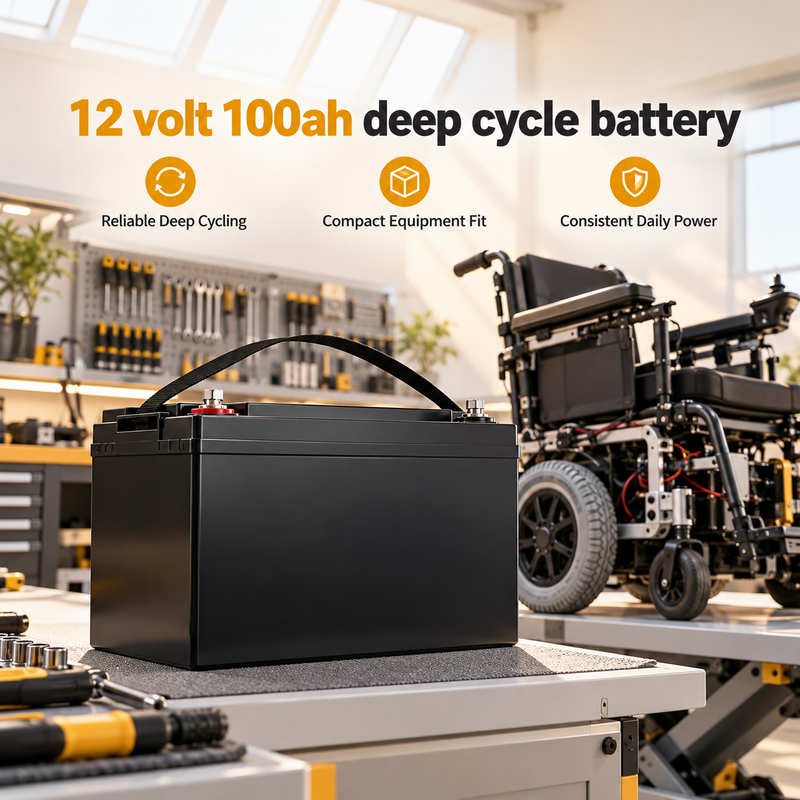
Guide to 12 Volt 100Ah Deep Cycle Batteries

5,000+ units ready stock, 1–5 days fast global delivery

application/12-volt-100ah-deep-cycle-battery, application/12-volt-100ah-deep-cycle-battery, 
Inquiry
Inquiry

12 volt 100ah deep cycle battery

When considering a reliable power source for various applications, a 12  volt 100Ah  deep cycle battery stands out as a practical choice. These  batteries are designed to provide  sustained energy  over  extended periods, making them  ideal for  solar power  systems, recreational vehicles  (RVs), uninterruptible power supplies (UPS), and  marine applications. B2B buyers,  including  purchasing managers  and engineers, often  seek to understand the specifications, cost factors,  and potential issues related to these batteries to make  informed purchasing decisions. This article  will help clarify the essential aspects of selecting,  purchasing, and utilizing a 12 volt 100Ah  deep cycle battery.

Cost Factors to Consider When Purchasing 12 Volt 100Ah Deep Cycle Batteries

Cost Factors to Consider When Purchasing 12 Volt 100Ah Deep Cycle Batteries

When evaluating the cost of a 12 volt  100Ah deep cycle battery, several factors  come  into play. The initial  purchase  price  is only one aspect;  consider the total cost of  ownership, including installation, maintenance, and eventual replacement costs. LiFePO4 batteries, while  typically  more expensive upfront, often provide lower maintenance costs and longer lifespan, making them more  economical in the long run.


Customization options can also  influence pricing. Many manufacturers, including Shenzhen  Yanshuosheng Technology Co., Ltd., offer customization in terms of dimensions, BMS features, and packaging. Buyers  should communicate their specific  requirements to receive accurate quotes.

Additionally, shipping and handling fees should be factored into the  overall cost. Batteries are  often subject  to special regulations, which can affect shipping costs and delivery times, particularly for international  orders.

Common Problems with 12 Volt 100Ah Deep Cycle Batteries and Solutions

Despite their advantages, users may encounter common  issues with 12 volt 100Ah deep  cycle batteries.  One prevalent  problem is capacity fade, which can occur due to improper  charging practices or environmental factors. To mitigate this, ensure that  the  battery is equipped with a  reliable BMS and follow recommended charging  protocols.

Overheating is another  concern, particularly in high-performance applications.  Buyers should choose batteries with built-in thermal management features  or consider using cooling systems in environments where  heat may be a factor.

Self-discharge rates can also vary significantly among  battery types. LiFePO4 batteries generally  exhibit lower self-discharge rates,  making them ideal for applications where the battery may  sit idle for  extended periods. Checking the self-discharge rate during the selection process can help  buyers avoid  performance issues down the line.

Applications of 12 Volt 100Ah Deep Cycle Batteries in Various Industries

The versatility of  12 volt 100Ah deep cycle batteries makes  them  suitable for a wide  range of applications  across different industries. In the solar energy sector, these batteries are used for energy storage,  enabling users  to harness solar power during the day and use it when needed, enhancing energy independence.


In recreational vehicles, these batteries provide a reliable power source for lights, appliances, and other electrical systems while off the grid. Their lightweight design and high  energy density make them an ideal  choice for mobile applications.

The  marine industry also benefits from these batteries, which power  everything from trolling motors to onboard electronics. A dependable battery ensures that vessels maintain operational capacity, especially during  extended fishing  trips  or excursions.

Uninterruptible power supplies (UPS) utilize these batteries to  provide immediate backup power  during outages, ensuring critical systems remain operational. The ability to  cycle deeply  without damage makes these batteries particularly effective  in UPS applications.

Installation Guidance for 12 Volt 100Ah Deep Cycle Batteries in Your Projects

Proper  installation of a 12  volt 100Ah deep  cycle battery is crucial for performance and safety. Before  installation, ensure that the mounting location is clean, dry, and well-ventilated to prevent overheating and allow for  efficient operation.

Wiring should be performed using appropriate gauge cables to handle the expected current load. It’s important  to connect the positive  terminal first, followed by the negative terminal,  to reduce  the  risk of short circuits. Tighten all connections securely but avoid over-tightening, which  can  damage terminals.

For applications  requiring multiple batteries, consider  a series or parallel configuration  based on the desired voltage and capacity. Be  sure to match batteries of the same type and age to ensure consistent performance across the system.

Lastly, always refer to the manufacturer’s guidelines for specific instructions related to installation and maintenance, as these can vary based on the battery model and application requirements. Proper installation not only enhances performance but also extends  the lifespan of  the battery.

By understanding  these critical factors—selection criteria, cost considerations, common issues, applications, and installation guidance—B2B buyers can make informed decisions when purchasing a 12 volt 100Ah deep cycle battery, ensuring  they meet their operational needs effectively.

How to Choose the Right 12 Volt 100Ah Deep Cycle Battery for Your Needs

Selecting the right  deep  cycle battery involves assessing several key factors. First, consider the battery  chemistry. Lithium Iron Phosphate (LiFePO4) batteries, like  those produced by Shenzhen Yanshuosheng Technology Co.,  Ltd.,  offer advantages such as longer lifespan, faster  charging  times, and greater depth of discharge compared to traditional lead-acid batteries. This can significantly reduce total  ownership  costs over time.

Next, examine the Battery Management System (BMS). A robust BMS ensures safe operation by preventing overcharging, over-discharging,  and thermal runaway, which is crucial in applications where safety is paramount. Certifications such  as UN38.3 and CE further validate the battery's reliability and safety standards.

Buyers should also consider the application requirements. Different applications may demand specific  features, such as higher  discharge rates for marine use  or temperature tolerance for solar energy systems.  Understanding the  operational  environment and energy demands will guide buyers in  selecting a battery that meets performance  expectations.

Get a Free Quote

Our representative will contact you soon.
0/1000