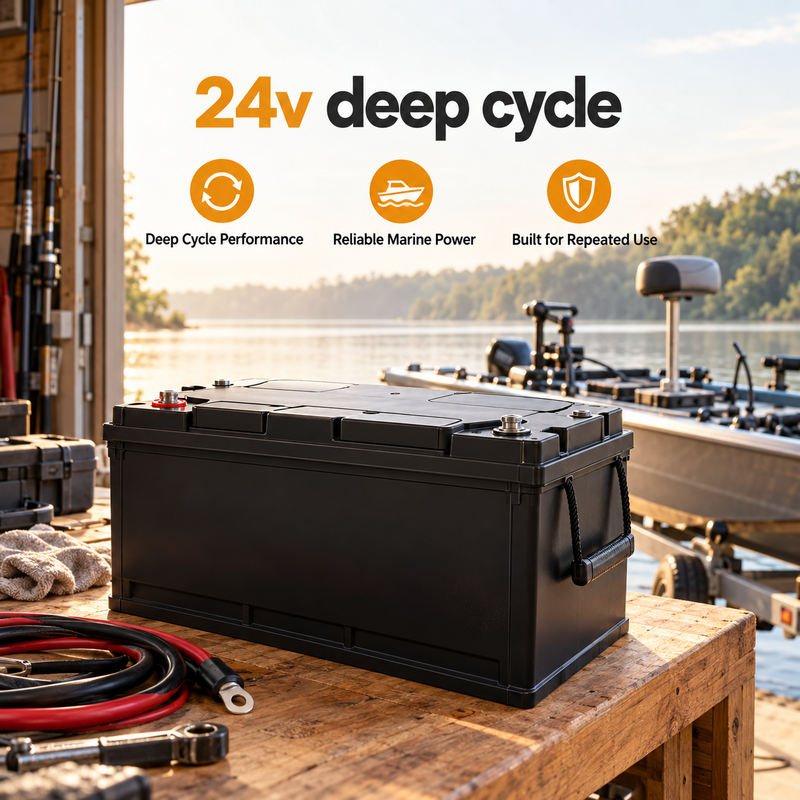
Sourcing 24V Deep Cycle Battery Solutions

5,000+ units ready stock, 1–5 days fast global delivery

application/24v-deep-cycle, application/24v-deep-cycle, 
Inquiry
Inquiry

24v deep cycle

24V deep cycle  batteries are essential components in various  applications, including renewable energy systems, recreational  vehicles (RVs),  uninterruptible  power supplies (UPS), and marine uses. For  B2B  buyers,  understanding  the specifications,  sourcing reliable  suppliers, and addressing common installation and performance issues are crucial. This article will  guide you through sourcing reliable suppliers, key  specifications, installation guidance,  common  problems, and the  advantages of LiFePO4 material  for your 24V  deep cycle  battery  needs.

Key Specifications of 24V Deep Cycle Batteries for Importers and Distributors

Key Specifications of 24V Deep Cycle Batteries for Importers and Distributors

When importing or distributing 24V deep cycle  batteries, certain specifications are  critical to ensure compatibility with various applications:

Capacity (Ah): This indicates how much energy the battery can  store. A higher amp-hour rating means longer run times, which is vital for  applications like RVs and solar energy systems.

Voltage: Ensure that the battery’s  nominal voltage matches the requirements of the application. For instance, 24V systems are common in maritime and  solar applications.

Cycle Life: This refers to the number of charge and  discharge cycles the battery can undergo before its capacity diminishes significantly. LiFePO4  batteries typically offer a longer cycle life compared to traditional lead-acid batteries.

Discharge Rate:  This affects how quickly  the battery can deliver its stored energy, which is important in  high-demand applications such as UPS systems.

Size and Weight: These factors affect installation and compatibility with existing systems. Ensure  the physical dimensions fit within the intended space.

Temperature Range: Understanding the operational temperature limits is essential, especially for applications  in extreme environments.

Safety Features: Look for batteries equipped with Battery Management Systems (BMS) that  protect against overcharging, short-circuiting, and overheating.

Confirming these specifications before ordering ensures that  the batteries will meet the  operational  needs  of your clients and reduce the likelihood  of  returns or quality issues.

Installation Guidance for 24V Deep Cycle Batteries in Various Applications

Proper installation of 24V deep cycle batteries is critical for optimal performance.  Here are  some guidelines tailored to specific applications:

Solar Power Systems:  When integrating with solar panels, ensure that the battery is  connected  to a suitable charge controller to manage the charging process. Position  the  battery in a well-ventilated area to  dissipate heat during  charging and discharging.

Recreational Vehicles (RVs): Secure the battery in a designated compartment to prevent movement during transit. Use appropriate gauge wiring to connect  the battery to the RV’s electrical system, and consider fuses to protect against overloads.


Uninterruptible Power Supplies (UPS): For UPS systems, ensure that the battery is compatible with the inverter. Regularly check connections to prevent corrosion, and test the  system periodically to ensure it functions properly during power outages.

Marine Applications: Install batteries in a dry,  ventilated area, ideally within  a battery  box to protect  against marine environments. Ensure that all connections are corrosion-resistant to  withstand saltwater exposure.

Following these guidelines will help achieve reliable performance  and longevity from the  batteries in their respective  applications.

Common Problems with 24V Deep Cycle Batteries and Their Solutions

Despite their robust design, 24V  deep cycle batteries  can encounter issues. Here are some common  problems and practical solutions:


Sulfation:  This occurs when a lead-acid battery is left discharged for too long. In LiFePO4 batteries, this is less of an issue, but it's  still  essential to avoid deep discharges.  Regularly monitoring charge levels can help prevent this.

Overheating: Excessive heat can  damage batteries and reduce their lifespan. Ensure that  the installation allows  for adequate ventilation and avoid charging in high-temperature  environments.

BMS Malfunctions: A faulty Battery Management  System can lead to overcharging  or undercharging. Regularly inspect the BMS for any  signs  of failure and ensure it is properly programmed for the specific battery  type.

Connection Issues: Loose or corroded connections can lead to poor performance. Regular maintenance checks should be performed to  tighten connections and clean terminals.


By addressing these common issues proactively, buyers can enhance the reliability and lifespan of their 24V deep cycle batteries.


Advantages of LiFePO4 Material in 24V Deep Cycle Battery Performance

LiFePO4  (Lithium Iron Phosphate) batteries offer several advantages over traditional  lead-acid batteries, making  them  a popular choice for 24V deep cycle applications:

Longer Cycle Life:  LiFePO4 batteries can typically withstand 2000 to 5000 charge cycles, significantly outlasting lead-acid batteries, which generally provide only 300 to 500 cycles.

Higher Efficiency:  They have a higher energy density, meaning they can store more energy in a smaller, lighter package, which  is particularly beneficial for  space-constrained applications like RVs and  marine use.

Safety: LiFePO4 batteries are less prone to thermal runaway and are considered safer than  other lithium-ion chemistries. The stable chemistry provides a lower risk of fires or explosions.

Fast  Charging: These  batteries can  be  charged quickly without  significant degradation of performance, reducing downtime in applications  where reliable power is essential.

Environmental Impact: They are considered more environmentally friendly due to the absence of toxic metals such as lead and cadmium.

Low Self-Discharge Rate: LiFePO4  batteries retain their charge for significantly longer periods  when not in use, making them ideal for seasonal applications like RVs.

Understanding these advantages can help buyers make informed decisions about incorporating LiFePO4 24V deep cycle batteries  into their operations, ensuring  they choose the right solution for their energy storage needs.

Where to Source Reliable Suppliers for 24V Deep Cycle Battery Needs

Finding trustworthy suppliers for 24V  deep  cycle  batteries  involves  a few key strategies. Start by researching manufacturers that specialize in LiFePO4 energy storage systems, as their expertise in this  technology is paramount. Look for  suppliers with relevant certifications, such as UN38.3 and CE, which indicate compliance  with international  safety and quality standards.

Networking at industry  trade shows or  forums can also be  beneficial.  Engaging with other businesses in solar, RV, UPS, and marine markets  can yield recommendations for reliable suppliers. Additionally, online marketplaces may provide access to a wide  range of manufacturers, but it is crucial to vet their credentials, production capabilities, and  customer reviews before making a decision.

Finally, request samples  to assess quality firsthand. This step will help confirm that the supplier's  products  meet your specifications and  performance expectations before placing larger orders.

Get a Free Quote

Our representative will contact you soon.
0/1000

Related product categories