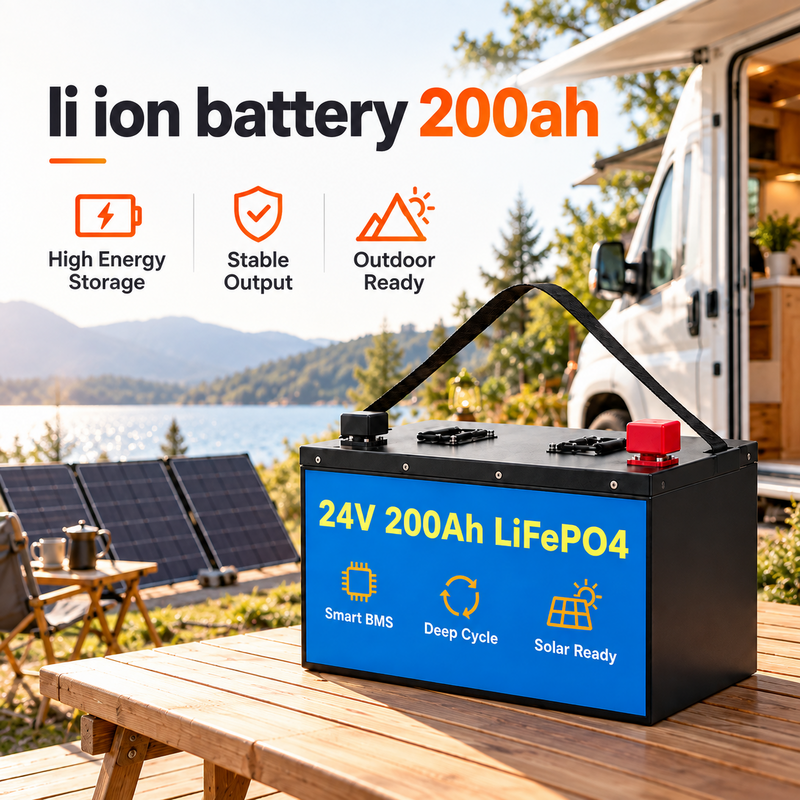
200Ah Li-Ion Battery: Key Features and Applications

5,000+ units ready stock, 1–5 days fast global delivery

application/li-ion-battery-200ah, application/li-ion-battery-200ah, 
Inquiry
Inquiry

li ion battery 200ah

Li-ion batteries, specifically the 200Ah variant, are increasingly popular in  various applications due to their high  energy density,  long cycle life, and reliable performance. For B2B  buyers, such as purchasing managers and engineers,  understanding the critical specifications and quality control  measures associated with  these batteries  is essential for  making informed decisions. This article will  delve  into the specifications  needed for selecting  a 200Ah  Li-ion battery,  the  manufacturing quality control processes, its  applications  in  various industries, common problems, and  cost factors to consider when sourcing these batteries.

Quality Control Measures in 200Ah Li-Ion Battery Manufacturing

Quality Control Measures in 200Ah Li-Ion Battery Manufacturing

Quality control is paramount in the manufacturing of 200Ah Li-ion batteries to ensure safety, reliability, and performance. Manufacturers like Shenzhen Yanshuosheng Technology Co., Ltd. implement several quality control measures, including:

Raw Material Inspection: The quality of raw materials, such as lithium  iron phosphate (LiFePO4), is critically assessed  before production. This step ensures that only  high-grade materials are  used, affecting the battery's performance and lifespan.

In-Process Quality Checks: Throughout the manufacturing process, various checkpoints are established to monitor the assembly of battery cells, modules,  and packs. This includes checking  for alignment, welding quality, and ensuring  that the BMS is correctly integrated.

Testing Protocols: Batteries undergo rigorous testing, including cycle life tests, thermal stability tests, and  capacity tests. These evaluations help identify any potential issues before the batteries  reach the market.


Certification Compliance: Adherence to international standards,  such  as UN38.3  and CE certifications, is crucial. These certifications  validate that the batteries meet safety and performance standards required for global distribution.

Final Product Inspection: Before shipment, a comprehensive inspection is conducted to verify that each battery  meets the  specified  design and performance criteria. This step is essential for maintaining product integrity  and customer satisfaction.


Implementing these quality control measures ensures that the 200Ah Li-ion batteries produced are reliable, safe, and ready  for various applications.

Applications of 200Ah Li-Ion Batteries in Various Industries

200Ah Li-ion batteries are versatile and find applications across multiple industries, including:

Renewable  Energy Systems: In  solar energy storage systems, these batteries  store  excess energy generated during the day for use at  night or during cloudy periods. Their high capacity and  long cycle life make them ideal for residential and commercial energy storage solutions.

Recreational Vehicles (RVs): RV owners benefit from the lightweight and compact design of 200Ah Li-ion batteries, which provide sufficient  power for appliances  without adding significant weight. Their ability to  withstand deep discharges also enhances their suitability for  prolonged trips.


Uninterruptible Power Supplies (UPS): In UPS systems, 200Ah Li-ion batteries deliver reliable  backup power  during outages. Their  rapid charge and discharge capabilities ensure that critical  systems remain operational in  emergencies.

Marine Applications: These batteries are also used in marine applications, providing power for navigation, communication, and onboard appliances. Their resilience against harsh environmental conditions makes them a preferred choice for boat owners.

Electric Vehicles (EVs): As the demand for electric vehicles grows, 200Ah Li-ion batteries are used to power various EV models, providing the necessary  energy for extended ranges and performance.

The  adaptability of 200Ah Li-ion  batteries across these sectors  highlights their importance in modern energy solutions.

Common Problems with 200Ah Li-Ion Batteries and Their Solutions

While 200Ah Li-ion batteries are generally reliable, they  can encounter common issues. Understanding these problems and their solutions can help buyers make informed decisions:

Capacity  Fade: Over time, Li-ion batteries  may experience a decrease in capacity due  to cycling and aging effects.  To mitigate this, it's essential to use a quality BMS that manages charge cycles effectively and avoids overcharging.

Thermal Runaway: This serious safety concern can occur if the battery overheats, potentially leading to fires. Implementing proper thermal management  systems and ensuring that batteries are used within their specified temperature range can help prevent this issue.

Self-Discharge: Li-ion batteries can  suffer from self-discharge, where  energy is lost when the battery is not in use. Choosing high-quality batteries with low self-discharge rates can minimize this problem.


Compatibility  Issues: Some applications  may face compatibility challenges  with existing systems. It's crucial to  verify that the 200Ah Li-ion battery  specifications align with the equipment it will power to avoid operational disruptions.

Quality Variations: Not all manufacturers produce  batteries to the same standard. Conduct thorough research on suppliers, focusing on their quality control processes, certifications, and customer reviews to ensure  reliable products.

By being aware  of these  common problems and implementing effective solutions, buyers can enhance the performance and  lifespan of  their 200Ah Li-ion batteries.

Cost Factors to Consider When Sourcing 200Ah Li-Ion Batteries

When sourcing 200Ah Li-ion batteries, several cost factors should be taken into account:

Unit Price: The base  price of the battery can vary significantly based  on the manufacturer, materials used, and production methods. It's  essential to balance cost with quality to ensure long-term  value.

Minimum Order  Quantity (MOQ): Some suppliers may have MOQs that influence total costs. Understanding  these thresholds can help buyers negotiate better pricing or plan purchases more effectively.

Shipping Costs: Depending on the location of the supplier and the  destination, shipping costs can add to the total expense.  Buyers should factor in shipping when comparing  supplier quotes.

Customization Fees: If specific configurations or branding are required, additional customization fees may apply. Clear communication  with the supplier about customization needs can help prevent unexpected costs.

Maintenance and Warranty: Consider  the long-term costs associated with maintenance and warranty services. A slightly higher upfront cost may be  justified by better warranties or  lower maintenance requirements.

By evaluating these  cost factors,  buyers  can make informed purchasing  decisions that align with their budget  and operational needs.

By understanding these aspects of 200Ah Li-ion batteries, purchasing managers and  engineers can ensure they select the right product for their specific applications, ultimately leading to enhanced operational  efficiency and reliability.

Specifications You Need for 200Ah Li-Ion Battery Selection

When selecting a 200Ah Li-ion battery, several specifications must be considered to ensure it meets the application requirements. Key specifications include:

Voltage Rating:  Typically, a 200Ah Li-ion  battery operates at different voltage  levels, commonly 12V, 24V, or 48V. The voltage rating should match the system requirements to ensure optimal performance.

Cycle Life: This refers to the number  of charge and discharge cycles a battery can undergo before its capacity  significantly diminishes. A  higher cycle life translates to better long-term performance and lower replacement costs.

Charge and Discharge Rate:  Measured in C-rates, this indicates how quickly the battery  can be charged and discharged. Understanding  the required C-rate for your  application is crucial, as it affects performance and lifespan.

Temperature Range: The operating temperature range affects battery performance and safety. Ensure that the battery can operate  effectively in the expected environmental  conditions.

Size and Weight: Depending on the application,  the battery’s dimensions and weight may impact installation and mobility. Ensure that the physical characteristics align with your operational needs.

Battery Management System (BMS): A robust BMS is critical for monitoring battery health,  managing charge  cycles, and ensuring safety. Look for batteries with  advanced BMS features to enhance reliability.

By carefully  evaluating these  specifications,  buyers can ensure  they select a 200Ah Li-ion battery that meets their specific operational needs.

Get a Free Quote

Our representative will contact you soon.
0/1000