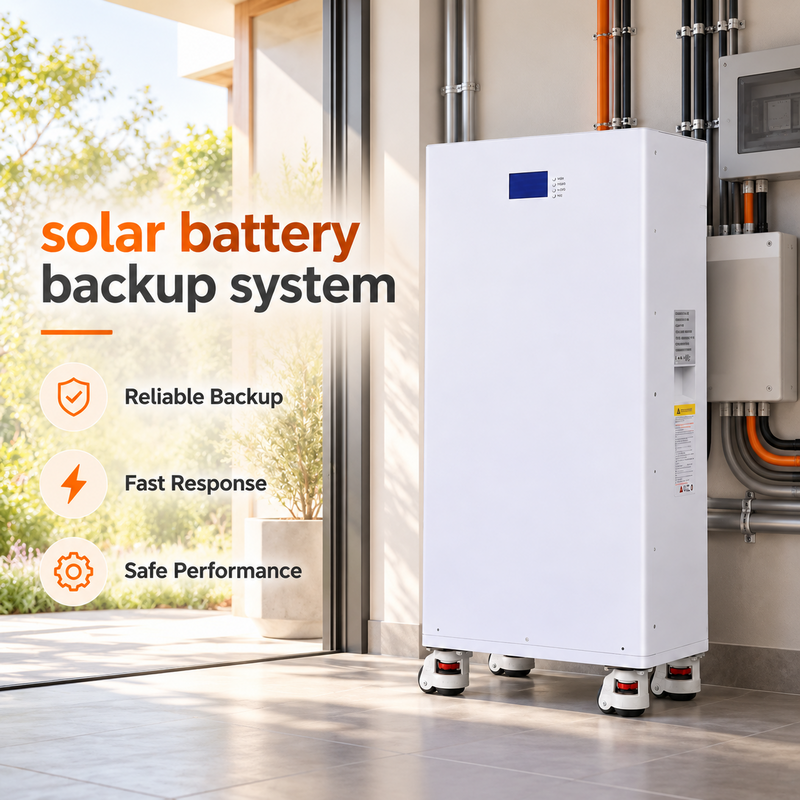
Comparing LiFePO4 Solar Battery Backup Systems

5,000+ units ready stock, 1–5 days fast global delivery

application/solar-battery-backup-system, application/solar-battery-backup-system, 
Inquiry
Inquiry

solar battery backup system

Solar battery  backup  systems  are essential  for  ensuring reliable energy  storage  and  power supply during  outages or peak demand periods. For B2B buyers, such  as purchasing managers  and distributors, the primary concerns often revolve around specifications,  quality, and  application suitability. This  article will guide you  through critical aspects  of evaluating solar  battery  backup systems, specifically focusing on  LiFePO4 technology, to help you make informed  purchasing decisions.

Key Specifications of LiFePO4 Solar Battery Backup Systems Explained

Key Specifications of LiFePO4 Solar Battery Backup Systems Explained

LiFePO4 (Lithium Iron Phosphate) batteries are widely recognized for their safety and performance. Key specifications  include nominal  voltage, capacity, energy density, and thermal stability.


Nominal Voltage: Most LiFePO4 batteries  operate at a nominal  voltage of 3.2V per cell. Understanding this helps in configuring systems to  match the voltage requirements  of your application, whether for residential  or commercial use.

Capacity: Expressed in amp-hours (Ah),  capacity determines how much energy  can be stored. For larger installations, higher capacity batteries can reduce the number of units required,  simplifying  installation and maintenance.

Energy Density: This specification indicates the  amount of energy stored per  unit of weight or volume. Higher energy density allows for more compact designs, which  is beneficial in applications with space constraints.

Thermal Stability: LiFePO4 batteries exhibit excellent thermal stability, reducing the risk of  thermal runaway, a common issue with other lithium-ion technologies.  This makes them a safer choice for  installations in various environments.

Understanding these specifications is critical  for  ensuring the selected system aligns with your operational needs and safety standards.

Understanding the Quality Control Process for Solar Battery Backup Systems

Quality control (QC) is vital  in the manufacturing of solar battery backup systems. A robust QC process  typically  encompasses several stages, including material selection, production monitoring, and final testing.

Material Selection:  High-quality raw  materials contribute significantly to the performance and lifespan of battery systems.  Manufacturers should conduct thorough inspections of incoming materials, ensuring they meet specified standards.

Production Monitoring:  Throughout the manufacturing process, consistent monitoring of equipment  and processes  is essential. Automated systems can help track parameters such as temperature, pressure, and humidity, which are crucial for  ensuring product quality.

Final Testing: Before  shipping, each battery should undergo rigorous testing, assessing performance metrics like capacity, discharge rates, and  safety features. This step  verifies that the product meets the  required specifications and  helps  identify any defects before reaching the customer.

A transparent  QC process not only ensures  product reliability but also builds trust with buyers, reinforcing  a manufacturer’s  commitment to quality.

Common Problems with Solar Battery Backup Systems and Practical Solutions

Despite their advanced  technology,  solar battery backup systems can encounter issues. Common problems include capacity degradation,  improper installation, and inadequate thermal management.

Capacity Degradation: Over time, batteries  may lose capacity due to factors like excessive cycling or poor charging  practices. To mitigate  this, educate users on proper charging habits and cycle management, including avoiding deep discharges.

Improper  Installation: Installation errors can lead to performance issues or even  safety  hazards. Ensure that installation  guidelines are clear and provide  comprehensive training for technicians to minimize risks.

Inadequate Thermal Management: Batteries  can overheat  if not properly ventilated. Implementing  effective thermal management solutions, such as cooling systems or proper placement, can  enhance performance and prolong battery life.

By addressing  these common  problems proactively,  buyers  can ensure reliable performance and longevity from their solar battery backup  systems.

Advantages of LiFePO4 Materials in Solar Battery Backup Systems

LiFePO4 materials offer numerous advantages  for solar  battery  backup  systems,  making them a preferred  choice for many applications. Key benefits include enhanced safety, long cycle life, and environmental friendliness.


Enhanced Safety:  LiFePO4 is less prone to thermal runaway compared to other lithium-ion chemistries. This characteristic significantly  reduces the risk of fire or explosion, making  these batteries suitable for various installations.

Long Cycle Life: With the potential for over 5,000 discharge cycles, LiFePO4 batteries provide a longer lifespan, which translates to lower  overall costs for end-users. This longevity is particularly advantageous for  commercial applications where  downtime can be costly.

Environmental Friendliness: LiFePO4 is non-toxic and more environmentally stable than other  lithium-ion alternatives. This aspect  appeals to eco-conscious buyers and aligns with increasing regulatory demands for sustainable practices in energy  storage.

In summary, the  advantages of LiFePO4 materials make them an excellent choice for solar battery backup  systems,  meeting the demands of reliability, safety, and sustainability in  various applications.

How to Compare Solar Battery Backup Systems for Wholesale Purchasing

When comparing solar battery backup  systems, focus on several key factors: capacity, discharge rates,  lifespan, and safety certifications. Begin by assessing the battery capacity measured in kilowatt-hours (kWh), which indicates how much  energy the system can  store. Higher capacity systems may be  necessary for larger applications, such as commercial  buildings or industrial sites.

Next, evaluate the discharge rates, which  affect how quickly energy can be delivered during peak usage.  Shorter discharge times are critical in applications requiring immediate power, like UPS systems in data centers.

Don’t overlook the  importance of lifespan, typically  represented in  charge cycles. LiFePO4 systems can offer up to 5,000 cycles or more, making them suitable for long-term energy storage.

Lastly,  verify safety certifications, such as UN38.3  and  CE,  which indicate compliance with international safety and  performance standards. These  certifications are crucial for wholesale  purchasing,  ensuring the products meet  regulatory requirements in your target markets.

Get a Free Quote

Our representative will contact you soon.
0/1000

Related product categories