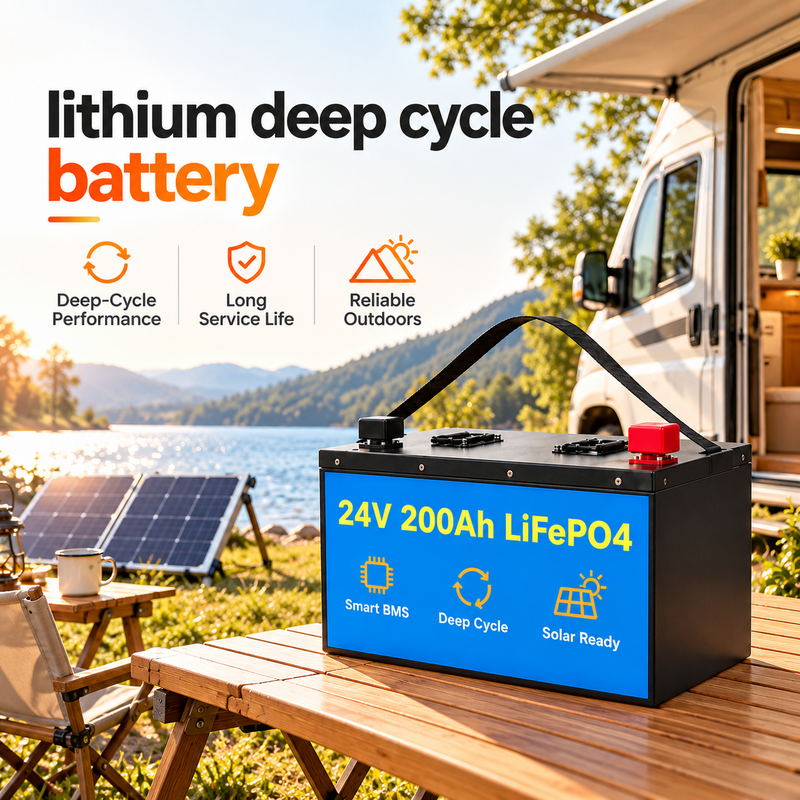
Understanding Lithium Deep Cycle Battery Specifications

5,000+ units ready stock, 1–5 days fast global delivery

application/lithium-deep-cycle-battery, application/lithium-deep-cycle-battery, 
Inquiry
Inquiry

lithium deep cycle battery

Lithium  deep  cycle batteries are a key component  in various energy storage applications,  providing reliable power for systems like  solar energy setups, RVs, uninterruptible  power supplies (UPS),  and marine  uses. B2B buyers, such as purchasing managers  and distributors,  often seek solutions that offer high performance,  longevity, and  safety. This article  will guide you through  essential specifications, sourcing options, installation challenges, and the advantages  of lithium deep  cycle batteries, ensuring you have the knowledge  needed to make  informed purchasing  decisions.

 
Where to Source Reliable Lithium Deep Cycle Batteries for Distribution

Where to Source Reliable Lithium Deep Cycle Batteries for Distribution

Sourcing reliable lithium  deep cycle batteries involves identifying  manufacturers that  meet quality standards and can fulfill your specific needs. Here are  key steps to consider:


Research Manufacturers: Look for manufacturers  with  a proven track record in producing  lithium batteries,  such as  Shenzhen Yanshuosheng Technology Co., Ltd. Their experience in exporting to over 50 countries and their certifications (like UN38.3 and CE) are indicators of reliability.

Request  Samples: Before committing to bulk orders, request samples to evaluate the product quality and performance. Testing samples under actual operating conditions can reveal insights into durability and efficiency.

Assess Customization Capabilities: Depending on your market  needs, you may require  specific battery configurations or packaging solutions. Confirm that the  manufacturer  can accommodate these requests.

Evaluate Lead Times and Minimum Order Quantities  (MOQ): Understand the manufacturer’s production capacity and lead times to ensure they can meet your  supply chain requirements.

Check Reviews and References: Reach  out to other distributors or  customers to gauge their experiences with  the manufacturer. Positive feedback can provide reassurance about quality and service.

Common Installation Challenges with Lithium Deep Cycle Batteries and Solutions

Installing  lithium deep cycle batteries can present various challenges, especially for those new to  this  technology. Here are common issues  and solutions:

Compatibility with Existing Systems: Lithium batteries may not be directly  compatible with older systems designed  for  lead-acid batteries. Buyers should check the compatibility of the battery management system (BMS) and ensure the inverter can handle lithium  batteries.

Temperature Management: Lithium batteries perform best within specific  temperature ranges. If installed in environments that exceed these limits,  performance can degrade. Incorporating thermal management systems or  placing batteries  in temperature-controlled environments can mitigate this risk.

Proper  Wiring and Connections: Incorrect wiring can lead to inefficiencies  or safety hazards. Ensure that the installation adheres to electrical codes and consider hiring a qualified technician for installation.

Monitoring and  Maintenance:  While lithium batteries require less maintenance than traditional batteries, they still  benefit from regular  monitoring. Implementing a BMS can help track battery performance, state of charge, and health, ensuring optimal operation.


By addressing these challenges proactively, buyers can ensure a successful installation that maximizes battery performance.


Comparing Lithium Deep Cycle Battery Applications in Various Industries

Lithium deep cycle batteries find applications across diverse sectors due to their  efficiency and longevity. Here are some  common applications:

Solar Energy Systems: In solar applications, lithium batteries store energy generated  during peak sunlight hours for  use during non-sunny  periods. Their high cycle life and depth of discharge capabilities make them  ideal for maximizing solar energy  utilization.

Recreational Vehicles (RVs): RV users benefit from the lightweight and compact design of  lithium batteries, allowing for more efficient use of space  and weight. The ability to discharge to a lower state  of charge without damaging  the battery is particularly advantageous for extended trips.

Uninterruptible Power Supplies (UPS):  In  UPS applications, lithium batteries provide  reliable backup power for critical systems, such as data centers and medical equipment. Their rapid charge and discharge capabilities  ensure that power is available when needed most.

Marine Use: Lithium batteries  are increasingly popular in marine applications due to their resistance to vibration and  ability to perform well in harsh environments. They provide  reliable starting power and energy storage for onboard  systems.

Understanding these applications can help buyers select  the appropriate battery type for their specific industry needs.

Advantages of Lithium Deep Cycle Batteries Over Traditional Options

Lithium deep cycle batteries offer several advantages compared to traditional lead-acid  batteries, making them a preferred choice for  many applications:

Longer  Lifespan: Lithium batteries  can  last up to five times longer than lead-acid batteries, reducing  replacement costs  over time.

Higher Efficiency: Lithium batteries  typically have a higher energy density, meaning they can store more  energy in a smaller  size. This efficiency translates to better performance in applications where space is limited.

Faster Charging: Lithium batteries can be  charged significantly faster than lead-acid options. This feature is particularly beneficial in  applications  requiring quick turnaround times.

Depth of Discharge (DoD): Lithium batteries can safely discharge up to 80-90%  of their capacity without damaging the battery, whereas lead-acid batteries should only be discharged to about 50%. This higher DoD can lead to more usable energy.

Safety Features: Many lithium batteries include advanced battery management systems (BMS)  that monitor cell health, temperature, and voltage, providing additional  safety and efficiency.

In summary, the advantages of lithium deep cycle batteries make them a compelling choice for a wide range of  applications, offering better performance and longer-term cost savings compared to traditional battery options. Buyers should evaluate  these  benefits when considering their next battery purchase to ensure they  select the best option for their needs.

Understanding Lithium Deep Cycle Battery Specifications for Wholesale Buyers

When evaluating lithium deep cycle batteries, several  specifications are crucial to understanding their performance and suitability  for different  applications. Key specifications include:

Capacity (Ah): This indicates the total energy that a battery  can store  and deliver over a specific period. For example, a 100Ah battery can provide 100 amps for one hour  or 50 amps for two hours. Buyers should assess capacity based on the intended application to ensure adequate power availability.

Voltage (V): Most lithium deep  cycle batteries operate at standard voltages like 12V, 24V, or 48V. The voltage must match the system requirements to ensure compatibility and optimal performance.

Cycle  Life: This is the number of charge-discharge cycles a battery can undergo before its capacity falls below a defined threshold (often 80% of its  original capacity). Lithium batteries can offer a cycle life of 2000-5000 cycles, significantly longer than traditional lead-acid batteries.

Charging and Discharging Rates (C-rate): A battery’s C-rate defines how quickly it can be charged or discharged relative to its  capacity. Understanding the C-rate is essential for applications with high power demands.


Temperature Range: Lithium batteries typically perform best within  specific temperature ranges. Buyers should  confirm that the battery’s operational range aligns with the environmental conditions where it will be used.

For  wholesale buyers,  it's essential to  confirm these specifications with manufacturers like Shenzhen Yanshuosheng Technology Co., Ltd.,  which specializes  in LiFePO4 energy storage systems and provides detailed specifications for their products. You might consider solutions like the High Performance 50Ah LiFePO4 Lithium Ion Battery Pack for your energy needs.

Get a Free Quote

Our representative will contact you soon.
0/1000