Choosing the Right Li-ion Deep Cycle Battery

5,000+ units ready stock, 1–5 days fast global delivery

application/li-ion-deep-cycle-battery, application/li-ion-deep-cycle-battery, 
Inquiry
Inquiry

li ion deep cycle battery

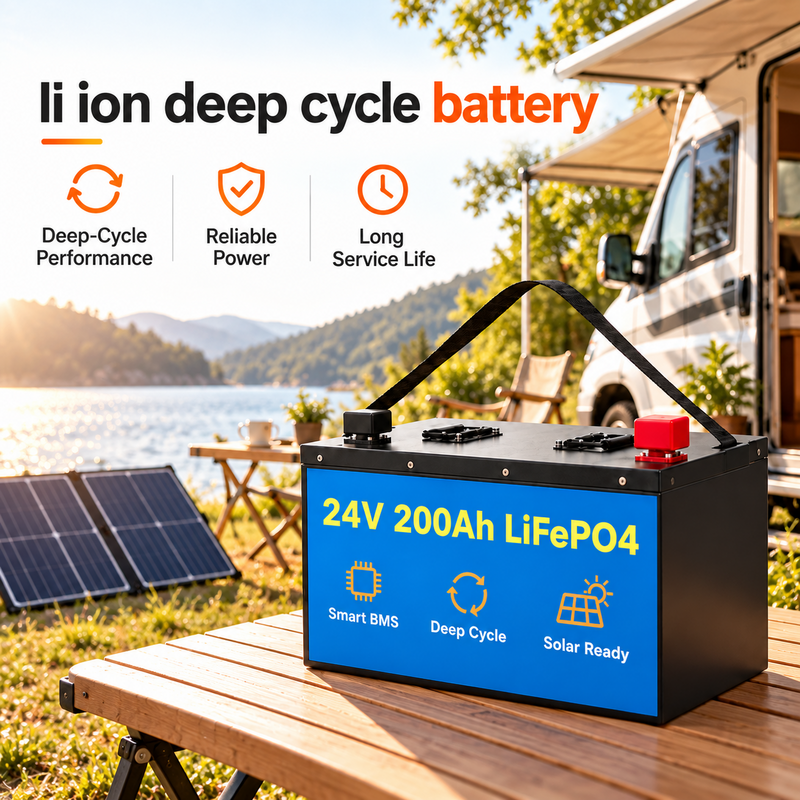
Li-ion deep cycle batteries are essential energy storage  solutions, particularly  in applications like solar energy systems, RVs,  marine use, and uninterruptible power supplies  (UPS).  As  a B2B  buyer,  you may have  several concerns, including  product specifications, quality, compatibility, and  supplier reliability. This article  aims to  provide  practical insights  into selecting, purchasing,  and  evaluating Li-ion deep cycle batteries, ensuring you  make informed  decisions for your needs.

 
Key Specifications to Compare in Li-ion Deep Cycle Batteries

Key Specifications to Compare in Li-ion Deep Cycle Batteries

When comparing Li-ion deep cycle batteries, focus on key  specifications that affect performance and suitability.

Voltage: Common voltages include  12V, 24V, and 48V.  Ensure the battery voltage matches  your application requirements.

Capacity (Ah): Measured in amp-hours, this indicates how much  energy the battery can store. For example, a 100Ah battery can provide 100  amps for one hour  or 50 amps for  two hours.

Cycle Life: This refers to the number of complete charge-discharge cycles a battery can undergo before its capacity drops significantly. A higher cycle life means  less frequent replacements.

Discharge Rate: Expressed in C-rates, this indicates how  quickly the battery can discharge its  stored energy. Applications requiring burst energy, such as  inverters  during peak load,  might need batteries with higher discharge capabilities.


Weight and Dimensions: Particularly  important for mobile applications, ensure the  battery's weight and size fit your installation space and weight  restrictions.

Safety Certifications: Look for certifications such as UN38.3 and CE,  which indicate compliance with international safety  standards.

Wholesale Purchasing Tips for Li-ion Deep Cycle Batteries

When  purchasing Li-ion deep cycle  batteries wholesale, consider the following  strategies to  ensure a  smooth process:

Request Detailed Quotations: Provide  potential suppliers with detailed information about your requirements, including application, quantity, specifications, and desired performance. This  allows suppliers  to give accurate  quotes and lead times.

Minimum Order Quantity (MOQ): Verify MOQs with different suppliers. Some  manufacturers may have flexible options that can suit  smaller orders,  while others may  require larger quantities.

Evaluate Supplier Reputation: Research potential suppliers by checking  reviews, certifications, and their experience in  the industry. Consider requesting references from previous clients to gauge their reliability.

Negotiate Pricing: While price  is crucial,  don't solely focus on the lowest  cost. Consider the total cost of ownership, including durability,  warranty, and  after-sales support.

Sample Approval: Always request samples before committing to a bulk order. Testing samples under your operating conditions can help identify potential issues early.

Evaluating Li-ion Deep Cycle Battery Quality and Reliability

Quality assurance  is paramount when selecting Li-ion  deep cycle batteries. To evaluate the quality and reliability  of a battery, consider the following:

Manufacturing Standards: Ensure the manufacturer adheres to strict quality  control processes, including ISO certifications.  This indicates  a commitment to maintaining high  production standards.

Battery Management System (BMS): A reliable BMS is crucial for monitoring battery health, balancing cells, and preventing overcharging. This not  only enhances performance but also significantly increases safety.

Material  Quality: Assess the materials used in the battery. High-quality cells and  components lead to  better performance and longevity. For instance,  LiFePO4 (Lithium Iron Phosphate) batteries typically offer higher thermal stability  and safety.

Warranty  and Support: A robust warranty  indicates the manufacturer’s confidence in  their product. Look for warranties that cover  a reasonable period and  include support for issues that may  arise.

Field  Testing Results: Inquire about performance data from field tests to get a sense of how the batteries perform in real-world applications.

Common Problems with Li-ion Deep Cycle Batteries and Solutions

Despite their advantages,  Li-ion deep cycle batteries  can present some challenges. Here are common problems and potential  solutions:

Overcharging: This  can lead to thermal runaway  and battery failure. Ensure the battery is  paired with a compatible charger that includes overcharge protection  features.

Temperature Sensitivity: Li-ion  batteries can be sensitive to extreme temperatures.  Ensure proper installation in environments that maintain optimal operating temperatures  and consider thermal management solutions for high-temperature  applications.

Self-Discharge: Some batteries  may experience self-discharge  over time. Regular monitoring and maintenance can help identify and mitigate this issue.

Cell Imbalance: Over time, cells within a battery may become imbalanced, leading to reduced performance. A good BMS can help balance cells and extend battery life.

Physical Damage: Inspect batteries regularly for signs of wear or  damage. If any physical damage is detected, replace the battery immediately to avoid safety hazards.

By understanding these common issues and  their solutions, you  can enhance the reliability and lifespan of your  Li-ion deep cycle batteries.


Choosing the right Li-ion deep cycle battery involves careful consideration of  specifications, supplier reputation, and potential issues. By  following the guidelines outlined , you can make informed decisions that meet your energy storage needs efficiently and effectively.

How to Choose the Right Li-ion Deep Cycle Battery for Your Needs

When  selecting  a Li-ion  deep cycle battery,  consider the application and  specific requirements. Start by assessing the  voltage and capacity needed for your system.  For instance,  residential energy storage  may necessitate higher capacity batteries to meet daily energy demands, while  RV applications may prioritize lightweight options for  mobility.

Additionally, evaluate the  battery's  cycle life and discharge rates.  A battery  with a higher cycle life can withstand more charge-discharge cycles, offering better longevity, which is critical for long-term investments. Understanding the depth of discharge (DoD) is  also important; a battery with a  higher DoD allows for more usable capacity without  damage.

Finally, ensure that the battery has appropriate safety features such as built-in Battery Management Systems (BMS) to monitor performance and prevent overcharging or overheating,  which is essential for  maintaining battery health and safety.

Get a Free Quote

Our representative will contact you soon.
0/1000