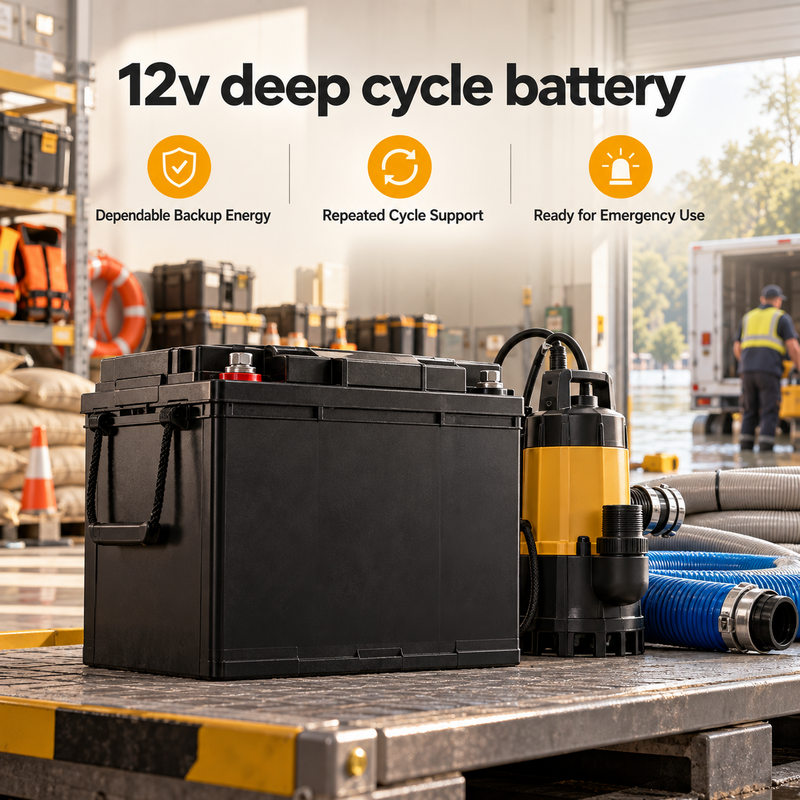
Choosing the Right 12V Deep Cycle Battery

5,000+ units ready stock, 1–5 days fast global delivery

application/12v-deep-cycle-battery, application/12v-deep-cycle-battery, 
Inquiry
Inquiry

12v deep cycle battery

Choosing the  right  12V  deep  cycle  battery is critical for various applications, including solar energy  storage,  RVs,  UPS systems, and  marine uses.  As  a purchasing manager or distributor,  understanding the nuances of these  batteries helps ensure optimal  performance,  reliability, and value.  This  article will help you navigate the essential factors to consider  when  sourcing 12V deep cycle batteries  for your business.

Where to Source Reliable 12V Deep Cycle Batteries for Your Business

Where to Source Reliable 12V Deep Cycle Batteries for Your Business

Sourcing reliable 12V deep cycle batteries involves  identifying reputable manufacturers or  suppliers. Look for companies with  a strong  track record in battery technology and experience in your specific  application areas, such as solar, RV, UPS, or  marine.


Shenzhen Yanshuosheng Technology Co., Ltd. specializes in  LiFePO4 energy storage systems and has established itself in over 50 countries.  When sourcing, request product samples and assess their performance  under your specific conditions to ensure they meet your quality standards. Additionally, consider the supplier’s ability to provide ongoing support,  including warranty terms  and  after-sales service.

Make sure to  compare pricing, minimum order quantities (MOQs), and  lead times  across different  suppliers. This will help you find the  most cost-effective solutions without compromising quality. Establishing a solid relationship with your supplier can also lead to better pricing and more  favorable terms in  the long run.

Key Specifications of 12V Deep Cycle Batteries for Importers and Distributors

As  an importer or distributor, understanding the key specifications of 12V deep  cycle batteries is crucial for making informed purchasing decisions. Here are some vital specifications to consider:

Capacity (Ah):  This indicates the battery's energy storage capability. Look for batteries with  a capacity  that matches your application needs.

Cycle Life: This refers to the number of charge  and discharge cycles  a battery can  undergo  before its capacity significantly  diminishes. LiFePO4 batteries typically  offer a cycle life of  2000 to  5000 cycles, making them a more durable  choice.

Self-Discharge Rate: A lower self-discharge rate is preferable, as it indicates  that the battery will retain  its charge longer  when not in use.

Dimensions and Weight: Ensure that the battery fits within  the intended application space and meets weight restrictions, especially in mobile applications like RVs and boats.


Operating Temperature Range: Check the battery's performance specifications at different temperatures to ensure reliability in  varying environments.

By confirming these specifications, you can select the most suitable batteries that align with your customers' needs and expectations.

Common Installation Problems with 12V Deep Cycle Batteries and Solutions

Installing 12V deep  cycle  batteries can present several challenges.  One  common issue is improper connection,  which can lead to  poor performance  or  damage. Ensure that terminals  are clean and connections are securely tightened to prevent voltage drops.

Another common problem is mismatching  battery types in a series or parallel configuration. Always  use batteries  of the same  type, capacity,  and age  to  ensure consistent performance and avoid potential failure.

Heat generation during  operation can also be an issue, particularly in high-demand applications. Ensure  adequate ventilation and consider using thermal management solutions to  mitigate overheating. Finally, educate your customers about the importance of regular maintenance, such as checking voltage levels and connections, to prolong battery life and  performance.

Technical Advantages of LiFePO4 12V Deep Cycle Batteries for Contractors

LiFePO4  12V  deep cycle  batteries offer significant  technical advantages, particularly for contractors involved in renewable energy or mobile applications.  These batteries provide a higher energy  density compared to traditional lead-acid batteries, which means they can store more  energy in a smaller and lighter package.

Additionally, LiFePO4 batteries  have a longer cycle life, resulting in lower total  cost of ownership over time. They are also  more efficient, with a charge  and  discharge efficiency  of around 95%, which minimizes energy loss and maximizes  usable power.

The safety profile of  LiFePO4 batteries is another key advantage. They are less prone to thermal runaway and have built-in protection features through their BMS, making  them a safer option for high-demand applications.

Contractors should evaluate these technical advantages when selecting batteries for projects, ensuring  they  choose products that meet both performance  and safety standards. This  not only enhances project reliability but also contributes to customer satisfaction and long-term business relationships.

What to Consider When Choosing a 12V Deep Cycle Battery for Wholesale

When selecting a 12V deep cycle battery for wholesale, consider the application requirements, performance  specifications, and  battery technology. For instance,  lithium iron phosphate (LiFePO4) batteries offer significant advantages over traditional lead-acid batteries,  such as longer  cycle  life, faster charging, and lighter weight.


Evaluate the discharge rate and capacity (measured in amp-hours) to ensure the  battery meets your energy needs. Additionally, consider  the depth of discharge (DoD) rating, as  it indicates how much of the battery's capacity can be used without damaging  the battery. A  higher DoD allows for greater usable energy, which is particularly important in applications where space and weight are critical.

It's also  essential to consider the battery  management system (BMS)  included with the battery. A  robust BMS enhances  safety  by preventing overcharging and discharging, thus prolonging battery life. Ensure that any battery you consider has  undergone proper certification, such as UN38.3 and  CE, to meet international safety standards.

Get a Free Quote

Our representative will contact you soon.
0/1000