Choosing the Right 48V Lithium Battery for Your Project

5,000+ units ready stock, 1–5 days fast global delivery

application/48v-lithium-battery, application/48v-lithium-battery, 
Inquiry
Inquiry

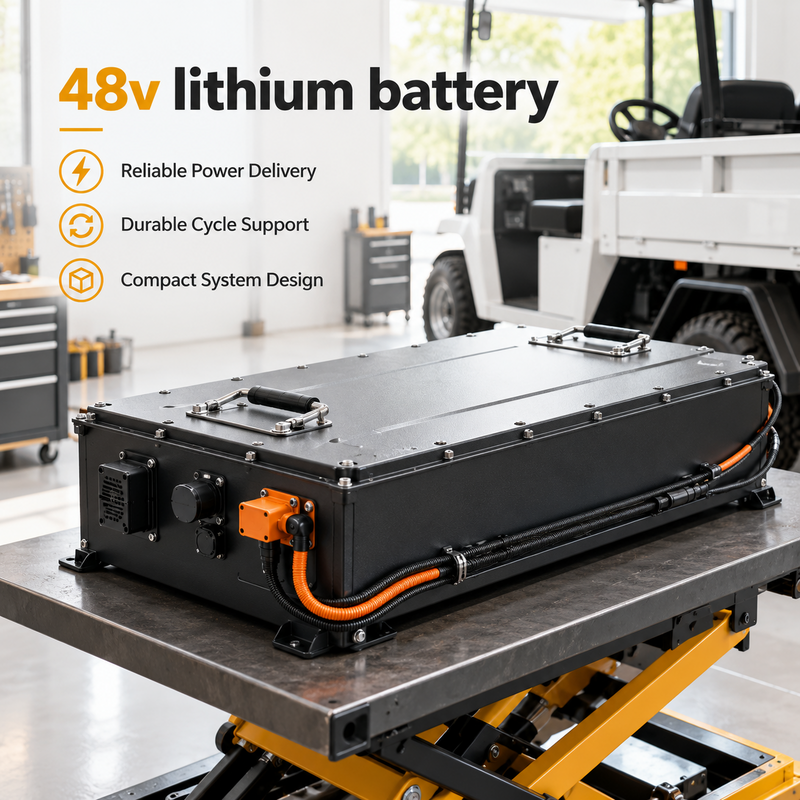
48v lithium battery

When selecting energy storage solutions for various applications, the 48V lithium  battery stands  out due to its efficiency, reliability, and versatility. As you explore options for solar energy  systems, residential storage, or  other industrial uses,  understanding  the characteristics  and  specifications  of these batteries  is crucial.  This  article  will guide you through selecting the right 48V  lithium  battery  for your project, reliable suppliers, key  specifications to consider,  the  quality control process,  and the various applications across industries.

Reliable Suppliers of 48V Lithium Batteries

Reliable Suppliers of 48V Lithium Batteries

When sourcing 48V lithium batteries, partnering  with a reliable supplier is essential.  Look for  manufacturers with a proven track  record in the  industry, such  as Shenzhen Yanshuosheng  Technology Co.,  Ltd., which specializes  in LiFePO4 energy storage systems. Evaluate suppliers based on their certifications, production capabilities, and  customer  reviews.

Consider suppliers who offer customization options to  meet your specific needs. This might include variations  in capacity, dimensions,  or additional features such as integrated monitoring systems.  It’s also beneficial to choose suppliers  with a strong international  presence to  ensure they understand  global shipping regulations and can deliver to your location efficiently.

Requesting samples from potential suppliers can also  provide insight into their product quality and performance. This will allow you to assess the physical aspects of the battery, including its size, weight, and finish, as well as conduct tests under your specific operating conditions.

Key Specifications to Evaluate in 48V Lithium Batteries

When evaluating 48V lithium batteries, certain specifications  are crucial  for making an informed  decision. Start with the battery chemistry; LiFePO4 batteries are known for their  thermal stability and longevity, making them suitable for various applications.

Next, examine the battery's energy density, which  indicates  how much energy it can store relative to its weight. Higher energy density means more power in a lighter package, which is especially important  for mobile applications  like RVs and marine use.

The  cycle life of the battery is  another key specification. This  refers to the number of complete charge and discharge cycles the battery can  undergo before its capacity diminishes  significantly. A battery with a longer cycle life reduces  the need for frequent replacements, translating to cost savings over time.

Additionally, consider the operating temperature range. Batteries should be able to function optimally in the environmental conditions  they will  face. For example, if the battery will be used in an outdoor solar installation, it must withstand  temperature fluctuations  without  performance degradation.


Understanding the Quality Control Process for 48V Lithium Batteries

Quality control is  a vital aspect of manufacturing 48V  lithium  batteries. A rigorous quality control process ensures that each  battery  meets the necessary safety and performance standards. At Shenzhen Yanshuosheng Technology Co., Ltd., for example, the production process includes multiple  stages of testing and inspection.

Initially, raw  materials are  sourced from reputable suppliers and undergo  quality checks to ensure they meet specifications. During production, batteries are  assembled in controlled environments to minimize contamination and defects.  Following  assembly, each  battery undergoes performance testing, including capacity  testing and BMS functionality checks.

Finally,  before the batteries leave the factory, they are subjected to a comprehensive final inspection. This includes verifying  compliance with relevant certifications, such as UN38.3 and  CE, which are  critical for international shipping and safety.

A  well-structured quality control process not only enhances product reliability  but also builds trust with customers, ensuring that the batteries perform under the demanding conditions of their intended applications.

Applications of 48V Lithium Batteries in Various Industries

48V lithium batteries are versatile and find applications across  multiple industries. In  the solar energy sector, these batteries are commonly used  for energy storage in residential systems, enabling  users to store excess  solar energy for use during non-sunny periods. Their ability to handle deep discharge  cycles makes them ideal for this application.

In the RV  and marine industries, 48V lithium batteries provide reliable power  for essential systems  like lighting, refrigeration, and navigation. Their compact size and lightweight design contribute to improved fuel efficiency and ease of installation.

Additionally, these batteries are increasingly used  in uninterruptible power supply (UPS) systems, where they ensure that critical systems  remain operational during power outages. Their long cycle life and maintenance-free operation make them  a preferred  choice for data centers and critical infrastructure.

As industries continue to transition towards sustainable energy solutions, the demand for high-performance 48V lithium batteries is expected to grow, making them an essential  component in modern energy systems.

By  understanding  the specifications, quality control processes, and  applications of 48V  lithium batteries, purchasing managers and  engineers can make informed decisions that align with their operational  needs and sustainability goals.

How to Choose the Right 48V Lithium Battery for Your Projec

Choosing  the right 48V lithium battery involves several critical considerations. First, assess  the specific energy requirements of  your application. For instance, solar energy systems typically require batteries that  can handle long discharge cycles,  while applications in RVs or marine environments  may need batteries that perform well  under varying temperatures  and conditions.

Next, consider  the battery's  capacity and  discharge rate. This  refers to  the battery's ability  to deliver a certain amount of power over a specified time, which is vital for ensuring  that your systems operate efficiently. Understanding your peak load and average load will help you select a battery with the appropriate amp-hour (Ah) rating.

Finally, evaluate the  battery management system  (BMS) integrated within  the battery. A robust BMS ensures optimal performance by monitoring voltage, temperature,  and state of charge, thus prolonging battery life and enhancing safety. Make sure that the chosen battery has certifications such as UN38.3 and CE, which indicate compliance with international safety  standards.

Get a Free Quote

Our representative will contact you soon.
0/1000