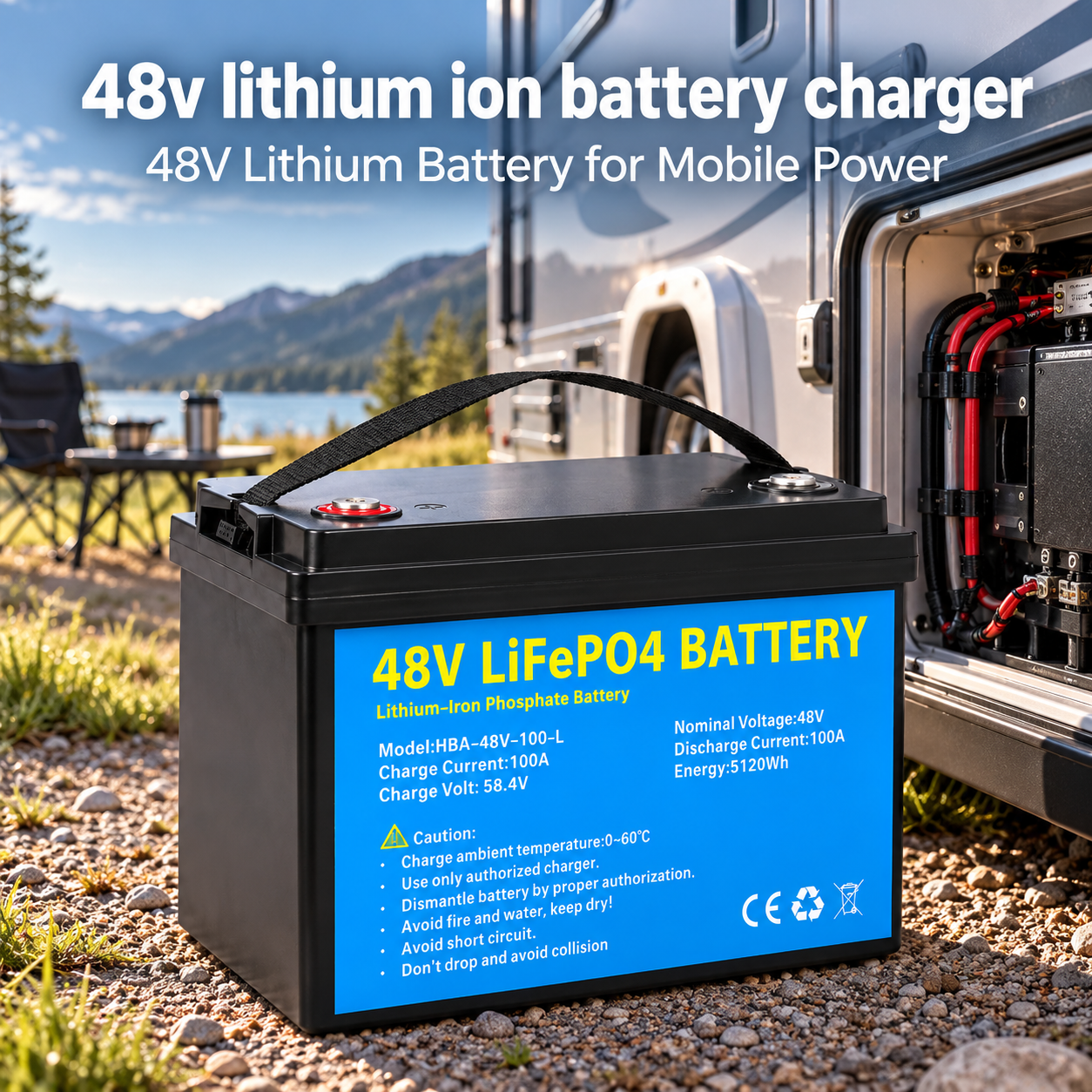
Key Specifications to Consider for 48V Lithium Ion Battery Chargers
Several specifications should be carefully examined when selecting a 48V lithium ion battery charger:
Output Voltage and Current: Ensure that the charger's output voltage matches the battery's requirements. The current rating should also be appropriate for the capacity of the battery being charged. If the current is too low, charging may take too long; if it's too high, it could damage the battery.
Charging Modes: Look for chargers with multiple charging modes, such as constant current (CC) and constant voltage (CV) modes. This flexibility allows for efficient charging across different battery states.
Protection Features: Essential protective features include over-voltage protection, over-current protection, short-circuit protection, and thermal protection. These features ensure both the charger and battery remain safe during operation.
Efficiency Ratings: A charger with a high efficiency rating will convert more input energy into usable output energy, reducing energy waste and operational costs.
Cooling Mechanisms: Depending on the application, consider chargers with built-in cooling systems to prevent overheating during extended use.
By ensuring that these specifications align with your operational needs, you can avoid common pitfalls associated with inadequate charging solutions.
 EN