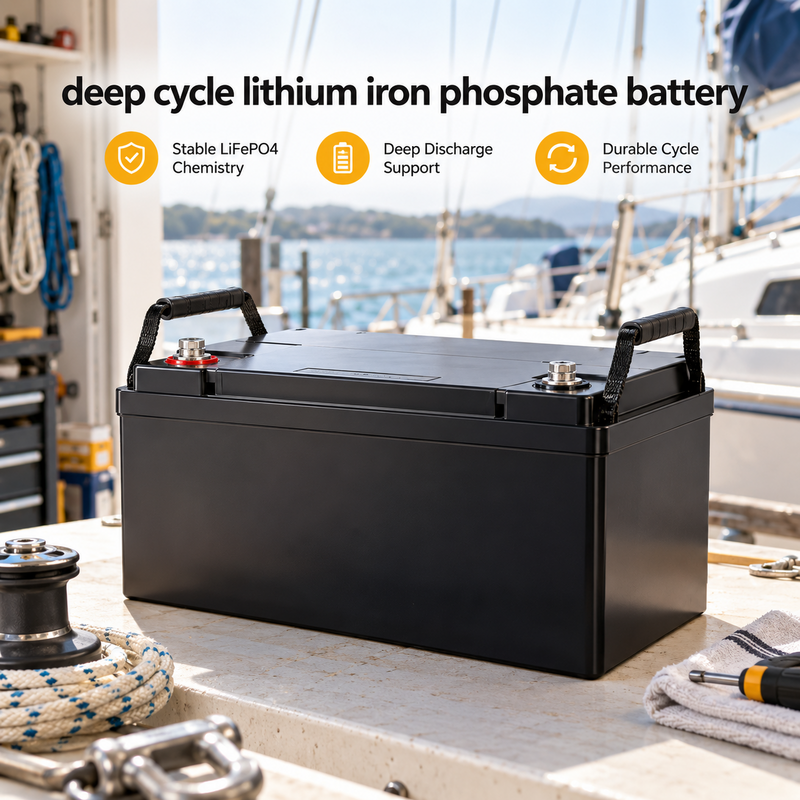
Reliable Deep Cycle Lithium Iron Phosphate Batteries

5,000+ units ready stock, 1–5 days fast global delivery

application/deep-cycle-lithium-iron-phosphate-battery, application/deep-cycle-lithium-iron-phosphate-battery, 
Inquiry
application/deep-cycle-lithium-iron-phosphate-battery, application/deep-cycle-lithium-iron-phosphate-battery, 
Inquiry

deep cycle lithium iron phosphate battery

Deep cycle lithium iron phosphate  batteries (LiFePO4) are at  the forefront  of  energy storage solutions, particularly  for applications  in solar energy  systems, recreational vehicles  (RVs), uninterruptible power  supplies (UPS), and marine  environments. These batteries are known for their longevity, safety, and efficiency, making them an  attractive option  for B2B buyers looking for  reliable  energy  storage. This article addresses  key concerns purchasing managers and engineers may have, such  as  sourcing, specifications, quality evaluation,  cost considerations, and application suitability, ultimately guiding them in making  informed purchasing decisions.

Understanding the Specifications of Deep Cycle Lithium Iron Phosphate Batteries

Understanding the Specifications of Deep Cycle Lithium Iron Phosphate Batteries

Deep cycle lithium iron phosphate  batteries come with various specifications that impact their performance and suitability for different applications. Key  specifications include:

Voltage and Capacity: Commonly available in 12V, 24V, or 48V configurations, with capacities ranging from 100Ah to over 400Ah. Higher capacity batteries can store more energy but may also be bulkier and  heavier. Cycle Life: LiFePO4 batteries typically  offer 2,000 to 7,000 cycles, significantly outlasting  traditional  lead-acid batteries. This longevity is crucial for reducing replacement costs over time. Discharge Rate: The maximum continuous discharge  current is vital for applications requiring high  power,  such  as inverters for solar systems. For example, YSS 10KW 48V Three Phase Hybrid Solar Inverter is designed for such high-power applications. Temperature Range: Understanding the operating  temperature range is essential, especially for  outdoor applications. Most LiFePO4 batteries operate efficiently between -20°C to 60°C.

These specifications must  align with  the  intended application to  ensure optimal performance and  reliability.

Evaluating the Quality of Lithium Iron Phosphate Batteries for Commercial Use

Quality evaluation of lithium iron  phosphate batteries is critical, especially for commercial applications where reliability is  paramount.  Here are essential factors to consider:

Certifications: Ensure the batteries meet international safety and quality standards, such as UN38.3  for transport and CE for compliance  with European safety regulations. Battery Management  System (BMS): A robust BMS protects  against  overcharging, over-discharging, and short circuits,  enhancing the battery's lifespan and safety.  Verify the BMS capabilities  when sourcing. Quality Control  Processes: Investigate  the manufacturer's quality control processes,  from  raw material sourcing to  final product testing. A rigorous  inspection  ensures consistent performance and reliability. Sample Testing: Before placing bulk orders, conduct thorough testing of samples under actual operating conditions to  validate  performance claims and compatibility with existing systems.

Engaging in these practices will help mitigate risks associated with battery failures in critical applications.

Cost Considerations When Sourcing Deep Cycle Lithium Iron Phosphate Batteries

When sourcing deep cycle  lithium  iron phosphate batteries, several cost  factors need careful consideration:

Unit Price vs. Total Cost of Ownership: While lower unit prices may initially seem  attractive, consider the total cost of  ownership, which includes lifespan,  maintenance, and replacement costs.  LiFePO4 batteries typically offer lower total costs due to their extended cycle life. Minimum Order Quantity (MOQ): Suppliers  often have MOQs that can impact overall cost. Be clear about your requirements to  negotiate favorable  terms. Shipping and Handling: Given the weight and size of  batteries, shipping costs can be significant. Evaluate suppliers based on  their  shipping capabilities and associated costs. Customization: If specific features are required,  such as unique dimensions or configurations,  be prepared  for potential increases in pricing. Discuss customization options early in the  negotiation process.

Understanding  these factors will enable buyers  to make more informed financial decisions  when sourcing.

Applications of Deep Cycle Lithium Iron Phosphate Batteries in Various Industries

Deep cycle lithium iron phosphate batteries are versatile and suitable for multiple industries due  to their unique characteristics. Key applications include:

Solar Energy Systems: Their ability to store energy efficiently makes them  ideal  for residential and commercial solar installations, providing reliable backup power. Recreational Vehicles  (RVs): LiFePO4 batteries offer lightweight solutions for RVs, allowing for extended travel without frequent recharging. Uninterruptible  Power Supplies (UPS): In data  centers  and  critical infrastructure, these batteries ensure that operations remain uninterrupted during power outages.  Marine Applications: Their robustness against harsh marine environments  makes them suitable for boats and yachts, offering  safety  and reliability.

Each application has specific requirements that need to be  understood for optimal battery selection, ensuring that  performance needs are met while adhering  to safety standards.

By familiarizing  themselves with these aspects, purchasing managers and  engineers  can make well-informed decisions when sourcing deep cycle lithium iron phosphate batteries, ultimately  enhancing their operational efficiency and reliability.

Where to Find Reliable Wholesale Suppliers for Lithium Iron Phosphate Batteries

Finding reliable wholesale suppliers for deep cycle lithium iron  phosphate batteries  involves  several steps. Start  by identifying manufacturers with a proven track record  in the  industry, such  as  Shenzhen Yanshuosheng Technology Co., Ltd., known for its  quality LiFePO4 energy storage systems and certifications like  UN38.3 and CE.

Buyers should consider  suppliers who have extensive experience in their specific  applications, whether it be  solar, RV, UPS, or marine. Trade shows, industry directories, and online marketplaces can also be valuable resources for finding trustworthy  manufacturers. Additionally, it’s  important to  request  samples and review  client testimonials and  case studies to gauge supplier reliability before making any commitments. For instance, products like High Performance 50Ah LiFePO4 Lithium Ion Battery Pack Deep Cycle 12V High Efficiency Lithium Iron are well-regarded in the industry.

Get a Free Quote

Our representative will contact you soon.
0/1000