Grid Tie Solar Inverters: A Comprehensive Guide

5,000+ units ready stock, 1–5 days fast global delivery

application/grid-tie-solar-inverter, application/grid-tie-solar-inverter, 
Inquiry
Inquiry

grid tie solar inverter

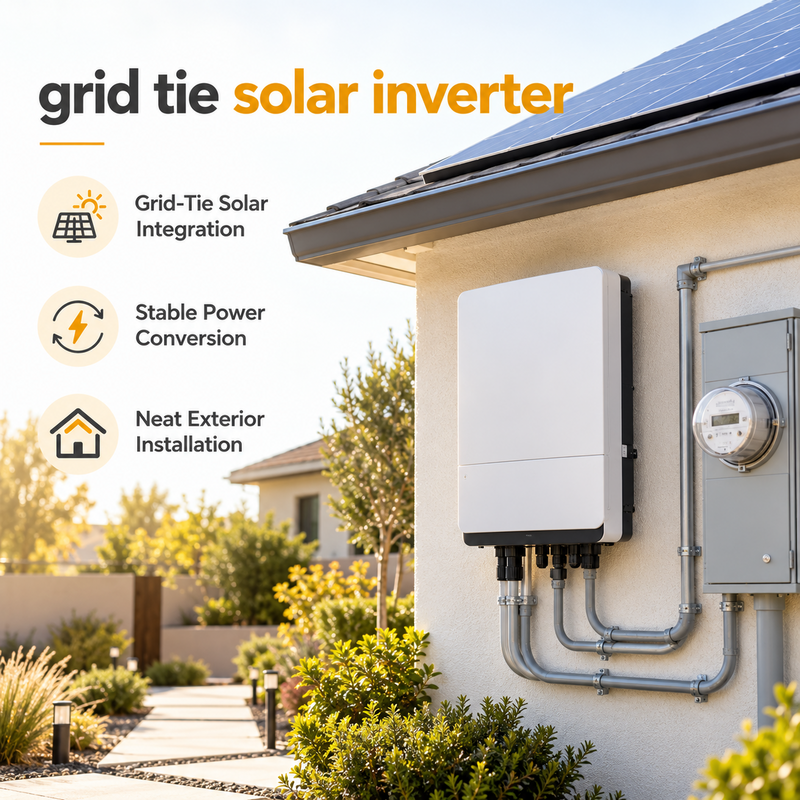
Grid tie  solar inverters are crucial  components  in renewable  energy  systems, converting direct current (DC) electricity generated  by  solar panels  into alternating current  (AC) electricity suitable for use in homes and businesses. For B2B buyers, concerns often revolve around efficiency, compatibility, and installation challenges. This  article provides insights into selecting the  right grid tie solar  inverter,  common installation  challenges  and  solutions, features and benefits, cost factors when ordering  in bulk, and their  applications across various industries. 

 
Common Installation Challenges with Grid Tie Solar Inverters and Solutions

Common Installation Challenges with Grid Tie Solar Inverters and Solutions

Installation  of grid tie solar inverters comes  with  its own set of challenges. One  common issue is ensuring proper  electrical connections and compatibility with existing electrical systems. Inadequate connections can lead  to inefficiencies or  even system failures. To  mitigate this,  it is vital to follow  manufacturer guidelines  and engage qualified technicians for installation.

Another challenge is  the  inverter's placement. Inverters should be  installed  in  a location with adequate ventilation and protection from the elements. Overheating can significantly reduce efficiency and lifespan. Positioning the inverter in shaded areas or using enclosures can prevent heat buildup.


Moreover, integrating the inverter with the local grid can pose complications, especially in areas with stringent regulations. Familiarizing oneself with local codes and working closely with local  utility companies  can facilitate a smoother installation process. Engaging with experienced contractors familiar with grid tie systems can also help circumvent potential  hurdles.

Features and Benefits Overview

Grid tie solar inverters come equipped  with various features that  enhance their functionality and reliability. Key  features include maximum power point tracking (MPPT), which optimizes  energy  harvest from solar panels by adjusting the electrical load. This can  significantly  increase energy production, especially under varying weather conditions.

Another important feature is  the ability to monitor energy production and consumption through digital displays or smartphone applications. This real-time data helps users manage their energy  usage and conduct maintenance when necessary. Additionally,  many modern inverters support remote firmware updates,  ensuring that the system remains up to date  with the latest technology and safety standards.

The benefits of using grid tie solar inverters extend beyond efficiency.  They  facilitate energy independence by allowing users to generate their own electricity, which can reduce  reliance on  the grid and lower energy bills. Additionally, they contribute to sustainability  efforts by harnessing renewable energy, helping businesses  and  homeowners meet their environmental goals.


Cost Factors to Consider When Ordering Grid Tie Solar Inverters in Bulk

When ordering grid tie solar inverters in bulk, various  cost factors come into play.  The  initial purchase price is a primary consideration,  but buyers should also factor in shipping and handling costs, which can vary based on the supplier's location and shipping  method.

Volume discounts  are  commonly available for bulk orders, so it is advisable to inquire about pricing structures that can lead to significant savings. Additionally, consider any associated costs  for installation and maintenance, including potential training  for staff on how  to operate and troubleshoot the inverters.

Lead time is  another crucial factor; manufacturers may require varying amounts of time to fulfill bulk orders based on their production capacity and inventory levels. Evaluating suppliers' production capabilities  and delivery timelines can prevent delays in  project implementation.

Lastly, warranty  and support services should be factored into the total  cost of ownership. A  higher upfront cost  may be justified  if the  inverter comes with a comprehensive warranty  and reliable customer support.

Applications of Grid Tie Solar Inverters in Various Industries

Grid tie  solar inverters find applications across numerous industries, enhancing their energy efficiency and  sustainability. In the commercial sector, businesses utilize these inverters to offset energy costs, particularly in energy-intensive operations such as manufacturing and warehousing. By generating their own electricity, companies can improve  their bottom  line  while reducing their carbon footprint.

In the residential sector, homeowners opt  for grid tie systems to reduce utility  bills and increase energy self-sufficiency. As energy prices fluctuate, having a reliable source of clean  energy becomes increasingly  attractive.

Moreover, grid tie inverters are widely used in agricultural applications. Farmers harness solar energy to power  irrigation  systems, cooling processes, and other essential operations, which can be particularly beneficial  in remote locations.

In the marine  and RV industries, grid tie solar inverters provide a reliable power source for off-grid applications, allowing for the  operation  of appliances and  systems while minimizing  reliance on fuel generators.

Understanding the  diverse applications of grid tie solar inverters can help buyers tailor their  choices  to meet specific industry needs effectively.

By considering these aspects, B2B buyers can make informed decisions regarding grid tie solar inverters, ensuring they select the right products for their specific requirements and applications.

A Buyeru2019s Guide

When  selecting a grid tie solar inverter, buyers  should consider several key factors. First, assess the inverter's power  rating, which should match or exceed the capacity  of the solar panel system.  Typically  measured in  kilowatts (kW), this ensures optimal performance and prevents overloading. Second, check for grid compatibility; inverters must meet local regulatory  standards to ensure safe operation  and  compliance  with government incentives.

Buyers  should also evaluate the inverter's efficiency rating, usually expressed as a percentage, indicating how  much  of the DC electricity is converted to usable AC power. An inverter with a higher efficiency rating  can lead  to more energy savings  in  the long term. Additionally, consider the inverter's warranty and support services offered by the manufacturer, which can be crucial for maintenance and troubleshooting.

Lastly, assess any customization  options available, such as size, features, and remote monitoring capabilities. These factors can help tailor the inverter to specific project needs and increase overall satisfaction with the product.


Get a Free Quote

Our representative will contact you soon.
0/1000