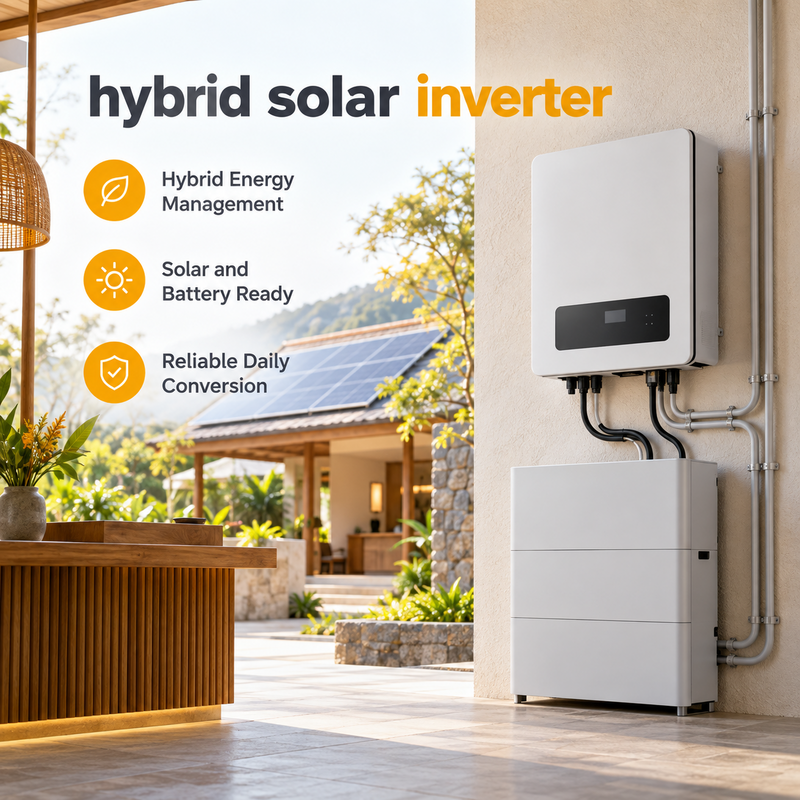
A Guide
When evaluating hybrid solar inverters, several key specifications should be prioritized:
Power Rating: This indicates the maximum load the inverter can handle. It is critical to match the inverter's power rating with your energy consumption patterns.
Efficiency Rating: Look for inverters with high efficiency ratings, typically above 95%. This reflects how effectively the inverter converts DC power from solar panels or batteries into usable AC power.
Battery Compatibility: Ensure the inverter is compatible with the type of battery system you plan to use, such as LiFePO4. Compatibility affects both performance and lifespan.
Grid Interaction: Check whether the inverter can operate in grid-tied, off-grid, or hybrid mode, depending on your energy strategy.
Monitoring and Communication Features: Advanced hybrid inverters often come with monitoring solutions that allow real-time tracking of energy production and consumption. Consider options that provide mobile app access for convenience.
Certifications: Verify the certifications of the inverter, such as UN38.3 and CE, which ensure compliance with international safety and performance standards.
By carefully assessing these specifications, you can select a hybrid solar inverter that aligns with your operational needs and enhances your energy management strategy.
 EN