Hybrid Solar Inverter Price and Selection Guide

5,000+ units ready stock, 1–5 days fast global delivery

application/hybrid-solar-inverter-price, application/hybrid-solar-inverter-price, 
Inquiry
Inquiry

hybrid solar inverter price

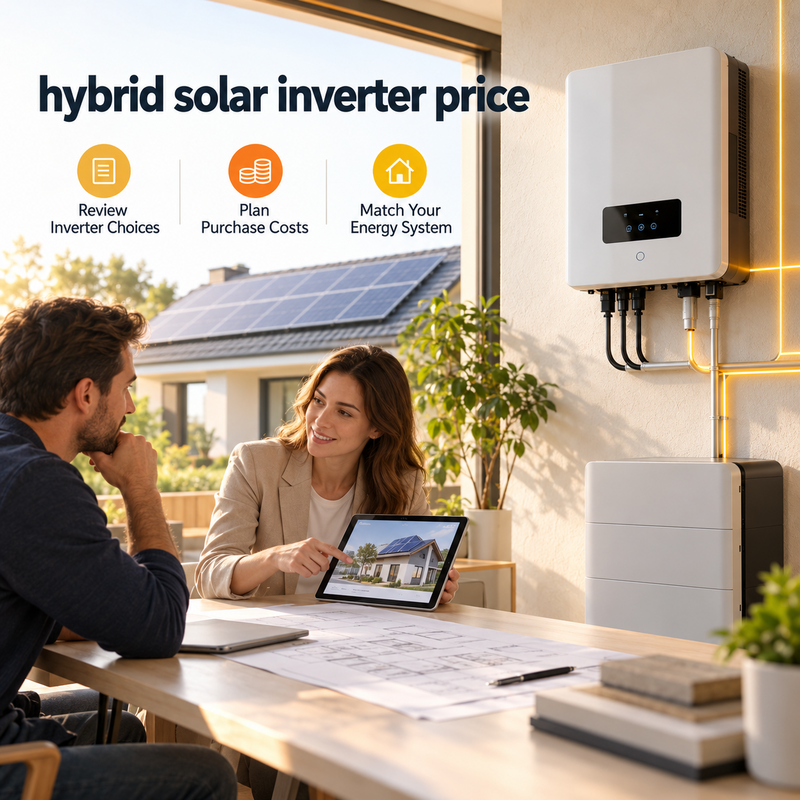
Hybrid solar inverters  are  essential components in  the transition to renewable energy systems, especially in  residential  and commercial applications. Understanding hybrid  solar inverter  prices  and their specifications is crucial for purchasing managers and project planners involved in  solar  energy  installations.  This  article  will guide you through selecting the right  hybrid solar inverter,  evaluating quality  for  bulk orders,  sourcing reliable products, and addressing common issues, empowering you to make informed purchasing decisions.

 
Evaluating the Quality of Hybrid Solar Inverters for Bulk Orders

Evaluating the Quality of Hybrid Solar Inverters for Bulk Orders

When ordering hybrid solar inverters in bulk, quality assurance is paramount. Start by  verifying  the manufacturer's certifications, such as  UN38.3 and CE, which indicate compliance with international safety and performance standards. These certifications  are critical for ensuring the reliability and safety of inverters.

Conducting quality inspections during  production is also advisable. Request samples before placing bulk orders to evaluate the inverter's performance, dimensions, and fit with  your existing systems.  Testing these samples under actual  operating conditions  can help identify any potential issues  early in the process.

Establishing clear specifications for  your order is essential. Provide the manufacturer with details  such as power output, efficiency,  and any special features you require.  This information will  help ensure  the products meet your expectations and reduce the likelihood of  defects.

Additionally, inquire about the manufacturer's  quality control processes. A  transparent process will likely indicate a commitment to producing high-quality products. Look for manufacturers who implement rigorous testing protocols, including electrical safety tests and  performance evaluations.

Where to Source Reliable Hybrid Solar Inverters for Your Projects

Sourcing reliable hybrid  solar inverters  requires thorough  research. Start by  identifying reputable manufacturers  known for their quality  products, such as Shenzhen Yanshuosheng Technology Co., Ltd. They specialize in LiFePO4 energy  storage systems  and have a track record of serving diverse markets,  including solar, RV, UPS, and marine applications.

Utilize industry trade  shows  and exhibitions to connect with manufacturers  and gain insights into  new technologies and products. These events also provide opportunities to ask direct questions and assess the manufacturer's capabilities firsthand.

Online platforms  and marketplaces can  also be useful for sourcing, but ensure you are dealing with verified suppliers. Look for reviews, testimonials, and case studies that showcase their previous work  and  customer satisfaction levels.

Lastly, consider local suppliers for faster  delivery  and easier communication. A local supplier may also assist you with installation and technical support, which can be invaluable if  issues arise during operation.

What to Know

Before making a  purchasing decision,  it’s crucial to understand the  implications of the  hybrid solar inverter price. Prices can vary significantly based on specifications, brand reputation, and  additional features. Generally,  investing in a higher-quality inverter may lead to better long-term  savings through improved efficiency and durability.

Additionally, consider the total cost of ownership, which includes installation,  maintenance,  and potential  warranty  costs.  In some cases, cheaper inverters may require more  frequent repairs or replacements, negatively affecting overall project costs.

Furthermore, be aware of the lead time for orders, especially when considering bulk purchases. Manufacturers may have varying  production  capacities, so confirming timelines upfront can  help in project planning and execution.

Lastly, keep an eye  on technological advancements in  the industry.  New features and improvements are continually being developed, which could influence your choice  of inverter and its pricing.

Common Problems with Hybrid Solar Inverters and Effective Solutions

Hybrid solar  inverters, while generally reliable,  can encounter common issues that buyers should be aware of. One  frequent problem is overheating, especially in high-load scenarios. To mitigate this, ensure proper  ventilation and consider inverters with built-in thermal management systems.


Another concern is  connectivity issues,  particularly with  smart inverters  that rely on internet connectivity for monitoring and control. Regularly updating firmware and ensuring a stable connection can help alleviate these problems.

Battery compatibility issues are also common. If your inverter is not  compatible with specific battery  types, such as LiFePO4, it may not function optimally. Always  confirm compatibility before finalizing your purchase  to avoid operational inefficiencies.


Finally, inverter performance degradation over time can affect energy  output. To combat this, implement  regular maintenance checks,  and consider manufacturers that provide warranties or  performance  guarantees. This proactive approach can help ensure long-term reliability and efficiency in your  solar power system.

How to Choose the Right Hybrid Solar Inverter for Your Needs

Selecting the right hybrid solar inverter involves several  critical considerations. First, assess  the inverter’s power rating, which should align with your energy consumption needs. Inverters are typically  rated in  kilowatts (kW), indicating the maximum load  they can handle. For instance, a household with significant energy requirements may need an inverter rated at 5-10  kW,  while smaller applications might require less.

Next, consider the inverter's efficiency rating, typically expressed as a percentage. Higher efficiency ratings mean less energy loss during conversion, which is vital for maximizing solar power utilization. An  inverter with an efficiency of 95% or higher  is generally preferred.


Moreover,  compatibility with your energy storage system is crucial. If  you are using LiFePO4 energy storage systems, ensure that the inverter supports this battery technology to optimize performance and safety. Additionally, evaluate features like  grid-tie capabilities and smart technology, which can enhance the system's functionality.

Lastly,  consider the inverter's  scalability for future energy needs.  If you plan to expand your  solar system, selecting an inverter that supports additional panels or batteries  will  save  you from having to upgrade your entire system later.

Get a Free Quote

Our representative will contact you soon.
0/1000