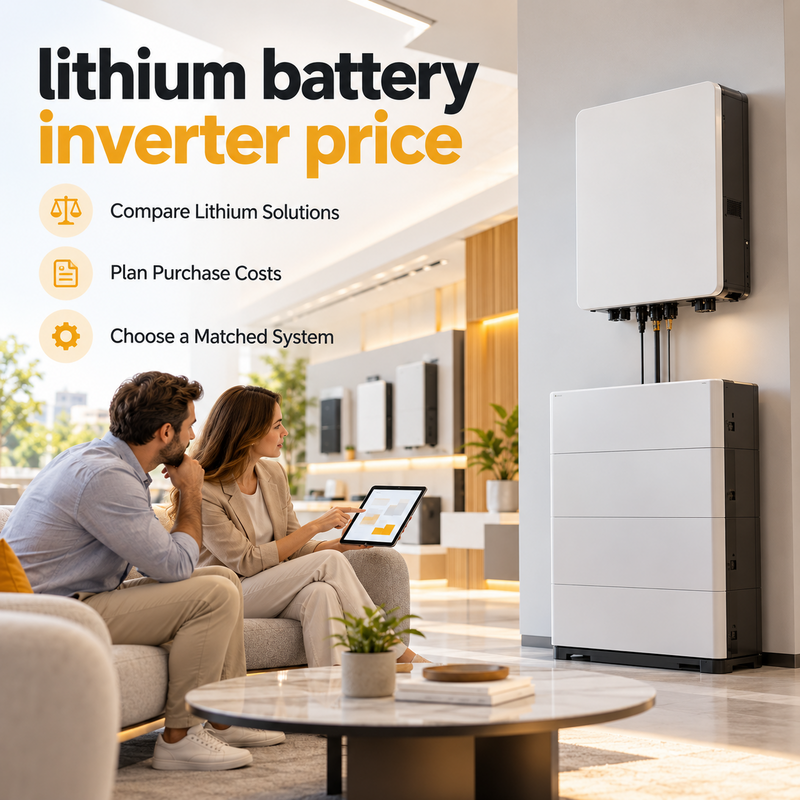
Understanding Lithium Battery Inverter Prices

5,000+ units ready stock, 1–5 days fast global delivery

application/lithium-battery-inverter-price, application/lithium-battery-inverter-price, 
Inquiry
Inquiry

lithium battery inverter price

Understanding the price of lithium  battery inverters is crucial for B2B buyers looking to invest in reliable energy storage solutions. These inverters  play a vital  role in converting DC power from  batteries to AC power for  various applications, including solar energy systems, RVs,  UPS, and marine setups. Buyers often have  concerns regarding specifications, quality, and overall cost. This article will provide  insights into lithium  battery  inverter prices, the  key specifications  to  compare,  cost factors influencing  prices, problem-solving tips  for common issues,  and  what to look for  when purchasing  inverters.

Key Specifications to Compare in Lithium Battery Inverters

Key Specifications to Compare in Lithium Battery Inverters

When evaluating lithium battery inverters, specific technical specifications are critical to ensuring the right fit for your application. Key specifications to  consider include:

Power Output: Measured in  watts, this indicates  the maximum  load  the inverter can  handle. It's essential to select an inverter with sufficient power output to meet the demands  of the connected devices.


Efficiency Rating: This metric shows how effectively the  inverter converts DC to AC power. Higher efficiency ratings mean less energy loss during the  conversion process, which can lead to  cost savings in  energy bills.

Input Voltage Range: This  specification defines the acceptable voltage range from the battery. It's vital to ensure compatibility with your  battery system.

Surge Capacity: This refers to the inverter's ability to handle short bursts of high  power, which is often necessary  for devices like  motors that require a higher startup current.

Certification Standards: Certifications such as UN38.3 and CE ensure  that the inverter meets safety and performance standards, which is especially important  for applications in sensitive environments.

Buyers should carefully evaluate these specifications to ensure  the inverter will perform adequately under their specific operating conditions.

Cost Factors Influencing Lithium Battery Inverter Prices

The pricing of  lithium battery inverters can be influenced by several factors:

Material Quality: High-quality components, such as durable casing and efficient circuit boards,  can increase production costs. However, investing  in better materials often leads to longer-lasting products with fewer maintenance needs.

Manufacturing Processes: Advanced manufacturing techniques and technologies can enhance production efficiency but may also raise costs. For  instance, inverters with  built-in battery management systems (BMS) may be more expensive due to the complexity of  their  design.

Volume of Purchase: As mentioned earlier, purchasing in bulk can lead to significant savings. Buyers should be aware that negotiating MOQs can result in better pricing  per  unit.


Brand Reputation:  Established manufacturers with  a solid  reputation in the industry often charge higher prices due to perceived quality and reliability. However, buyers should weigh the potential benefits  of brand reliability against their  budget  constraints.

Market Trends: Fluctuations in supply and demand, as well as changes  in raw material costs,  can also  affect inverter prices. Staying informed about market conditions can help buyers make timely purchasing decisions.


Problem-Solving Tips for Lithium Battery Inverter Issues

Despite their reliability, lithium battery inverters may encounter issues that require troubleshooting. Here are  some  common problems and solutions:

Overheating: This  can occur due to inadequate ventilation or  exceeding the inverter's  rated capacity. Ensure the inverter is installed in a well-ventilated area and check that the connected load  does not exceed  specifications.


Inverter Not Turning On:  This issue may stem from a low battery voltage or  connection problems.  Verify all connections  and ensure that the battery is sufficiently charged.

Poor Performance:  If  the inverter is  not producing the expected output, it may be due to improper settings or a faulty component. Regularly check the inverter settings and consult the  manufacturer’s guidelines for troubleshooting.

Frequent Shutdowns: This can be caused by overheating  or overloading. Regular maintenance and ensuring compliance with the inverter’s specifications can mitigate this issue.

Incorporating a proactive  approach to maintenance and understanding common problems can enhance  the longevity and performance of lithium battery inverters.


What to Look for When Buying Inverters

When purchasing lithium battery inverters, buyers should consider the following  aspects to ensure they make an informed decision:

Compatibility with  Existing Systems: Ensure the inverter is compatible with the existing battery and energy systems. Providing detailed  specifications of current systems can help suppliers recommend the most  suitable inverter.


Warranty and  Support:  A robust warranty and reliable customer support from the manufacturer can provide peace of mind. It's essential to understand the terms of warranty coverage and the availability of  technical support.

Customization Options: Depending on specific application needs,  buyers may require customization in terms of features or specifications.  Ensure to  discuss these requirements with the manufacturer to find suitable solutions.

Previous Performance Reviews: Researching reviews and performance data from other users can provide insights into the inverter's reliability and efficiency. This information can be particularly useful in avoiding  common pitfalls.

Quality Assurance Processes: Engage with manufacturers who maintain strict quality control  processes. This  ensures that  each  inverter meets industry standards and reduces the  risk of defects.

By focusing on these  considerations, buyers can enhance their purchasing  strategy and ensure  they select the best lithium battery inverter for their applications.

Understanding Lithium Battery Inverter Price for Wholesale Buyers

When considering the purchase of lithium battery inverters,  wholesale  buyers  typically focus on several factors that can significantly affect  the pricing. The average price range for  these inverters  varies based on specifications, brand reputation, and specific features. For instance, inverters designed for high-performance applications may  command higher  prices due to advanced technology, higher efficiency rates,  and enhanced  durability.

Moreover, wholesale buyers  should keep in mind that  minimum order  quantities  (MOQs) can impact total costs. Many manufacturers, including Shenzhen  Yanshuosheng Technology Co., Ltd., may offer better per-unit pricing for larger  orders. Understanding  the  market demand and expected applications can  help buyers negotiate better deals and ensure they are investing  in the right products for their needs.

Get a Free Quote

Our representative will contact you soon.
0/1000