200Ah Lithium Ion Battery Buying Guide

5,000+ units ready stock, 1–5 days fast global delivery

application/lithium-ion-battery-200ah, application/lithium-ion-battery-200ah, 
Inquiry
Inquiry

lithium ion battery 200ah

Lithium  ion batteries,  particularly  in the 200Ah capacity  range, have become vital components across various industries, including renewable energy, marine, RV, and backup  power  systems. As a B2B buyer,  understanding the  nuances of these batteries is crucial  for  ensuring  you  select the right product for  your  specific application. This article will help you  evaluate the quality of 200Ah lithium  ion  batteries, navigate cost factors for bulk  orders, understand  key specifications, identify common problems, and provide wholesale  purchasing tips.

Cost Factors for Bulk Orders of 200Ah Lithium Ion Batteries

Cost Factors for Bulk Orders of 200Ah Lithium Ion Batteries

The cost  of bulk orders for 200Ah lithium ion batteries can vary significantly based on several factors. One major consideration is the quantity ordered; larger orders often qualify for  volume discounts. It's essential to communicate your  expected  order  size when requesting quotes to  ensure accurate pricing.

Another cost factor is the specific features and customizations required. Batteries with advanced BMS technology or additional certifications may come at a premium. Be  clear about your  requirements to receive precise estimates.

Additionally,  shipping costs  can impact the overall  price. Consider  the delivery destination and any potential  import duties  or taxes that may apply. Partnering with  a  supplier experienced in  international  shipping can  help  you navigate these additional costs.

Key Specifications of 200Ah Lithium Ion Batteries for Buyers

When purchasing 200Ah lithium  ion batteries, certain specifications are critical to ensuring they meet your application  needs. Key  specifications to evaluate include:

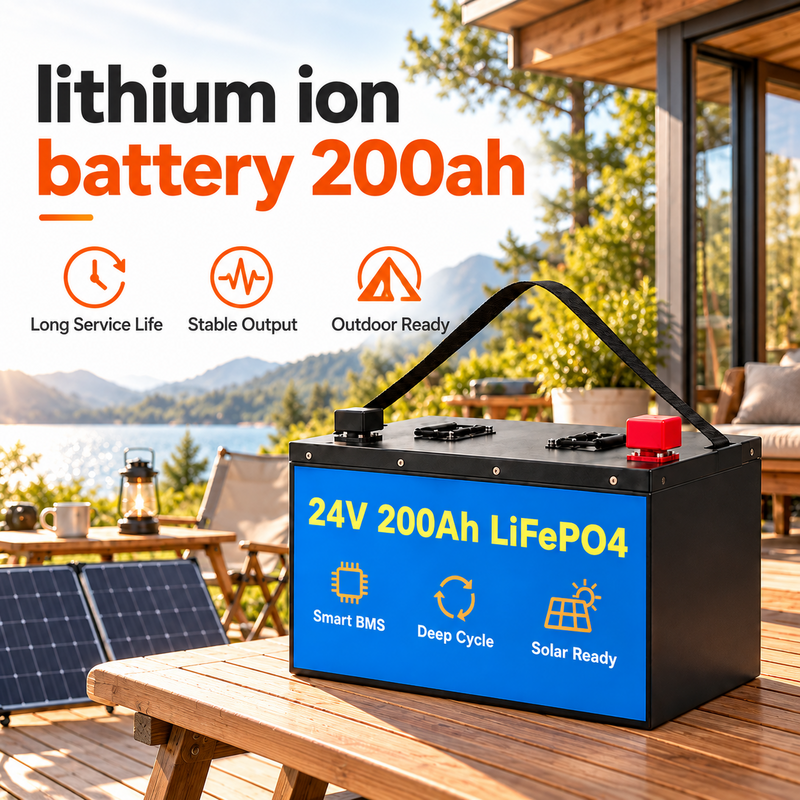
Voltage: Commonly, 200Ah lithium  ion batteries operate at a nominal voltage of 12V  or  48V. Ensure the voltage aligns with your system's requirements.

Cycle Life: This indicates  the number of charge-discharge cycles the battery can undergo  before its capacity significantly diminishes. Higher cycle  life ratings suggest better long-term performance.

Charging and Discharging Rates: Look for the C-rate, which  indicates how quickly the battery can be charged or discharged.  A higher C-rate allows for faster charging and discharging, which can be essential for  applications requiring rapid power delivery.


Temperature Range:  Confirm the operating temperature  range  of the battery. Batteries that can operate in a wider range of temperatures offer more versatility and  reliability in various environments.

Dimensions and Weight: Ensure the battery’s  physical dimensions and weight  are suitable for your intended application, as space and weight constraints can be significant factors  in many installations.

Common Problems with 200Ah Lithium Ion Batteries and Solutions

Despite  their advantages, 200Ah lithium  ion batteries  can present several common issues. One frequent problem is capacity fade, which  can occur due to improper charging practices or thermal management issues. To  mitigate this, ensure  your battery management system effectively regulates temperature and charging  cycles.

Another potential issue is cell imbalance, where  individual  cells within the battery pack charge and  discharge unevenly.  This can lead to reduced performance and lifespan. Regularly  monitor cell  voltages and consider using  a BMS with cell balancing features to maintain uniform charge levels.

Lastly, environmental  factors can  impact battery performance. High temperatures can  accelerate degradation, while extremely low  temperatures can reduce available capacity. Always  follow the manufacturer's guidelines for installation and  operation to minimize these risks.

Wholesale Purchasing Tips for 200Ah Lithium Ion Batteries

When preparing for wholesale purchases  of 200Ah lithium ion  batteries, there are several  key tips to enhance your procurement process:

Request  Detailed Quotations: Provide  potential suppliers with  comprehensive details about your requirements, including specifications, intended applications, and estimated order volumes. This allows them  to offer accurate quotes and relevant options.

Evaluate Supplier Experience: Look for manufacturers with proven experience in the lithium ion battery industry. Understanding their production capabilities, quality control measures, and customer support can  help you gauge their reliability.

Sample Testing: Before finalizing a bulk order, request samples for testing. This allows you to assess the battery's performance under real-world conditions and verify its compatibility with your systems.

Negotiate Terms: Don’t hesitate to negotiate payment and  delivery terms. Establishing  clear  terms can prevent misunderstandings  and ensure timely delivery of your order.

Post-Purchase Support: Inquire about post-purchase  support, warranty, and return policies. A  manufacturer that offers robust support can be invaluable  if issues  arise with your order.

By following these guidelines, you can successfully navigate the  complexities of purchasing 200Ah lithium ion batteries,  ensuring you select the  best  products for your business needs.

How to Evaluate the Quality of 200Ah Lithium Ion Batteries

When assessing the quality of 200Ah lithium ion  batteries, several factors should be considered. First, check for certifications such as UN38.3 and CE, which indicate compliance with international  safety and performance standards. A reputable manufacturer  will provide documentation to assure you  of  the  battery's  safety and reliability.


Next, examine the Battery Management  System  (BMS). A robust BMS is essential for optimizing battery performance, enhancing lifespan, and ensuring safety by preventing overcharging  and deep discharging.  Look  for  features like thermal management, cell balancing, and fault detection.

Lastly,  consider the manufacturing process and  materials used. High-quality lithium ion batteries typically utilize lithium iron phosphate (LiFePO4) technology for better  thermal  stability and longer  cycle life. Investigate the manufacturer’s production capabilities and quality control processes to ensure  consistency in battery performance.

Get a Free Quote

Our representative will contact you soon.
0/1000