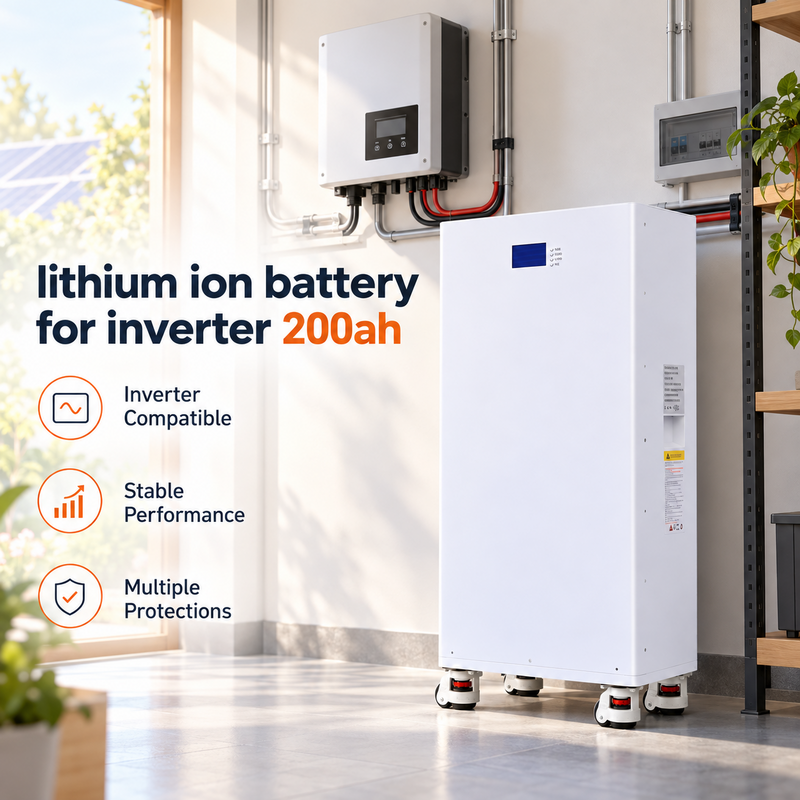
Choosing a 200Ah Lithium Ion Battery for Inverters

5,000+ units ready stock, 1–5 days fast global delivery

application/lithium-ion-battery-for-inverter-200ah, application/lithium-ion-battery-for-inverter-200ah, 
Inquiry
application/lithium-ion-battery-for-inverter-200ah, application/lithium-ion-battery-for-inverter-200ah, 
Inquiry

lithium ion battery for inverter 200ah

Choosing the  right lithium ion battery for  inverter  applications  can significantly impact the efficiency  and reliability  of energy  storage  systems. A  200Ah lithium ion battery is particularly  popular  for its  capacity, making it suitable for various applications, including solar energy systems, RVs,  UPS, and  marine uses.  This article  will  explore key considerations  for selecting a 200Ah lithium ion battery for inverters,  helping purchasing managers, engineers, and product managers make informed decisions based on  practical insights.

Where to Find Reliable Suppliers of 200Ah Lithium Ion Batteries

Where to Find Reliable Suppliers of 200Ah Lithium Ion Batteries

Finding  a dependable  supplier for  200Ah lithium ion batteries is critical  for ensuring quality  and  service.

Industry Trade Shows:  Attending industry-specific trade shows and exhibitions can provide opportunities  to meet manufacturers and suppliers face-to-face, allowing for direct  assessment of product quality and capability.

Online  Marketplaces and Directories:  Platforms such as Alibaba and ThomasNet can be useful for identifying potential suppliers. Look  for those with positive reviews and a proven track record in the industry.

Manufacturer  Websites: Directly visiting  manufacturer websites, like  Shenzhen  Yanshuosheng  Technology Co., Ltd., can provide insights  into their product offerings, certifications, and technical support capabilities.

Networking and Referrals: Leverage industry connections or forums to gather  recommendations on reliable suppliers. Personal referrals  often lead to trustworthy sources that others in the industry have vetted.

Evaluating the Quality of 200Ah Lithium Ion Batteries for Your Projects

Quality assessment is crucial when sourcing 200Ah lithium ion batteries. Here  are key evaluation criteria:

Material Quality: Examine  the materials used in the battery's  construction.  High-quality cells and components  are essential for ensuring performance and longevity. Inquire about the  sourcing  of materials and manufacturing practices.

Testing and Quality Control: Confirm that the supplier has rigorous quality control processes in  place. This  may  include testing for capacity, cycle life, and safety checks before shipping.

Sample Testing: Request  samples  before  placing bulk orders. Testing samples under  actual operating conditions ensures the battery meets  specific performance requirements and compatibility with  your systems.

Customer Feedback  and Case Studies: Look for customer testimonials  or case studies that  demonstrate the battery's performance in similar applications. This can provide insights into reliability  and overall satisfaction.

Cost Factors Involved in Sourcing 200Ah Lithium Ion Batteries

Understanding the cost factors  associated with sourcing  200Ah lithium ion batteries  is vital for budgeting and cost management.

Unit Price vs. Total  Cost of  Ownership: While  it may be tempting to choose the lowest-priced option,  consider the  total cost of  ownership, which includes installation, maintenance, and lifecycle costs.  Higher-quality batteries may offer better performance and  longevity, ultimately leading  to  cost savings.

Customization Fees: If customization is required to fit specific applications, be sure to factor in any  additional costs associated with modifications to the battery design or specifications.

Shipping  and Handling Fees: Depending on the supplier's location and the shipping method chosen, costs can vary significantly. Clarify shipping terms upfront to avoid unexpected expenses.

Minimum Order Quantity (MOQ): Some suppliers  may have a minimum order  requirement, which can impact overall costs. If your needs are  seasonal  or variable,  negotiating MOQ terms can be beneficial.

Common Problems with 200Ah Lithium Ion Batteries and Their Solutions

While 200Ah lithium ion batteries are  widely used, they can encounter issues. Here are common problems and their solutions:

Temperature Sensitivity: Batteries can be sensitive to temperature extremes. Ensure proper thermal management systems  are  in place to maintain optimal operating temperatures, which helps  prevent performance degradation.

Cycle  Life Degradation: Over-discharge or improper charging  can reduce the battery's cycle life. Implementing Battery Management Systems (BMS) can help monitor and manage charge levels, protecting the battery from  harmful conditions.

Cell Imbalance: This can occur when  individual cells within the battery pack have different charge levels, leading to reduced capacity and efficiency. Regular balancing and monitoring through  a BMS can mitigate this  issue.


Aging and Capacity  Loss: Over time, batteries will naturally degrade. Understanding the expected lifespan and planning for  replacement  cycles is important for maintaining system reliability.

In summary, selecting the right  200Ah lithium ion battery for inverters  involves careful consideration of specifications, supplier reliability, quality assessment, cost factors, and common issues. By  addressing these  elements, purchasing managers and engineers  can ensure  they make informed decisions that lead to successful applications in energy storage systems.

What to Consider When Choosing a 200Ah Lithium Ion Battery for Inverters

When selecting a  200Ah lithium ion battery for inverter use, several factors need to be considered to ensure  optimal performance and longevity.

Battery Chemistry: Lithium iron phosphate  (LiFePO4)  batteries are often preferred for their thermal stability and safety.  They offer a longer cycle life compared to traditional lithium-ion  batteries, making them an ideal choice for applications requiring consistent energy supply.

Depth of  Discharge (DoD): Understanding the DoD is crucial as it affects the battery's lifespan and performance. A battery with a  higher  DoD allows for more usable capacity, which is essential in applications like solar  energy systems where  maximum efficiency is desired.

Charging and Discharging Rates: Evaluate the battery's C-rate, which indicates how quickly it can be charged and discharged. A higher C-rate is beneficial for applications that require  rapid energy delivery or frequent cycling.


Compatibility with Inverter  Systems: Ensure that the battery's voltage and discharge characteristics are compatible with the inverter system. Mismatched voltage  levels can lead to inefficiencies or damage to components.


Certification and Safety Standards:  Look for batteries that have certifications such  as UN38.3 and CE. These certifications are  indicators of safety and compliance with international standards, providing  assurance of quality and reliability.

Get a Free Quote

Our representative will contact you soon.
0/1000