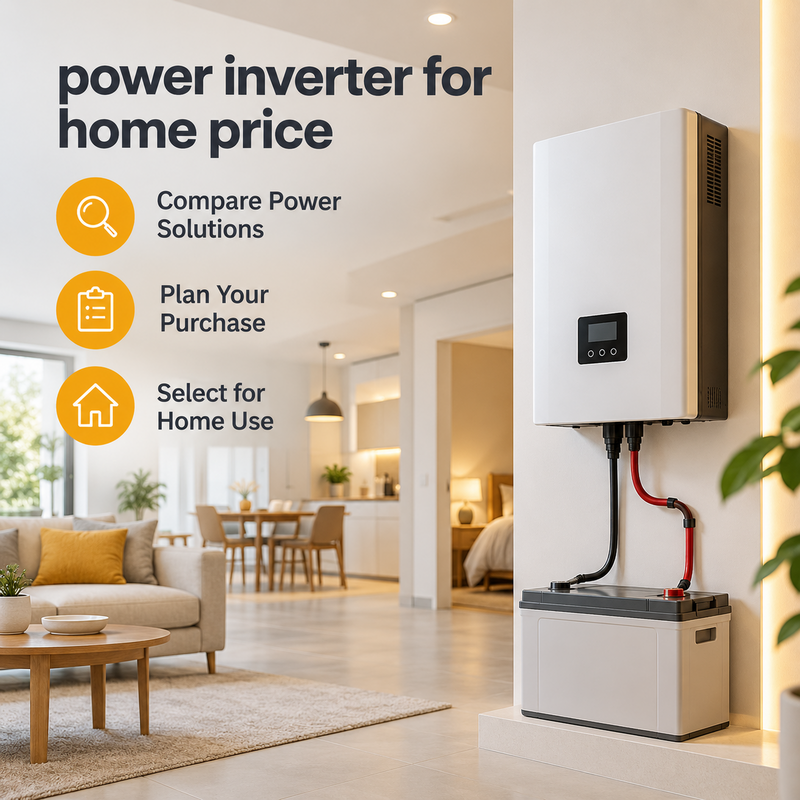
Power Inverter Prices for Home Use Explained

5,000+ units ready stock, 1–5 days fast global delivery

application/power-inverter-for-home-price, application/power-inverter-for-home-price, 
Inquiry
Inquiry

power inverter for home price

When considering a power&nbps; inverter for home use,  price is a crucial  factor that can significantly influence your decision. Power inverters  convert DC power from batteries into AC power, enabling you to  run household appliances  during power outages or off-grid  situations. As  a B2B buyer, your  primary concerns may include performance, reliability,  and  long-term value. This article will  guide you through essential  aspects  to consider when evaluating  power inverter  prices  for  home use, helping  you make an informed purchasing  decision.

How to Choose the Right Power Inverter for Your Home's Needs

How to Choose the Right Power Inverter for Your Home's Needs

Choosing the right power inverter requires a clear understanding of your power requirements. Start by calculating the  total wattage needed  for the appliances you  plan to run. This includes essential devices like refrigerators, lights, and electronics. It's wise to consider peak wattage,  which often exceeds normal running watts, especially for appliances with motors.

Once you have  a wattage figure, select an inverter with a  power rating that comfortably exceeds your calculated needs. For example, if your total appliance wattage is 2000  watts, consider an inverter  rated for at least 2500 watts to  account for  surges.

Additionally, consider the  inverter's features. Look for models  with  built-in protection mechanisms such as overload, short circuit, and overheating protection. These features enhance reliability and  safety, minimizing risks during operation. Opting for a power inverter that includes advanced battery management  systems (BMS)  can also improve battery life and performance,  particularly  for those using LiFePO4 batteries, which are known for  their  efficiency and longevity. For instance, you might explore options like Deep Cycle 12V 24V 50Ah 100Ah 200Ah LiFePO4 Lithium Ion Solar Energy Battery Storage Systems With BMS.

Key Specifications to Evaluate in Home Power Inverters

When evaluating home power inverters, several key specifications should guide your decision:

Power Output: Expressed in  watts, this determines the  maximum load the inverter can handle. Ensure it meets your needs.

Waveform Type: Pure sine wave inverters are ideal for sensitive electronics,  providing clean power. Modified sine wave inverters are cheaper  but may be unsuitable  for certain devices.

Efficiency Rating:  Higher efficiency ratings (typically above 90%) reduce energy waste and lower operating costs.

Input Voltage:  Ensure the inverter’s input voltage  matches your battery system (e.g., 12V, 24V).  Compatibility is crucial for performance.

Protection Features:  Look for built-in  protections such as over-voltage, under-voltage, overload, and short-circuit protection to enhance safety.

Size and Weight: Consider the  physical dimensions  and weight of the inverter, especially if space is limited  or if you  need  to transport it frequently.

By  focusing on these specifications, you can better assess the suitability of a power inverter for your home’s specific requirements.

Ensuring Reliability

Reliability is paramount when  selecting a power inverter. A reliable inverter minimizes the risk of malfunctions during  critical times, such as power outages.  To  ensure reliability, consider the manufacturer's reputation and history in the industry. Companies like Shenzhen Yanshuosheng Technology Co.,  Ltd., known for  their robust  manufacturing  processes and quality control systems,  often produce more  dependable products.

It's also beneficial  to read customer reviews and testimonials. These firsthand  accounts can provide insights  into the  inverter's  performance under real-world conditions. Look for  feedback regarding durability, ease of installation, and customer service experiences.

Additionally, ensure the inverter  you choose complies with relevant safety standards and has  received essential certifications.  This compliance not only assures quality but also provides peace of mind regarding the product’s reliability.

Understanding the Advantages of LiFePO4 Batteries in Power Inverters

LiFePO4 (Lithium Iron Phosphate) batteries offer several  advantages when used  with power inverters, particularly for home applications. These batteries provide high energy density, allowing for more power storage in a  smaller footprint. This  is especially beneficial for residential setups where space may be limited.

One of the key benefits of LiFePO4 batteries is their longevity. They typically have a lifespan of 2000-5000 cycles, significantly outlasting traditional lead-acid batteries, which often only last for 500-1000 cycles. Consequently, while the initial investment in LiFePO4 batteries may be higher, their extended life can lead to lower total cost of ownership.

Furthermore, LiFePO4  batteries have a stable chemical structure,  making  them safer and less prone to overheating or thermal runaway  compared to other lithium-ion battery technologies.  This safety  aspect is crucial when integrating batteries with power  inverters, as it reduces the risk of fire hazards.

In  summary, when considering power inverter for home price, it's essential to factor in  the compatibility and benefits of LiFePO4 batteries. Their efficiency, longevity, and safety make them  an excellent choice for powering home inverters,  providing  both reliability and value over  time.

By understanding these  critical aspects, B2B buyers can make informed decisions that align with their specific power needs and budget considerations.

What to Consider When Comparing Power Inverter Prices for Homes

When comparing prices for power inverters, it’s essential  to consider a range of factors beyond just the upfront cost. First, assess the inverter's power  rating,  measured in watts, which determines how  much  load it can handle. Look for inverters that match or exceed your home's total wattage needs to ensure reliable performance.

Next, consider the type of inverter: pure sine wave inverters are more expensive than modified sine  wave models but provide cleaner power suitable  for sensitive  electronics. Additionally, check the inverter's efficiency rating,  which impacts energy  consumption and operational costs over time. A higher efficiency  rating means  less energy loss during conversion, ultimately leading to savings  on your energy bills.

Lastly, don't overlook  warranty and  support services. A longer warranty period typically indicates greater confidence from the manufacturer in the product's durability and performance. Look for  a company like  Shenzhen Yanshuosheng  Technology Co., Ltd., which offers reliable support and products with certifications such as UN38.3 and CE, ensuring compliance with international safety standards. For example, consider their High Performance 50Ah LiFePO4 Lithium Ion Battery Pack Deep Cycle 12V High Efficiency Lithium Iron for enhanced reliability.

Get a Free Quote

Our representative will contact you soon.
0/1000