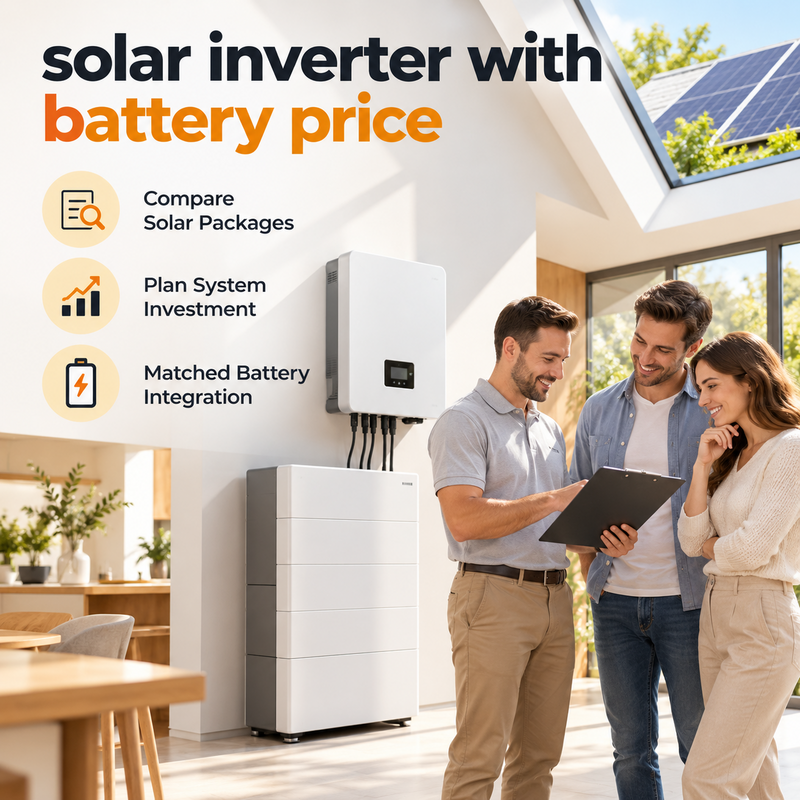
Solar Inverter with Battery Price Insights

5,000+ units ready stock, 1–5 days fast global delivery

application/solar-inverter-with-battery-price, application/solar-inverter-with-battery-price, 
Inquiry
Inquiry

solar inverter with battery price

In the evolving  landscape of energy solutions, solar inverters with battery storage are becoming  essential  for businesses  and industries seeking reliable,  sustainable energy  sources. The price  of solar inverters with battery options can vary significantly, influenced by factors  such  as capacity,  technology, and features. For purchasing managers and  engineers, understanding these  factors  is crucial for making informed decisions. This article  will delve  into the key specifications,  purchasing  tips, reliable suppliers,  installation guidance, and criteria for selecting the right solar inverter with  battery storage for your  projects.

Wholesale Purchasing Tips for Solar Inverters with Battery Systems

Wholesale Purchasing Tips for Solar Inverters with Battery Systems

When purchasing solar inverters with  battery systems in bulk, consider the following tips:

Research Suppliers:  Identify suppliers with a  strong  reputation  in the industry. Look for manufacturers with a track record of quality production and positive  customer feedback. This can help mitigate risks associated with  purchasing.

Request Samples: Before committing to a large order, always request  samples. This allows you to assess product quality, check specifications, and confirm compatibility with your existing systems.

Negotiate Pricing: Engage in  discussions about bulk pricing. Many manufacturers  are open to negotiation,  especially for large orders. Understand the factors that influence pricing, such as order quantity, customization, and shipping logistics.

Check Minimum Order Quantities  (MOQ): Be aware of the MOQ  set by suppliers. Understanding this will help  you plan  your purchasing strategy effectively.

Evaluate After-Sales Service: Ensure  the supplier offers comprehensive after-sales support,  including warranty service, technical assistance, and replacement  parts. This can significantly affect the long-term reliability of  your energy  system.

Where to Find Reliable Suppliers for Solar Inverters with Batteries

Finding reliable suppliers is crucial for sourcing solar inverters with battery  systems. Here are some strategies:

Industry Trade Shows: Attend renewable energy and technology  trade shows. These events provide opportunities to meet manufacturers, view  products firsthand,  and  establish direct relationships.

Online Platforms: Utilize B2B marketplaces like Alibaba, ThomasNet, or Global  Sources. These platforms allow  you  to compare multiple suppliers, read  reviews, and check product specifications.

Professional Networks: Leverage industry connections and professional networks. Recommendations from colleagues or industry  peers can lead you to reputable suppliers.

Manufacturer Websites: Explore the websites of  manufacturers  specializing  in solar  technology. Look for detailed product information,  certifications, and case studies to  assess their expertise.

Local Distributors: Consider  local distributors who  may offer additional support and faster shipping times. They can also  provide insights  into regional regulations and market demands.

Installation Guidance for Solar Inverters with Battery Systems

Proper installation of solar inverters with battery systems is essential for optimal performance. Here are some  guidelines:

Professional Installation: It is highly recommended to hire  certified  professionals for installation.  They possess  the expertise to  ensure compliance with electrical codes and safety standards.

Site Assessment: Conduct a thorough site assessment to determine the best  location for the inverter and batteries.  Consider  factors such as sunlight exposure, accessibility, and proximity to  the main electrical  panel.

Wiring and Connections: Ensure that all wiring  meets  local electrical codes. Use appropriately rated cables and connectors to prevent potential overheating or failures.

Battery  Placement: Install batteries in a well-ventilated area  to prevent overheating. Ensure they are securely mounted and protected from environmental factors.

System Testing: After installation, conduct a comprehensive test  of the system to confirm that all components are functioning correctly.  Check voltage  levels, battery  charge times, and inverter performance under  load.

How to Choose the Right Solar Inverter with Battery for Your Projec

Selecting  the  right solar inverter with battery storage for your project involves careful consideration of several factors:

Project Requirements: Begin by defining your energy needs. Calculate the total energy consumption and  identify peak usage times to determine the required inverter capacity.

Battery Technology:  Choose the appropriate battery technology  based on your project’s requirements. LiFePO4 batteries, for  example, offer longer lifespans and enhanced safety compared to traditional lead-acid batteries.


Scalability: Consider future  energy needs  and whether the inverter can be  expanded or easily  integrated with additional batteries or solar panels.

Budget Constraints: Balance your budget with the desired features and specifications. While lower-priced options might be  tempting, they could lead to higher operational costs or shorter  lifespans.

Local Regulations: Check for any local regulations or incentives related to  solar energy installations. Compliance with these regulations is vital for  project approval and can influence overall costs.

By understanding  these critical aspects, B2B buyers can make  informed decisions when sourcing solar inverters with battery storage,  ensuring  effective energy  solutions that meet their operational needs.

Key Specifications for Solar Inverters with Battery Options

When evaluating solar inverters  with battery storage, several key specifications should be prioritized:

Power Rating (kW):  This indicates the maximum output  power of the inverter. It is critical  to align the power rating with your  energy consumption needs. An inverter  with  inadequate power  will lead to insufficient energy supply.

Battery Compatibility: Ensure that the inverter is compatible with the specific  battery technology you  intend to use, such as LiFePO4, which is known for its  safety and efficiency. Compatibility affects charge/discharge efficiency and overall system performance.

Efficiency Rating: Look for inverters with high efficiency ratings (typically above 90%). Higher efficiency means less energy loss, allowing for better utilization  of solar energy.

Input/Output  Voltage: Verify that the inverter’s voltage specifications match your solar panel and battery systems.  Mismatched voltages can lead to operational issues and potential damage.

Safety Certifications: Ensure the product has the necessary certifications such as UN38.3 and CE. This guarantees  compliance  with international  safety standards, crucial for both legal and  operational assurance.

Warranty and Support: A robust warranty period indicates the manufacturer’s confidence in their product. Check  for customer support options as well, which can be vital for  troubleshooting and maintenance.

Get a Free Quote

Our representative will contact you soon.
0/1000