Choosing Solar Power Batteries for Home Use

5,000+ units ready stock, 1–5 days fast global delivery

application/solar-power-batteries-for-home, application/solar-power-batteries-for-home, 
Inquiry
Inquiry

solar power batteries for home

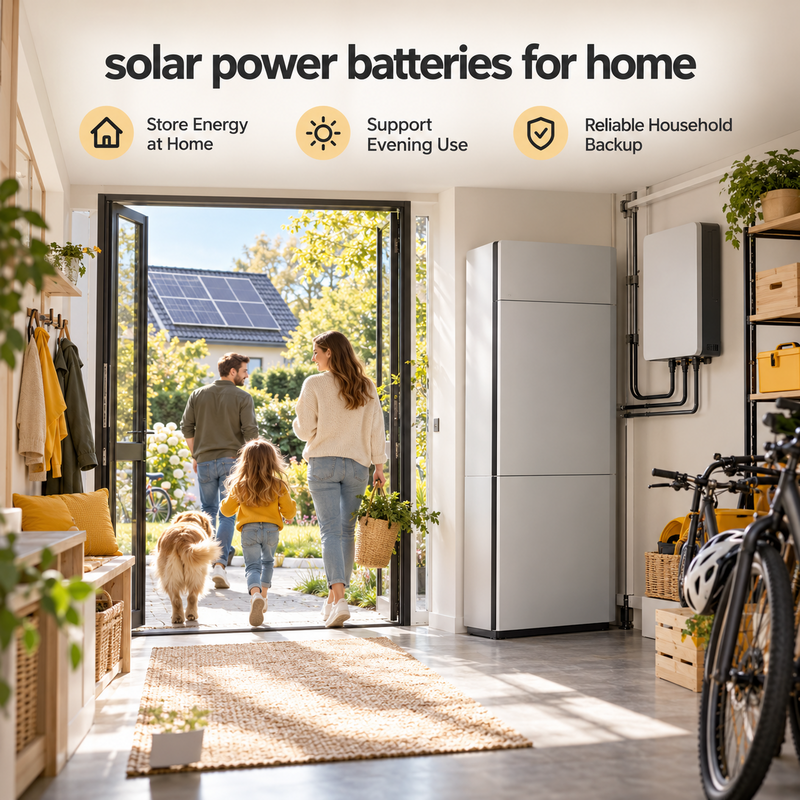
As  the demand for renewable energy solutions  continues to rise, solar power batteries  for  home  applications  have become essential for  homeowners  looking to maximize  energy efficiency and reduce reliance  on the grid. These  batteries store excess solar energy generated during the day, allowing households  to use  it during nighttime or cloudy  days. For purchasing managers, distributors, and engineers, understanding the  specifications, quality,  and installation requirements of these  batteries is crucial for making informed decisions. This article will help  you  navigate the key considerations involved in selecting the right solar  power batteries for home use.

Key Specifications to Consider for Solar Power Batteries for Home

Key Specifications to Consider for Solar Power Batteries for Home

When reviewing  solar power batteries, several specifications should be prioritized:

Capacity:  Measured in  kWh, this determines how much energy  the battery can store. For example, a household that consumes 30  kWh per day would require a battery system capable of storing at least that amount to  cover nighttime usage.

Depth of Discharge (DoD):  This indicates how much of  the  battery’s capacity can  be used. A higher DoD means that a larger portion  of the battery's energy can be utilized, which is essential for maximizing energy efficiency.

Cycle Life: This refers to the number of  charge and discharge cycles a battery can endure before its capacity  significantly degrades. LiFePO4 batteries often offer a cycle life of 2000 to 5000 cycles, making them a durable choice for  residential applications.


Efficiency: Look  for batteries with high round-trip efficiency rates, which indicate how much energy is lost during the charge  and discharge cycles. Higher  efficiency  translates to better energy savings.

Certifications: Ensure that the batteries have necessary certifications, such as  UN38.3 and CE, which indicate compliance with safety and performance standards.

How to Evaluate the Quality of Solar Power Batteries for Home

Quality assessment for solar  power batteries involves several steps. First, verify the manufacturer's reputation and experience in the industry. Companies like  Shenzhen Yanshuosheng Technology Co., Ltd., with independent  Battery  Management Systems (BMS)  and relevant certifications, provide assurance of product reliability.

Next, examine the materials used in the battery construction.  LiFePO4 batteries are  preferred for their safety and  longevity compared to other lithium technologies.  It's  also advisable to  request samples and conduct thorough testing under actual operating conditions to evaluate performance  and reliability.

Lastly,  ensure that  the manufacturer has a robust quality control process in place. This  may include  checks for  electrical performance, thermal stability, and adherence  to international  standards during  production.

Cost Factors to Consider When Purchasing Solar Power Batteries

The cost of  solar  power batteries can vary  significantly based  on several factors. First, the battery type plays a crucial role. LiFePO4 batteries typically have a higher upfront cost but offer longer lifespan and lower maintenance costs, making them  more economical in the long run.

Second, capacity and specifications will directly affect pricing. Higher capacity  batteries  with advanced  features like integrated BMS and  higher  efficiency ratings will generally come at a premium.

Third, consider the  overall installation and  integration costs. This includes labor, additional components like inverters, and any  necessary permits. It’s often beneficial to request a detailed quote  from suppliers, breaking down each cost component  to allow for  better budgeting.

Lastly,  don't overlook the potential for government incentives or rebates  designed to encourage renewable energy adoption,  as these  can significantly offset initial costs.

Installation Guidelines for Solar Power Batteries in Residential Settings

Proper installation of solar power batteries is  critical for optimal performance and safety. First, ensure that the  installation site  is suitable, typically a dry, well-ventilated  area  that is  easily accessible for maintenance. The installation should also comply with local building codes and regulations.

Next, consider the battery's orientation and how it connects to the solar panels and inverter. Working with an experienced installer  familiar with the specific battery technology you choose can minimize errors  and ensure  all components function efficiently together.

Finally, after installation, conduct a thorough system check to confirm that  all connections are  secure and that the  battery is charging properly. Regular maintenance checks will help identify  any issues early, ensuring that the  system remains efficient and reliable over time.


By understanding these aspects, buyers can  confidently select and  install solar power  batteries for home applications,  ensuring energy independence and  sustainability for their households.

Choosing the Right Solar Power Batteries for Home Applications

When selecting solar power batteries for home applications, several  factors should  guide  your decision. Primarily, the type of battery  technology matters significantly. Lithium Iron Phosphate  (LiFePO4)  batteries, for instance,  are known for their  thermal stability, safety, and longer lifecycle compared to traditional  lead-acid batteries. This makes them  an optimal  choice for residential energy storage.

Additionally,  consider the battery capacity, measured in kilowatt-hours (kWh). This specification indicates how  much energy  the battery can  store and subsequently provide. Homeowners typically require a battery  system that can meet their energy needs during peak hours. A deeper  understanding of your household’s energy  consumption can help in choosing the right capacity.

Lastly, it's  important to evaluate the compatibility of the batteries with existing solar  systems and inverters. Ensuring that the components work seamlessly together will lead to efficient energy management and reduced installation issues.

Get a Free Quote

Our representative will contact you soon.
0/1000