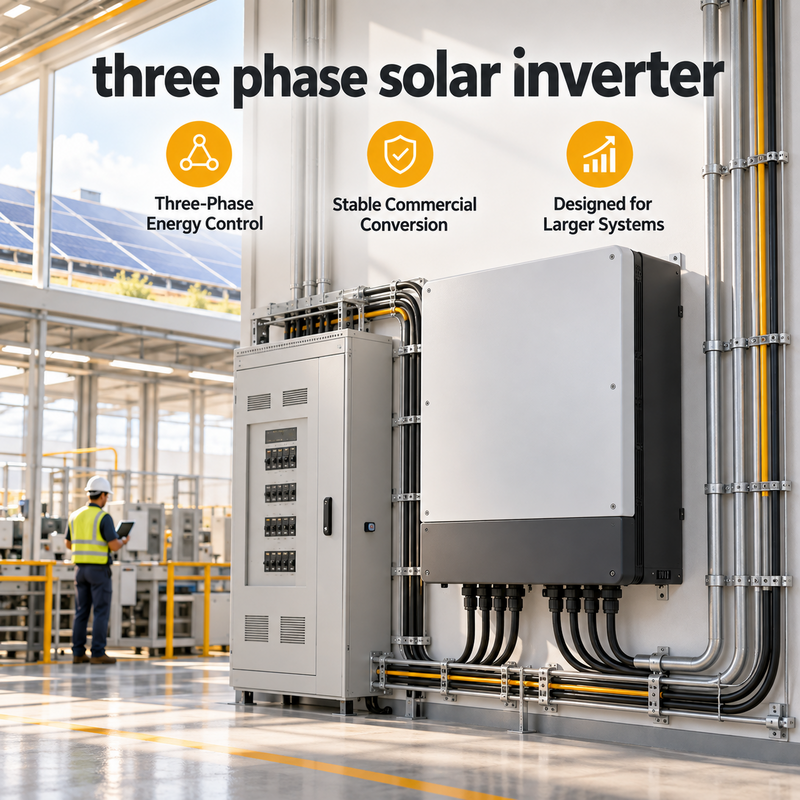
Understanding the Advantages of Three Phase Solar Inverters in Energy Systems
Three-phase solar inverters offer several advantages that make them ideal for large-scale energy systems. One of the primary benefits is their ability to handle higher power outputs, making them suitable for commercial and industrial applications where energy demands are significant.
Moreover, three-phase systems provide better voltage stability and reduced harmonic distortion, leading to improved overall system performance and reliability. This stability is crucial for sensitive equipment and can minimize downtime caused by power quality issues.
Another advantage is the scalability of three-phase systems. As energy needs grow, additional solar panels can be integrated without major system overhauls, allowing for future expansion.
In addition, many three-phase inverters come equipped with advanced features such as smart grid compatibility, enabling better integration with renewable energy sources and energy storage systems. This integration facilitates a more efficient and resilient energy system, paving the way for sustainable energy solutions in various applications.
By understanding these specifications, quality indicators, installation considerations, cost factors, and advantages, B2B buyers can make informed decisions when sourcing three-phase solar inverters that best meet their energy needs.
 EN