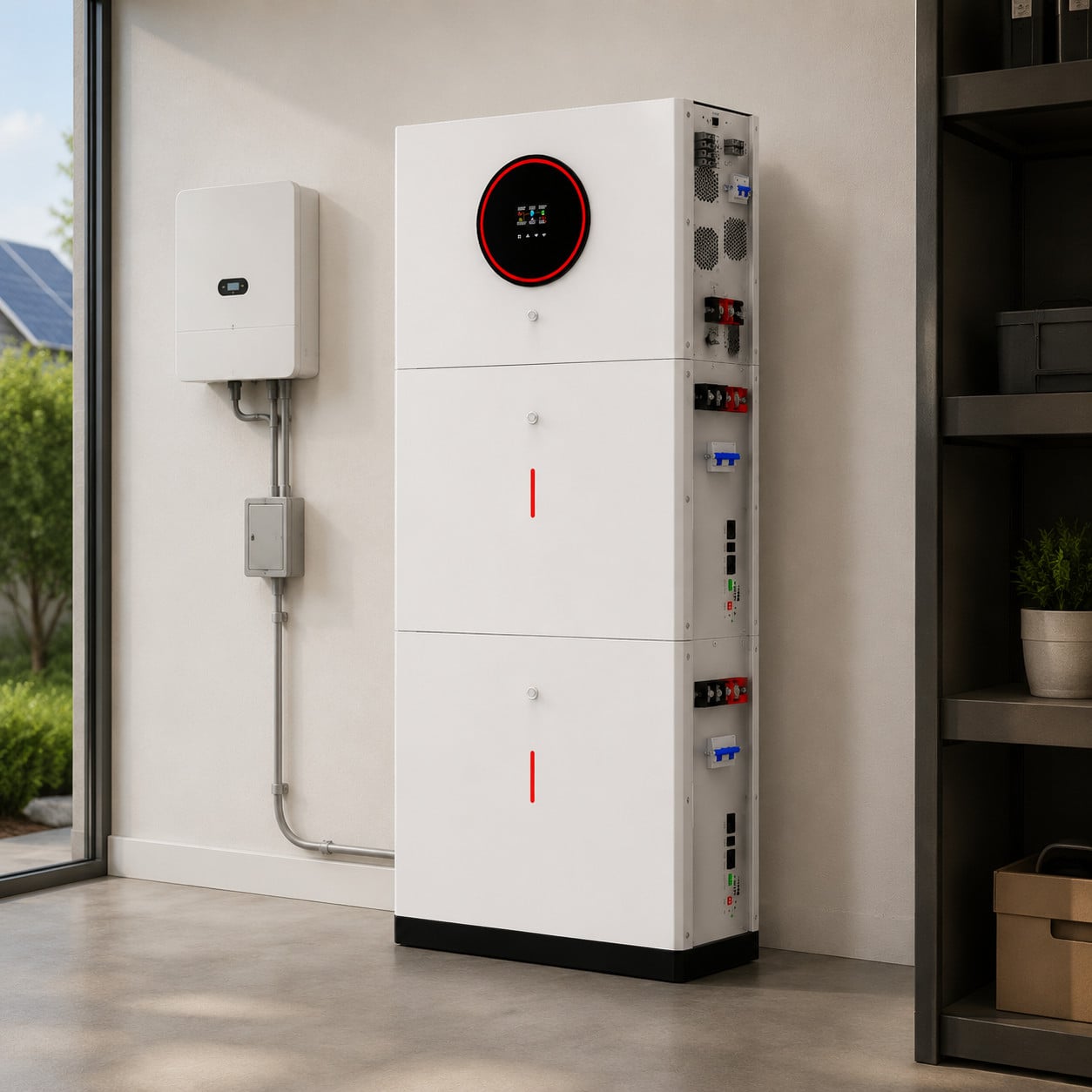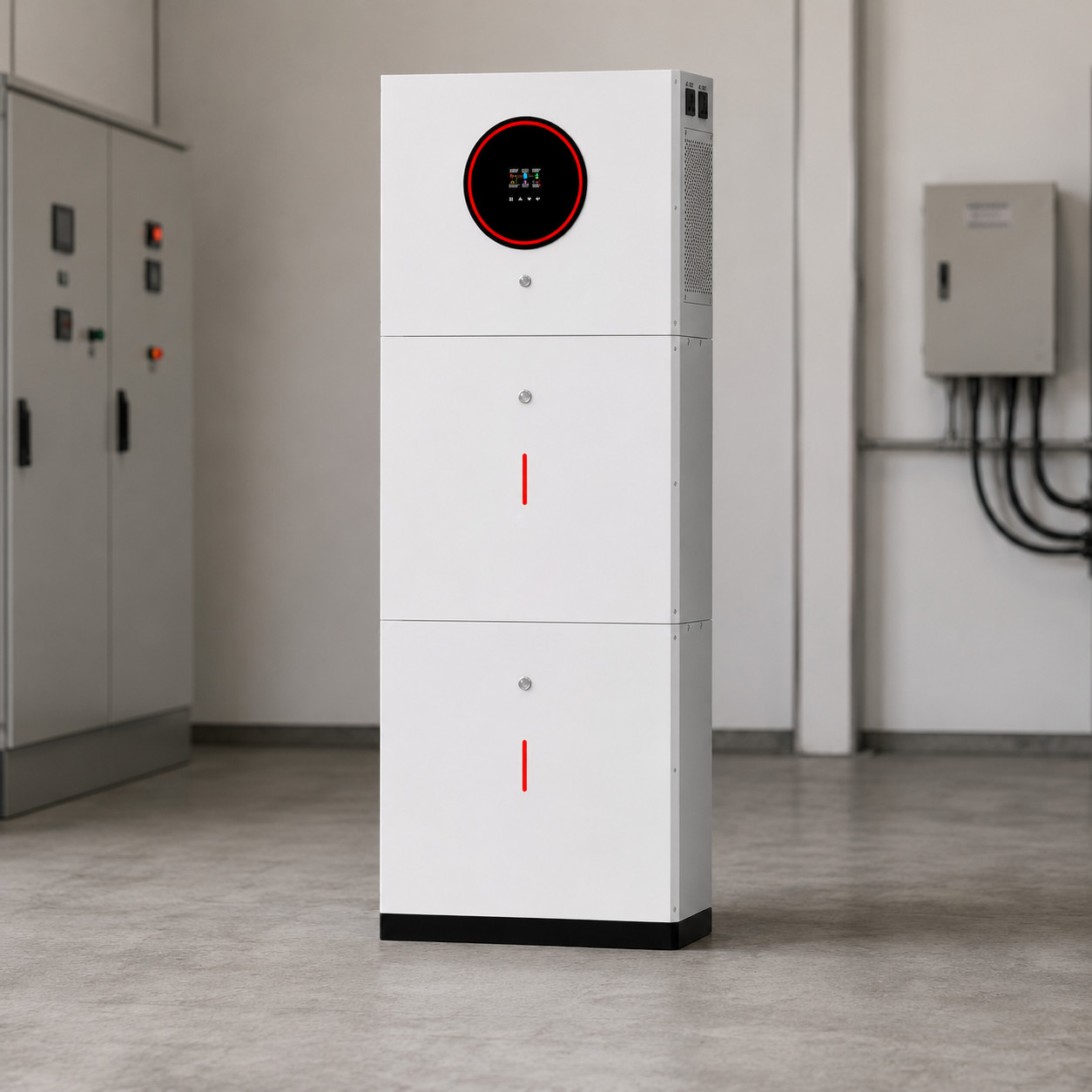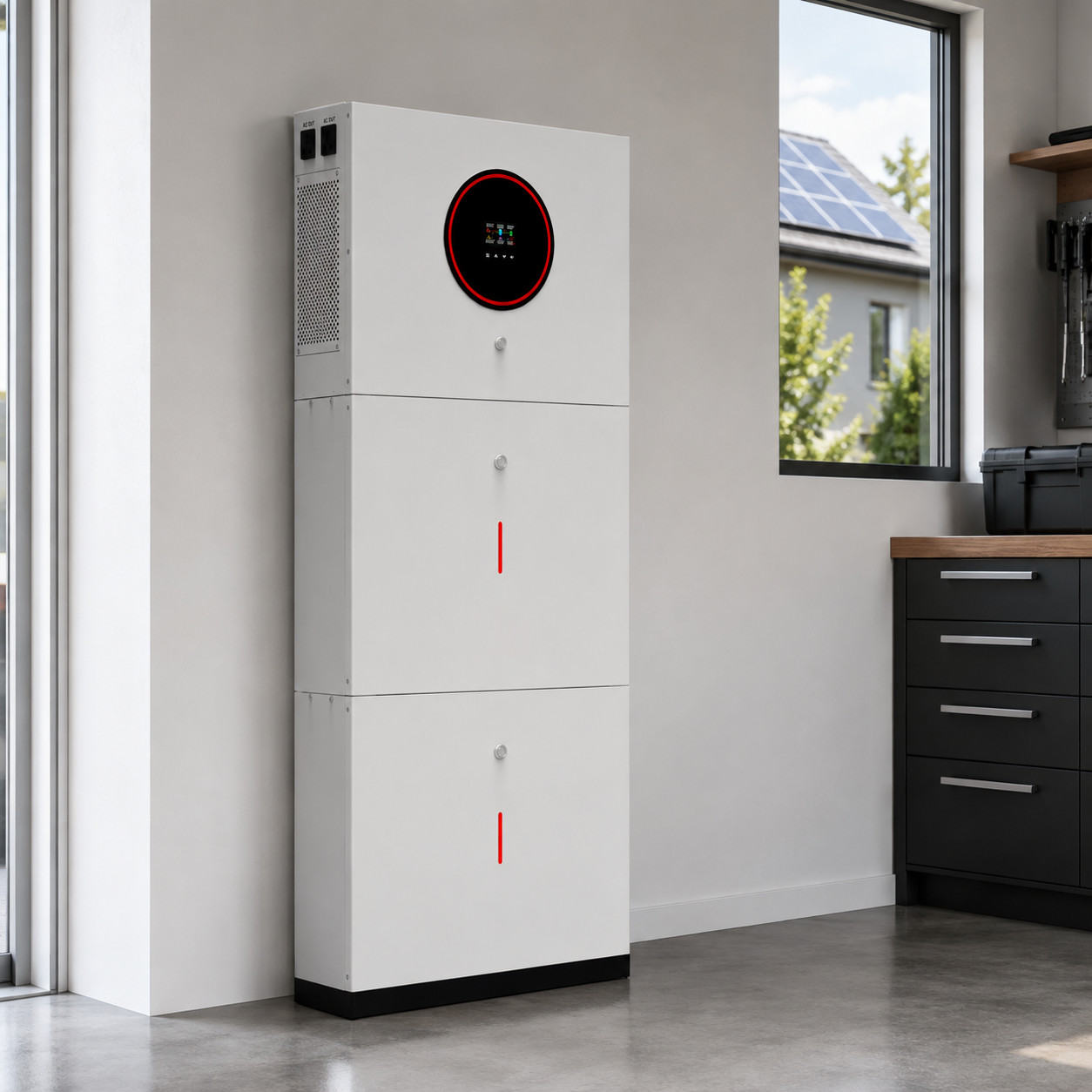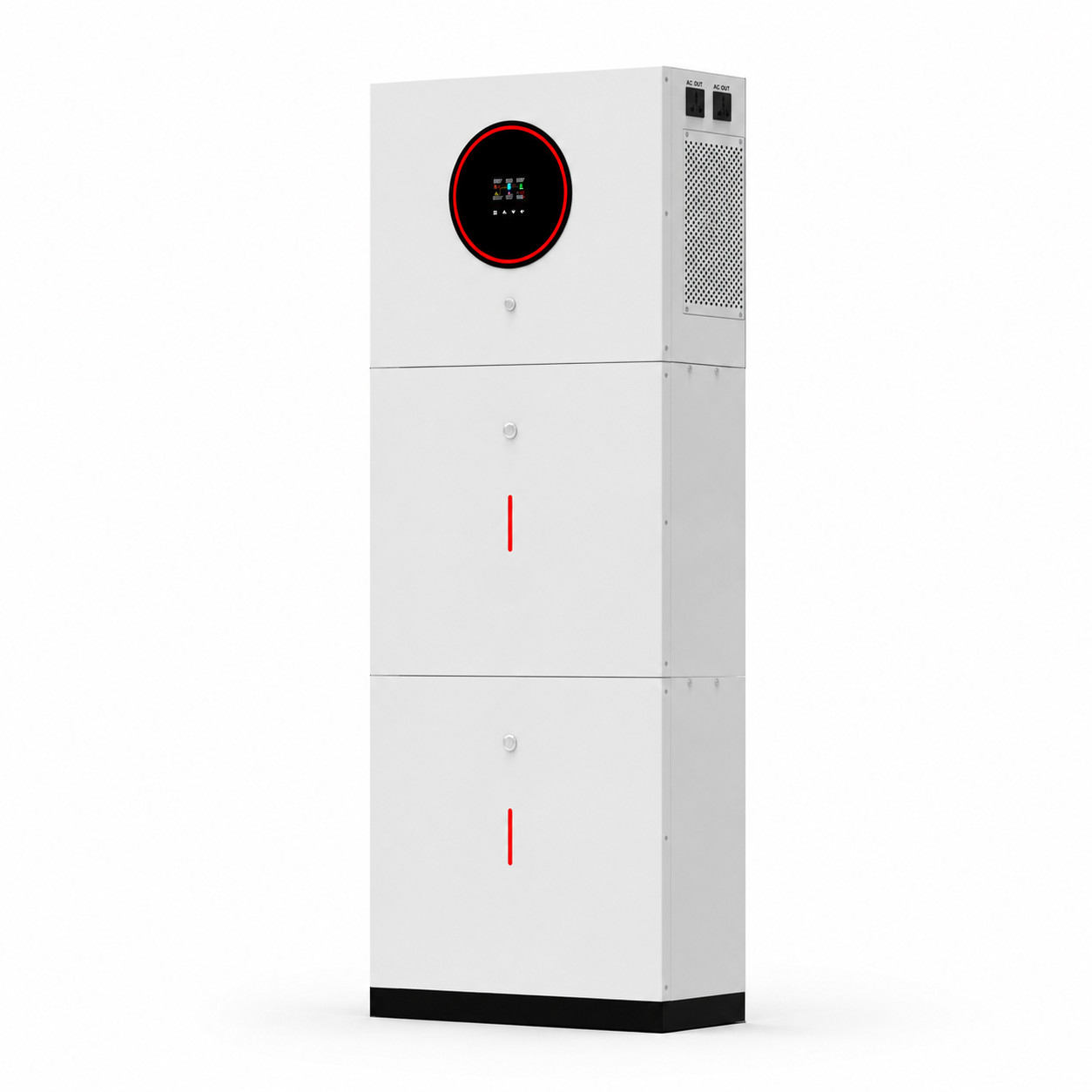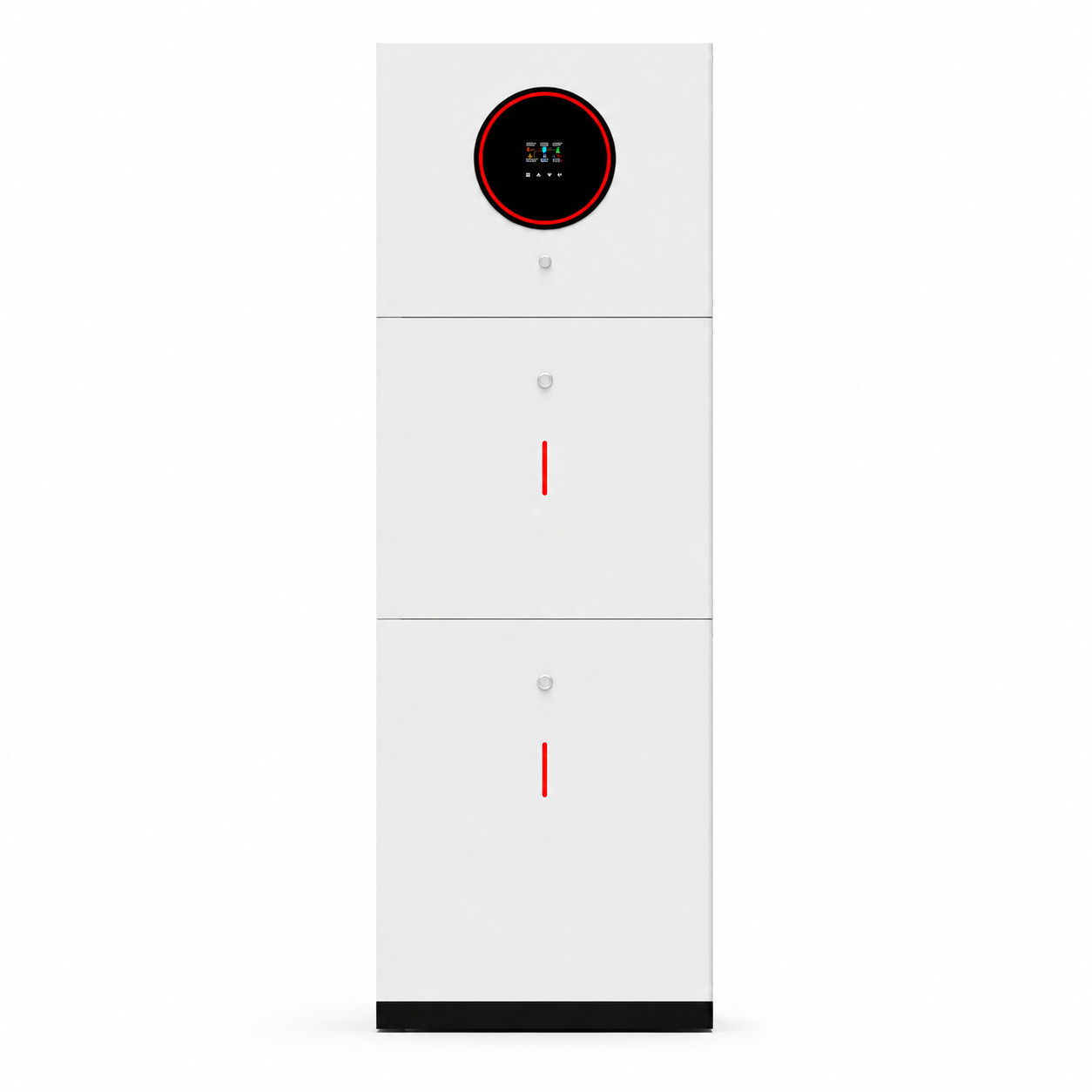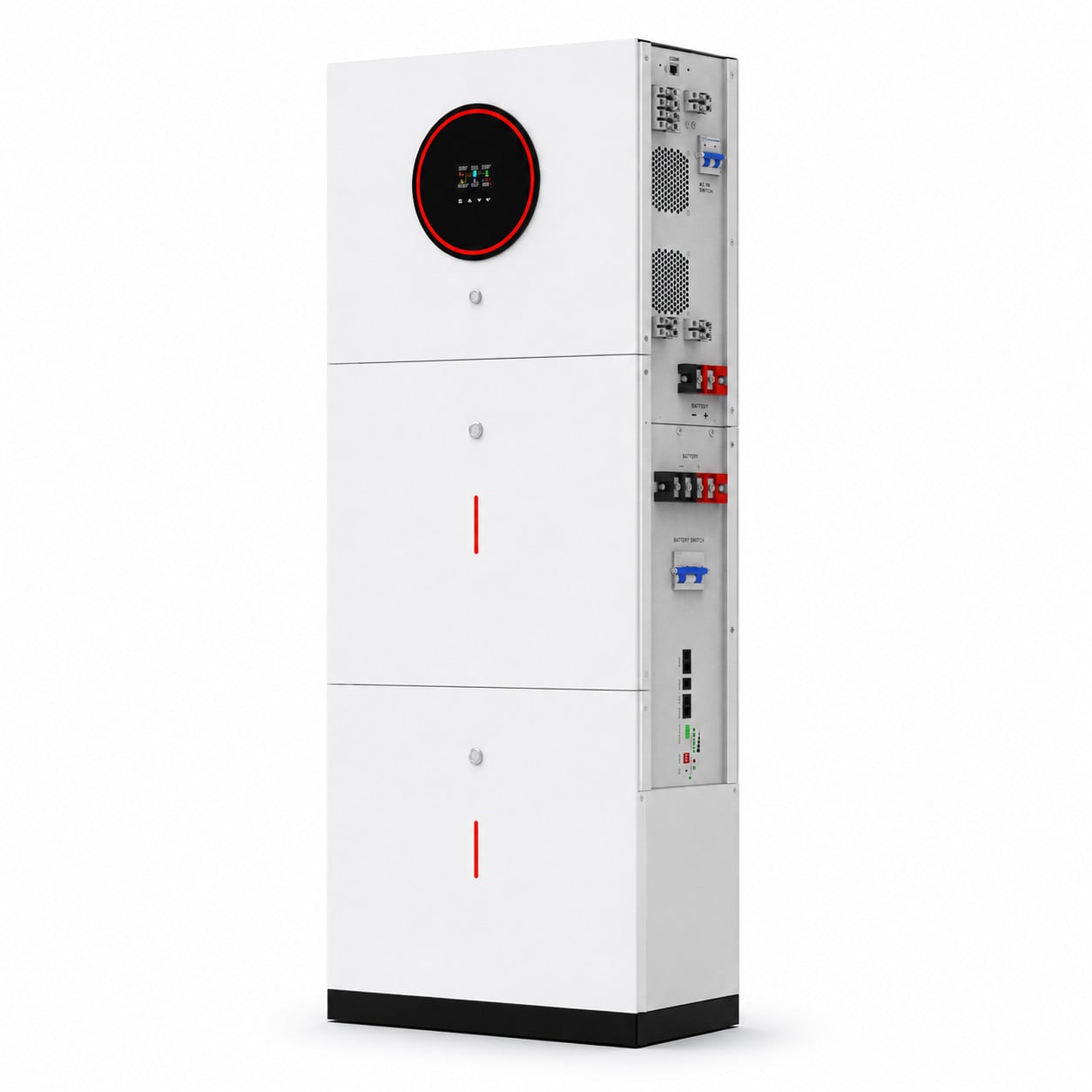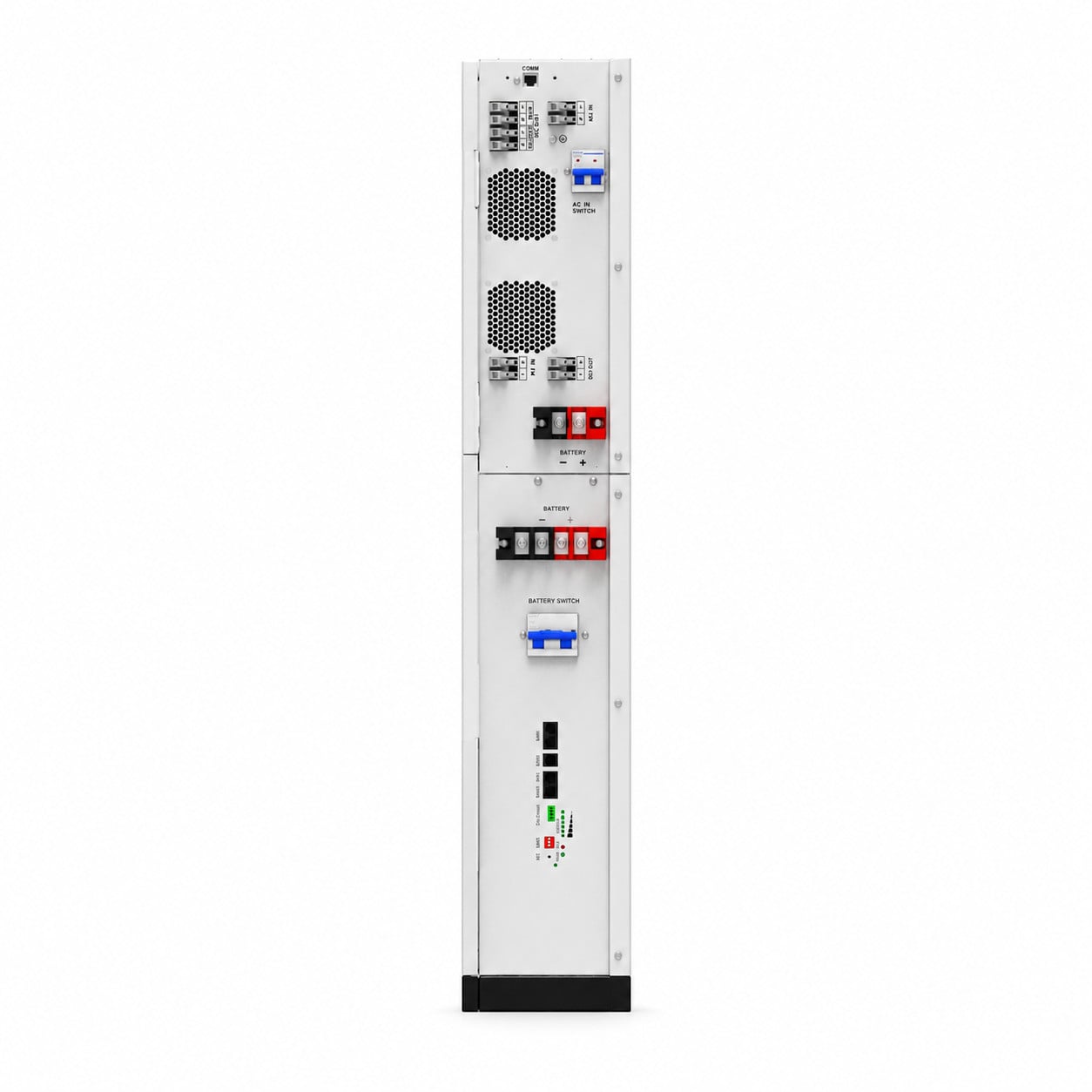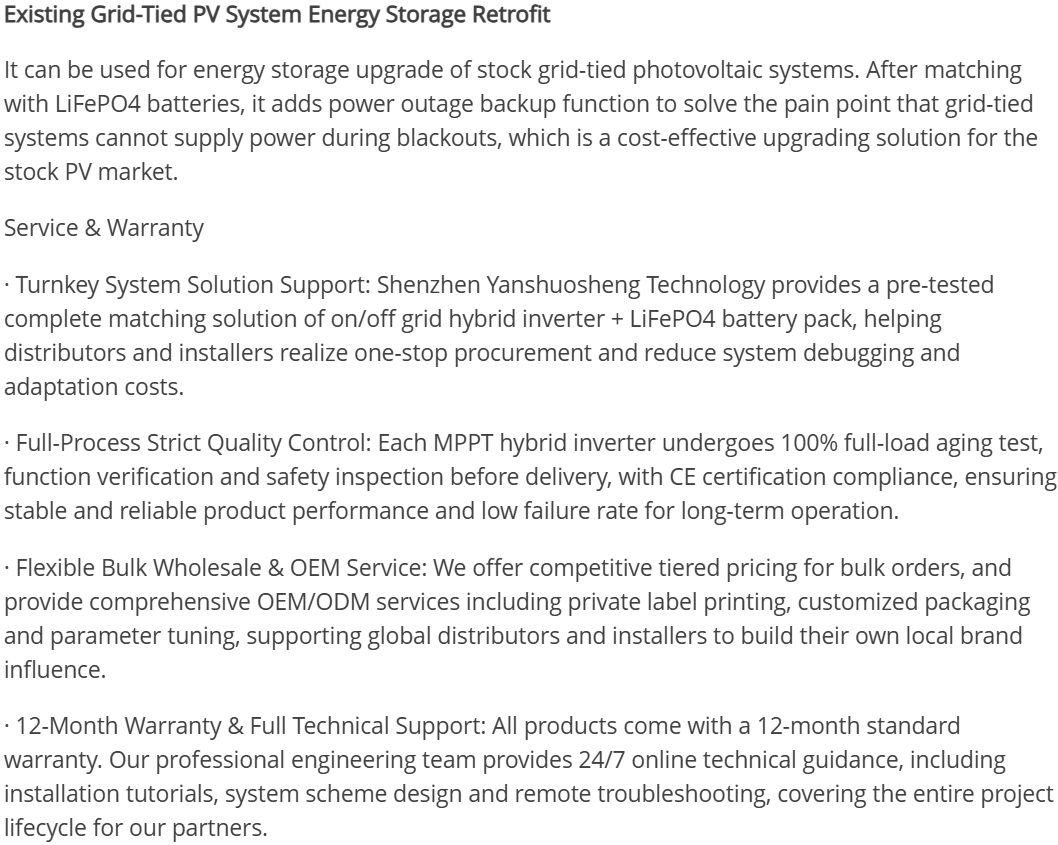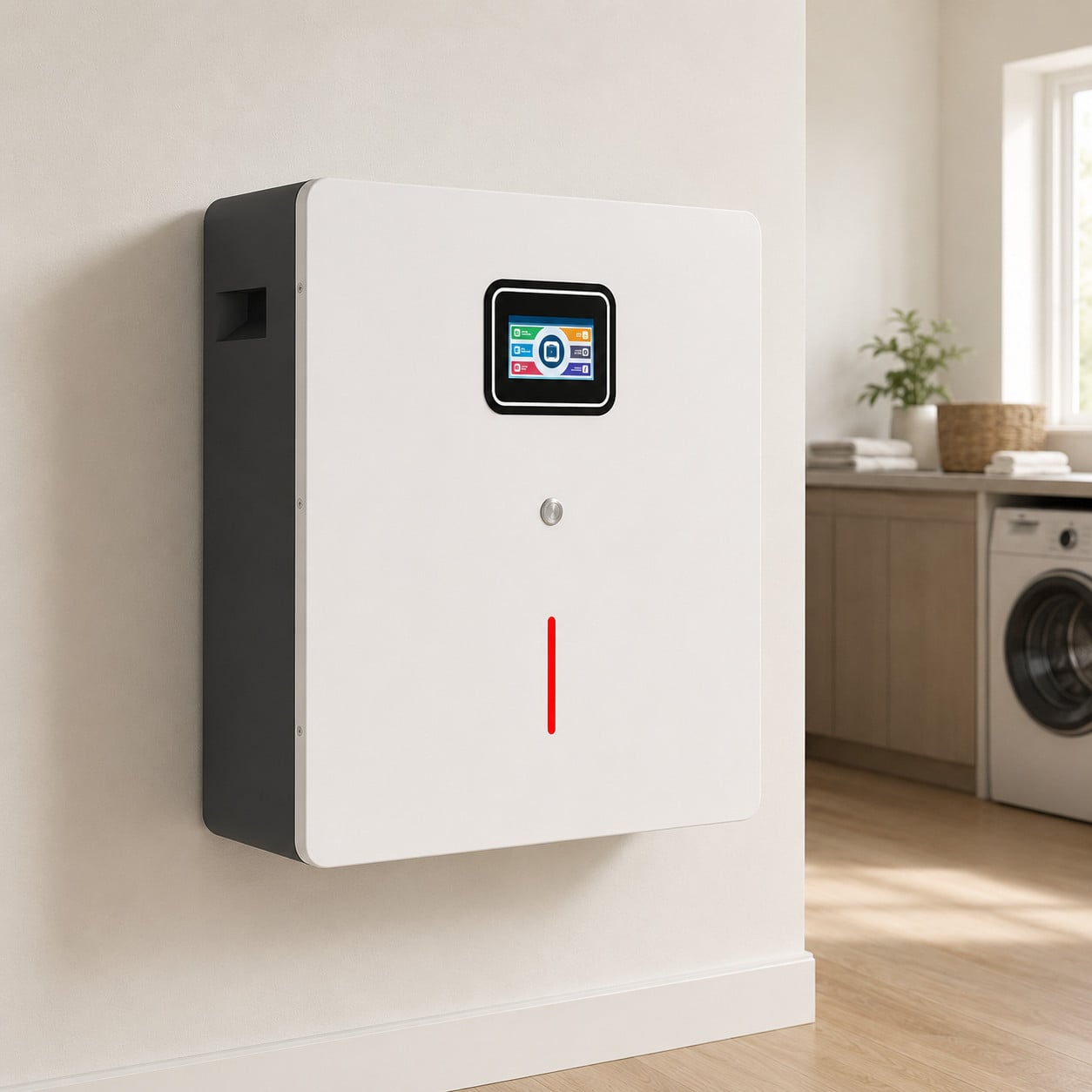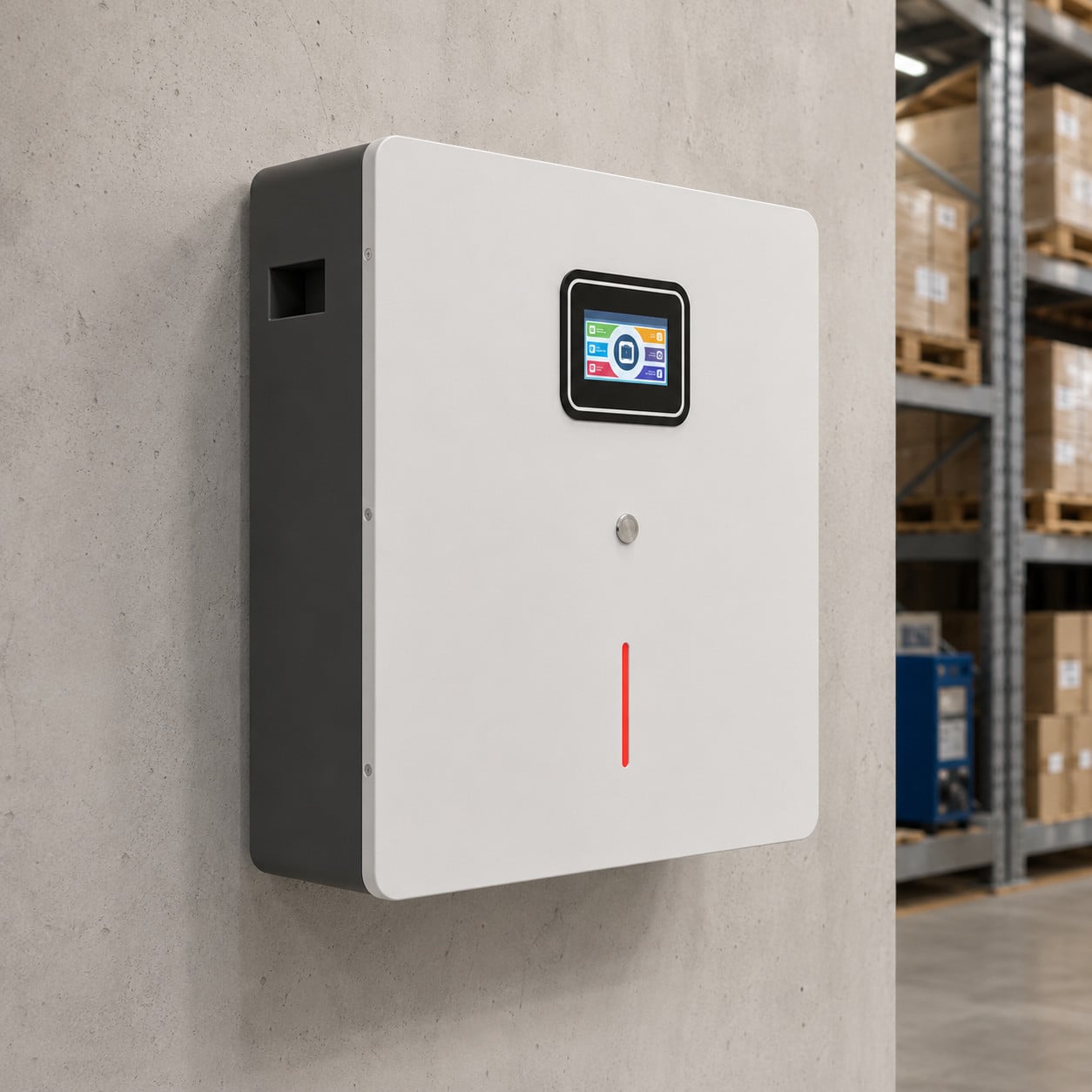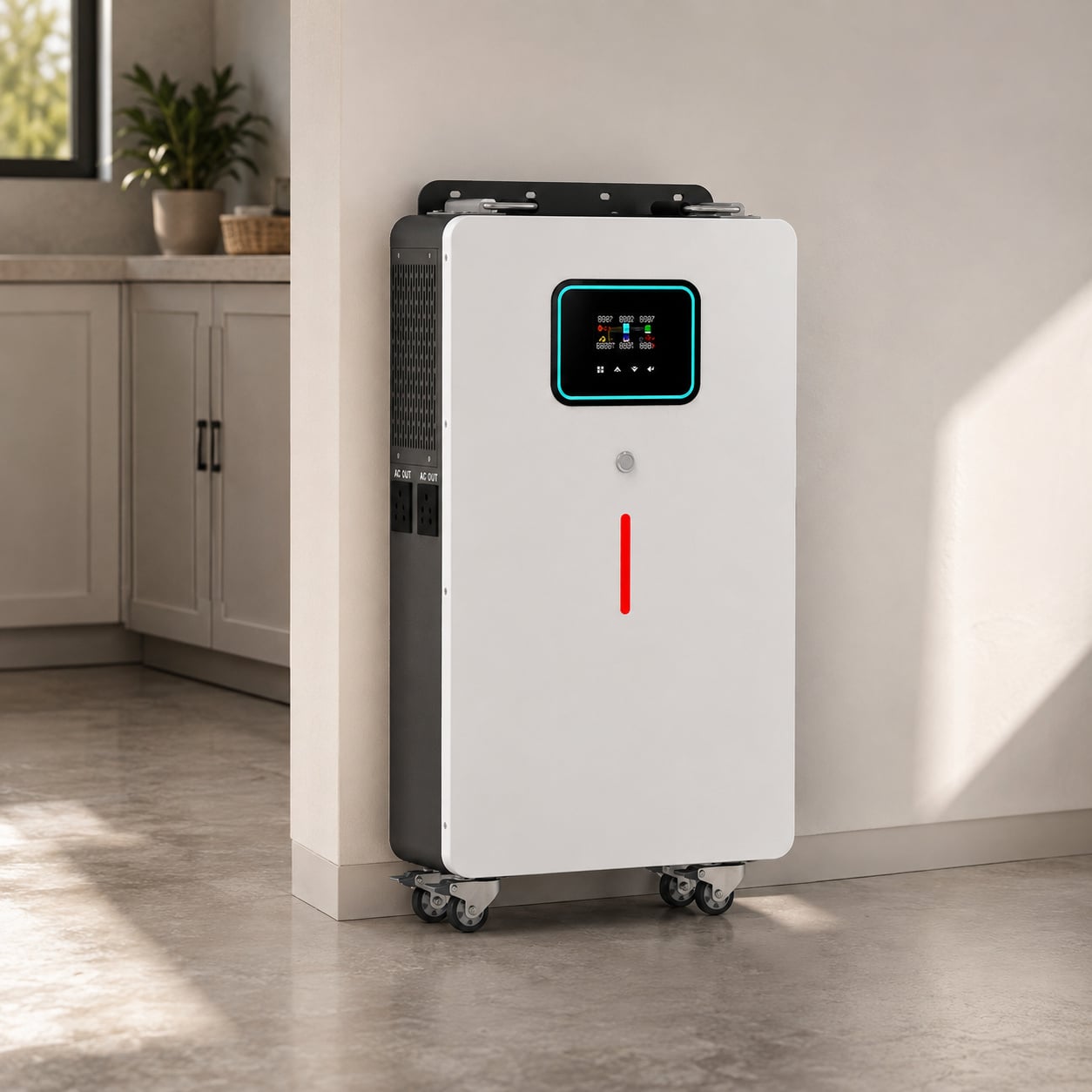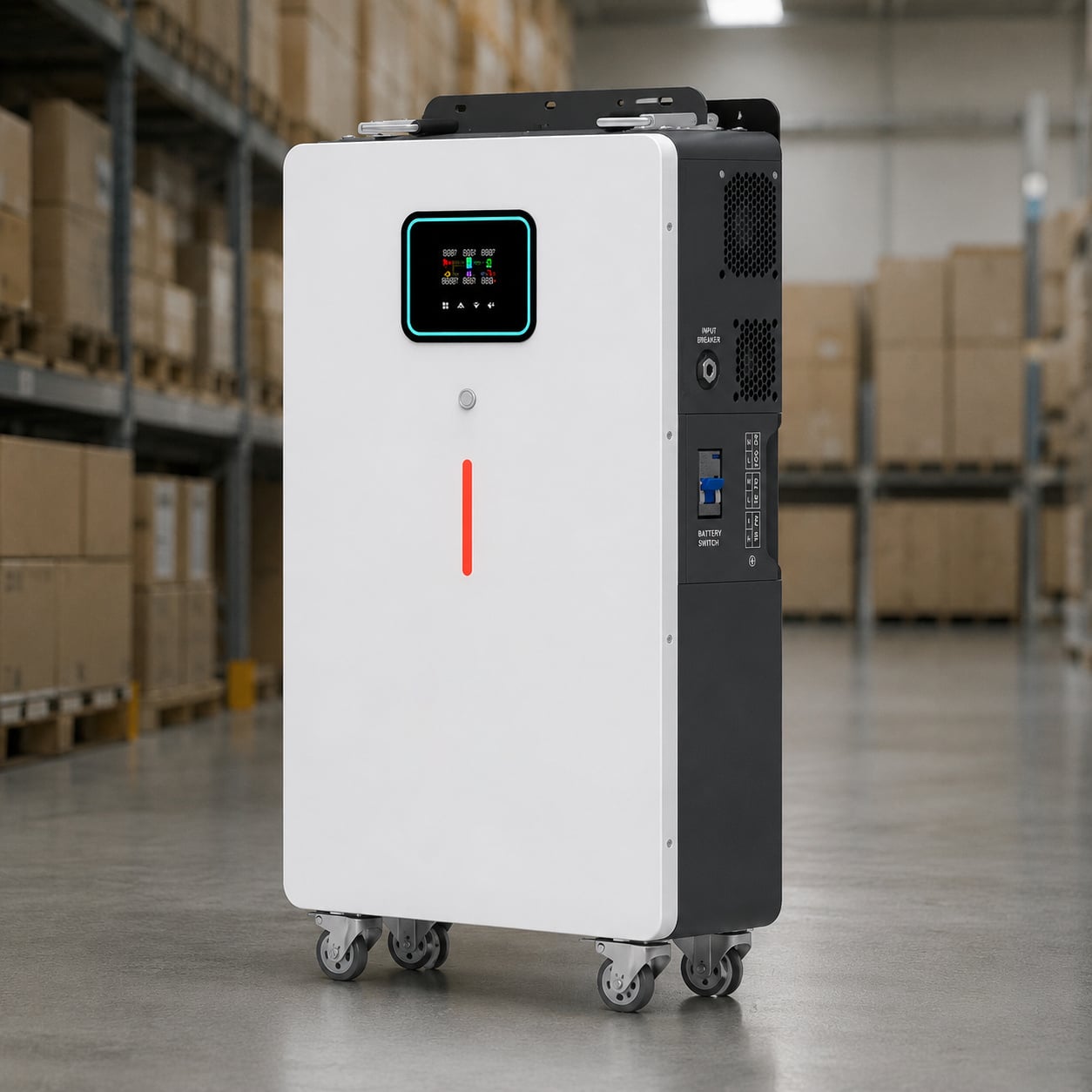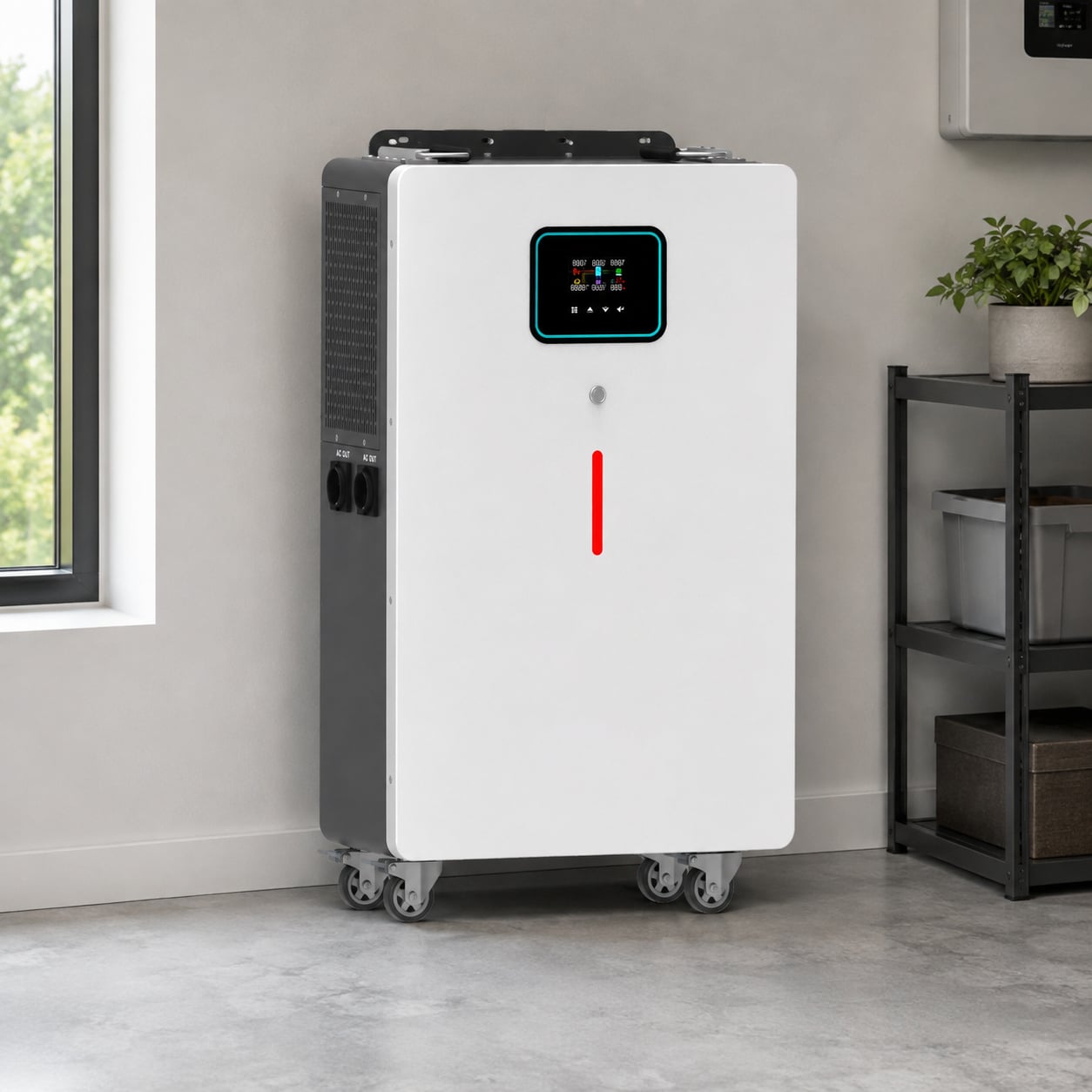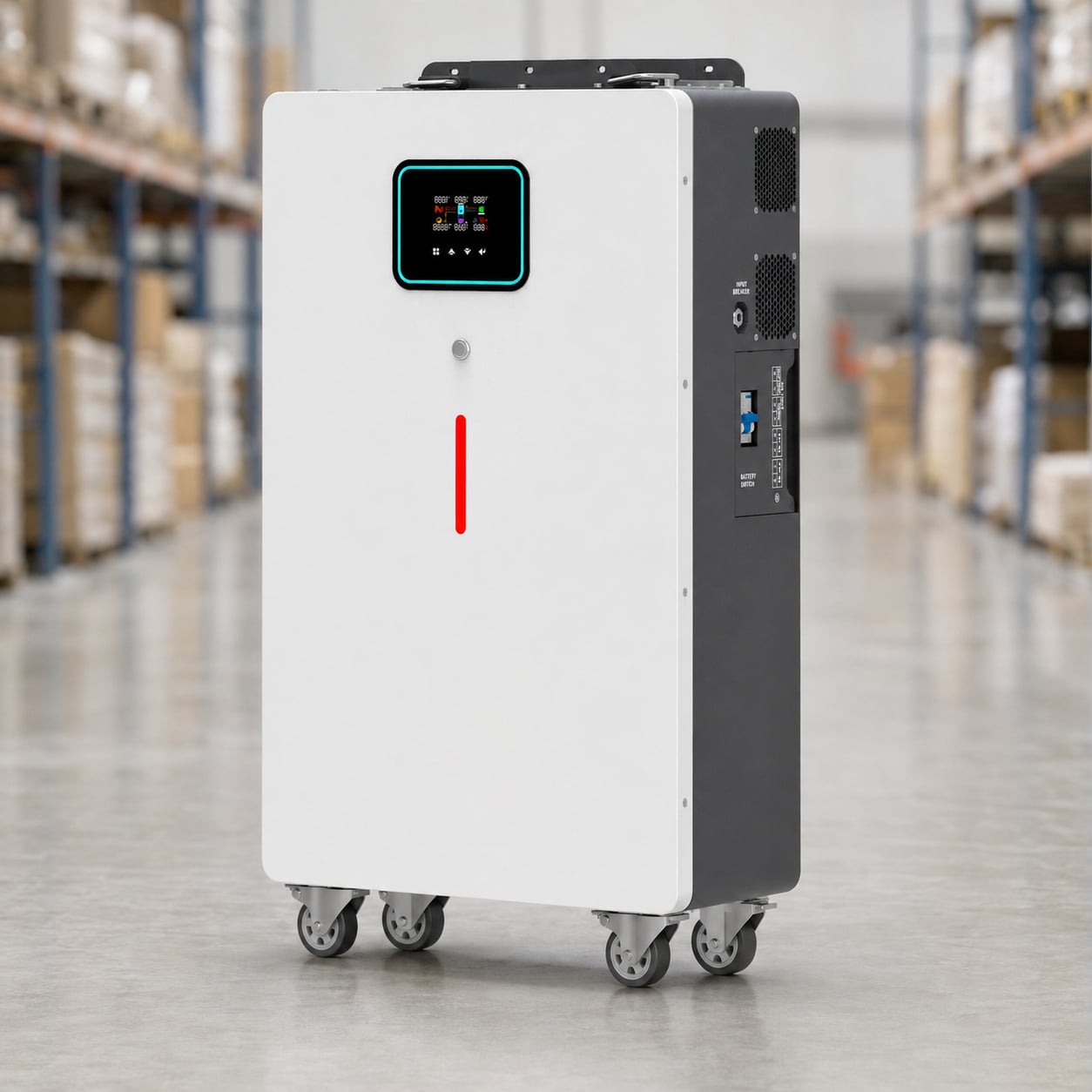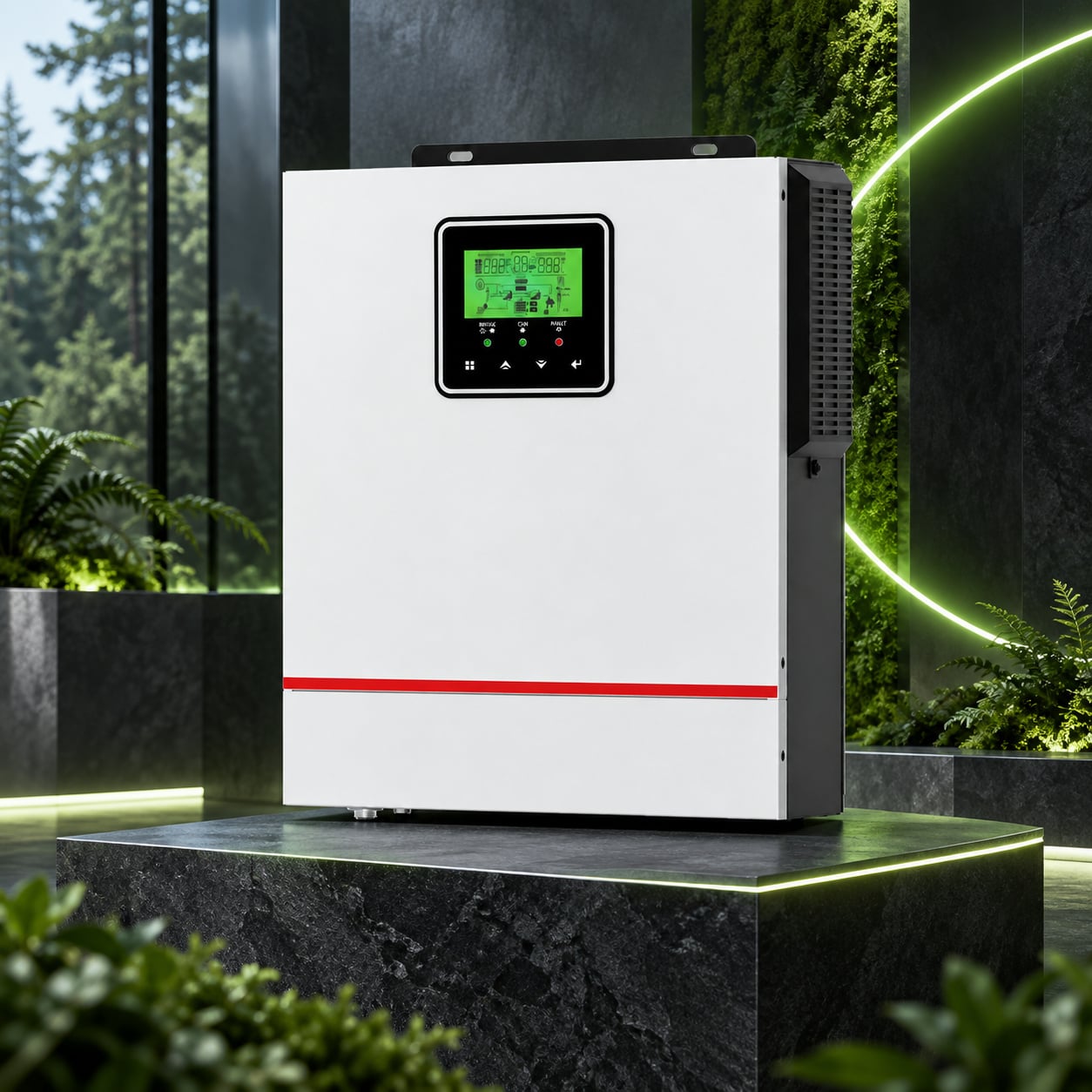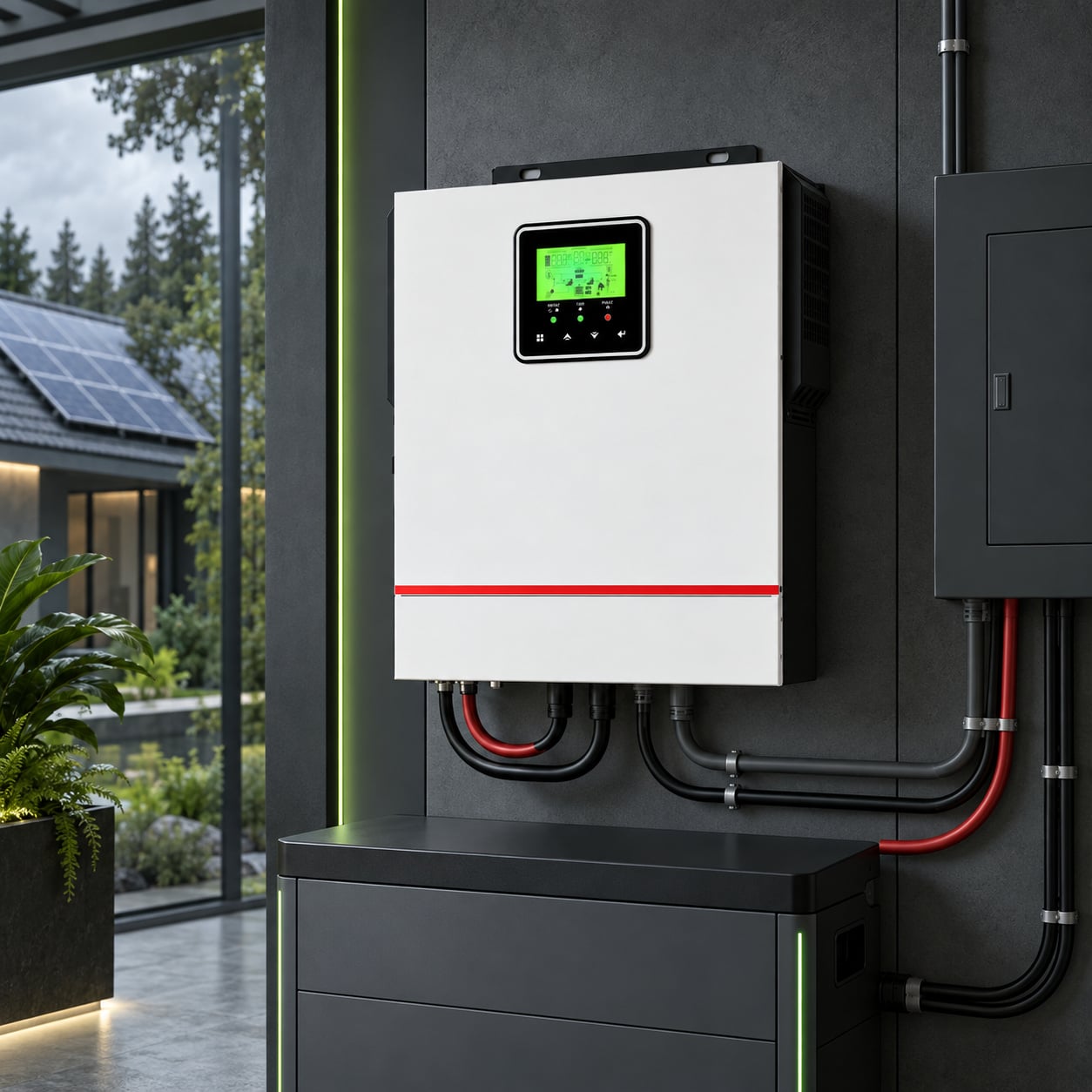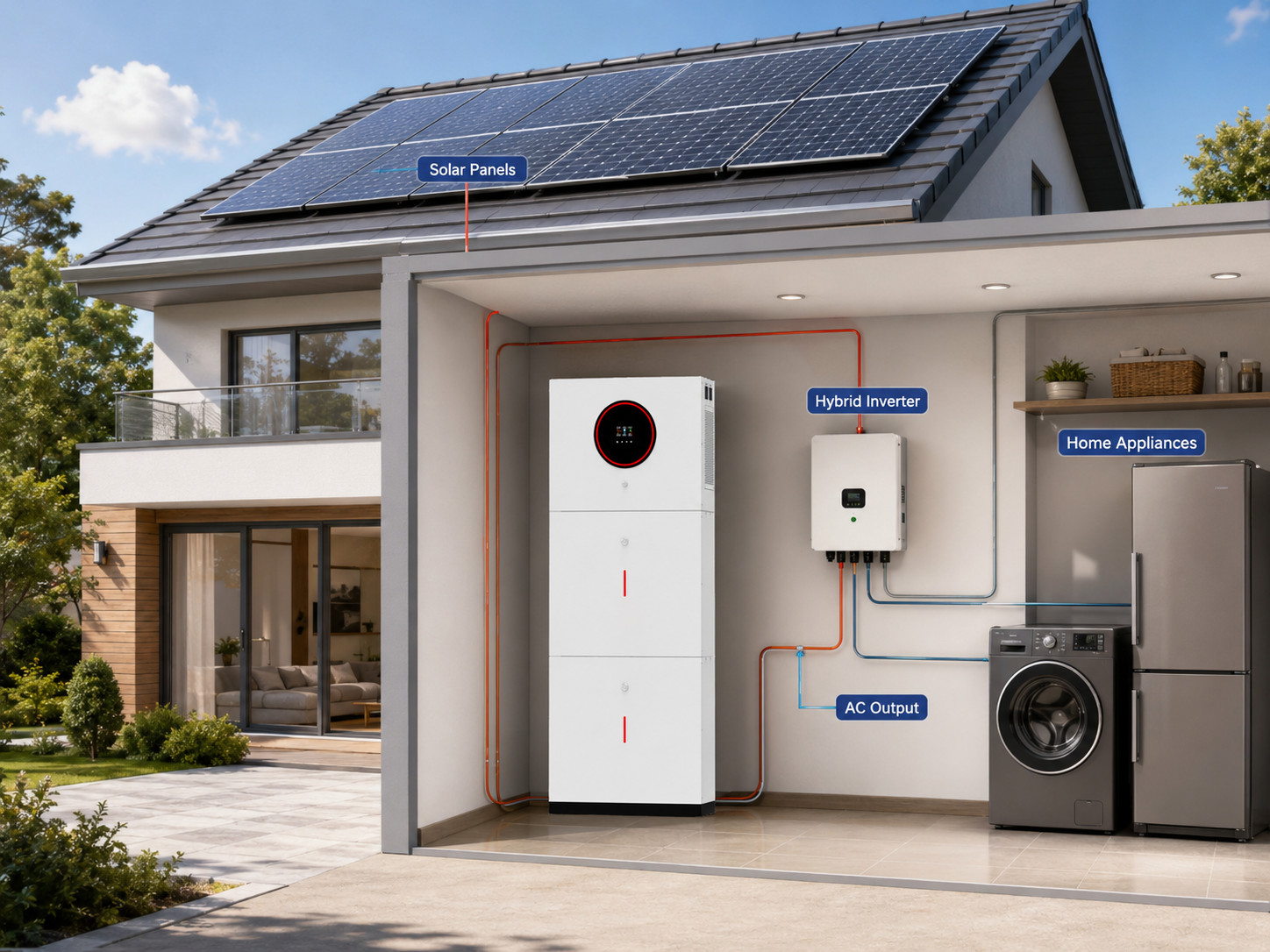
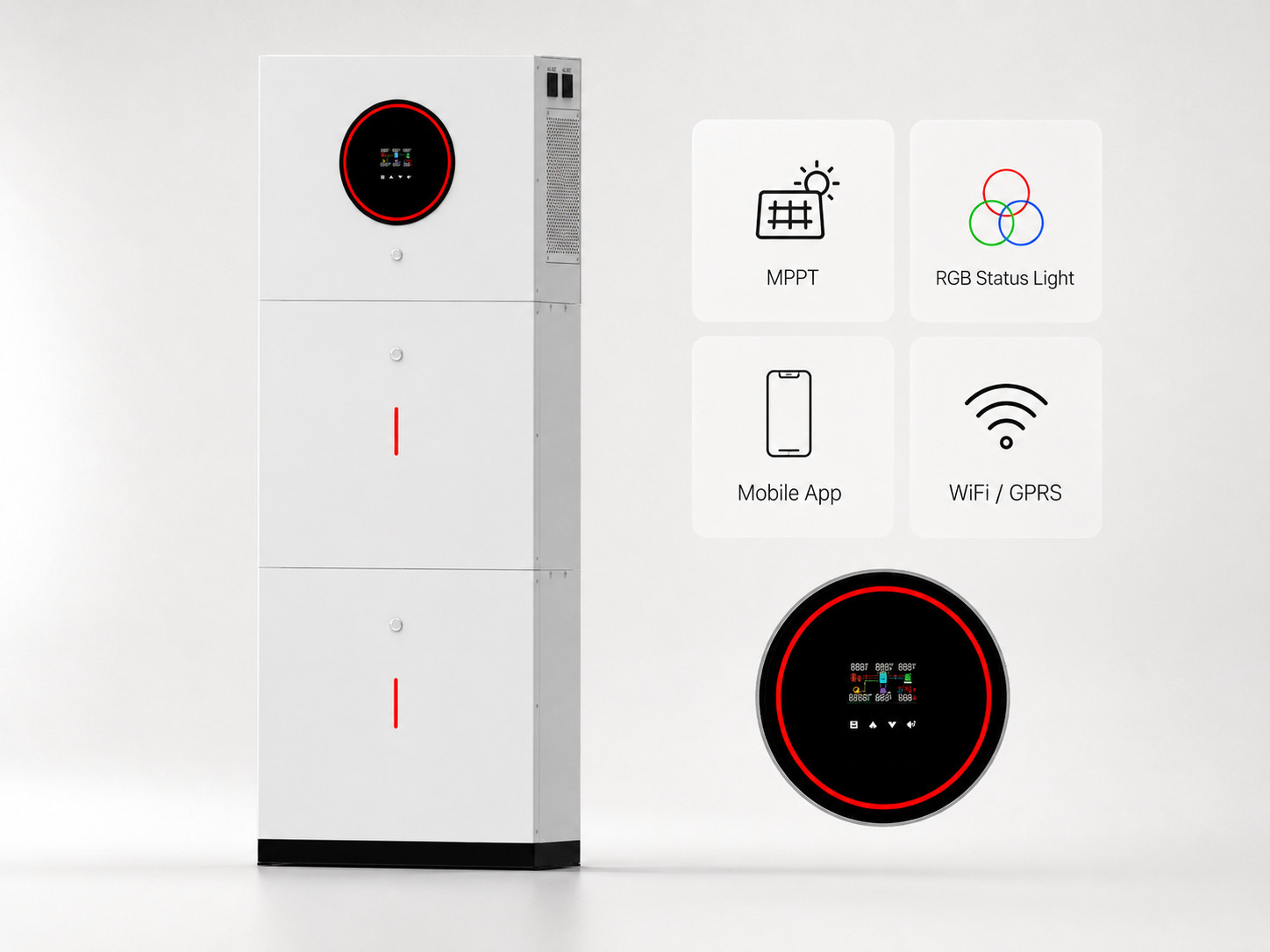
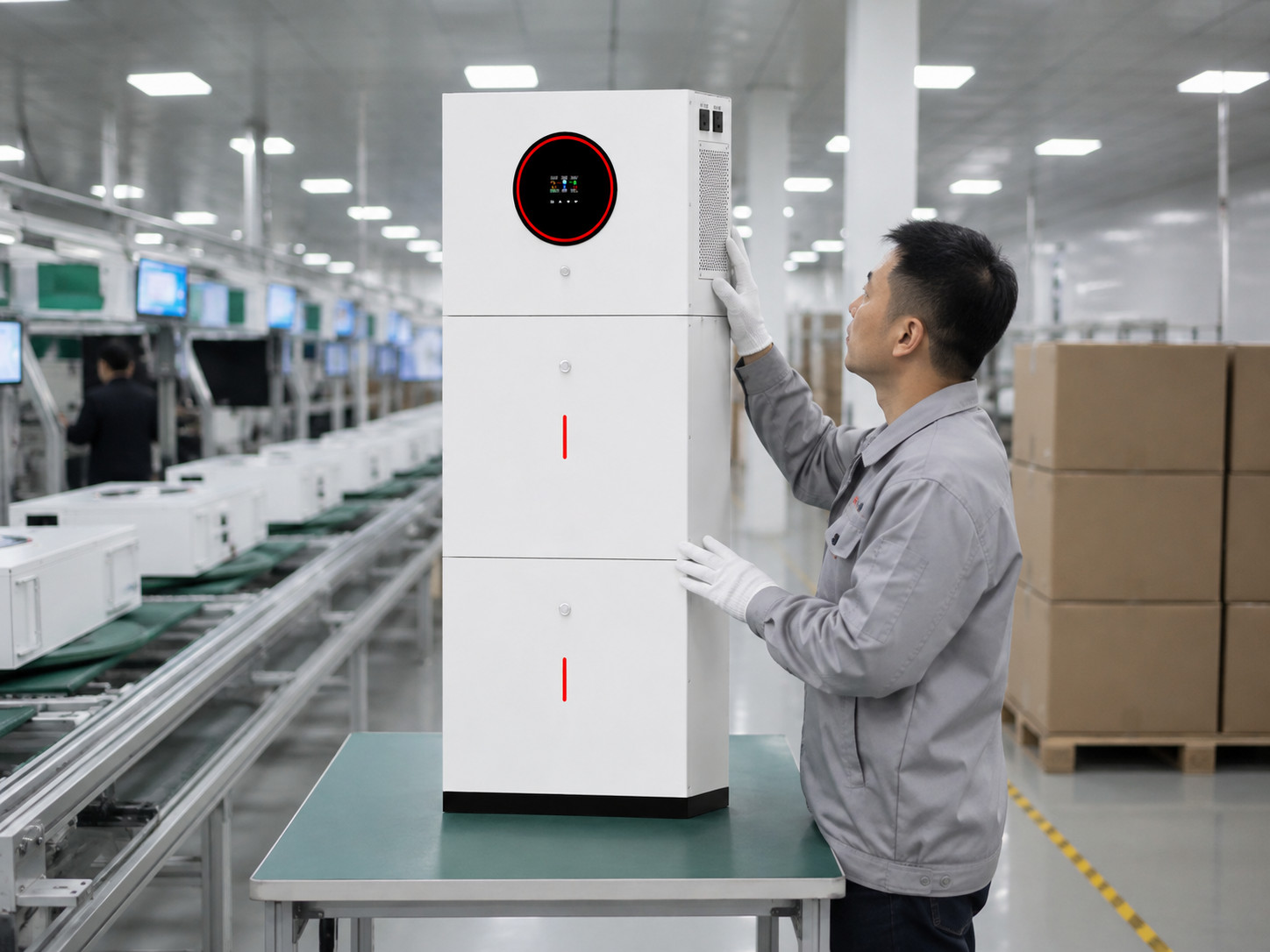
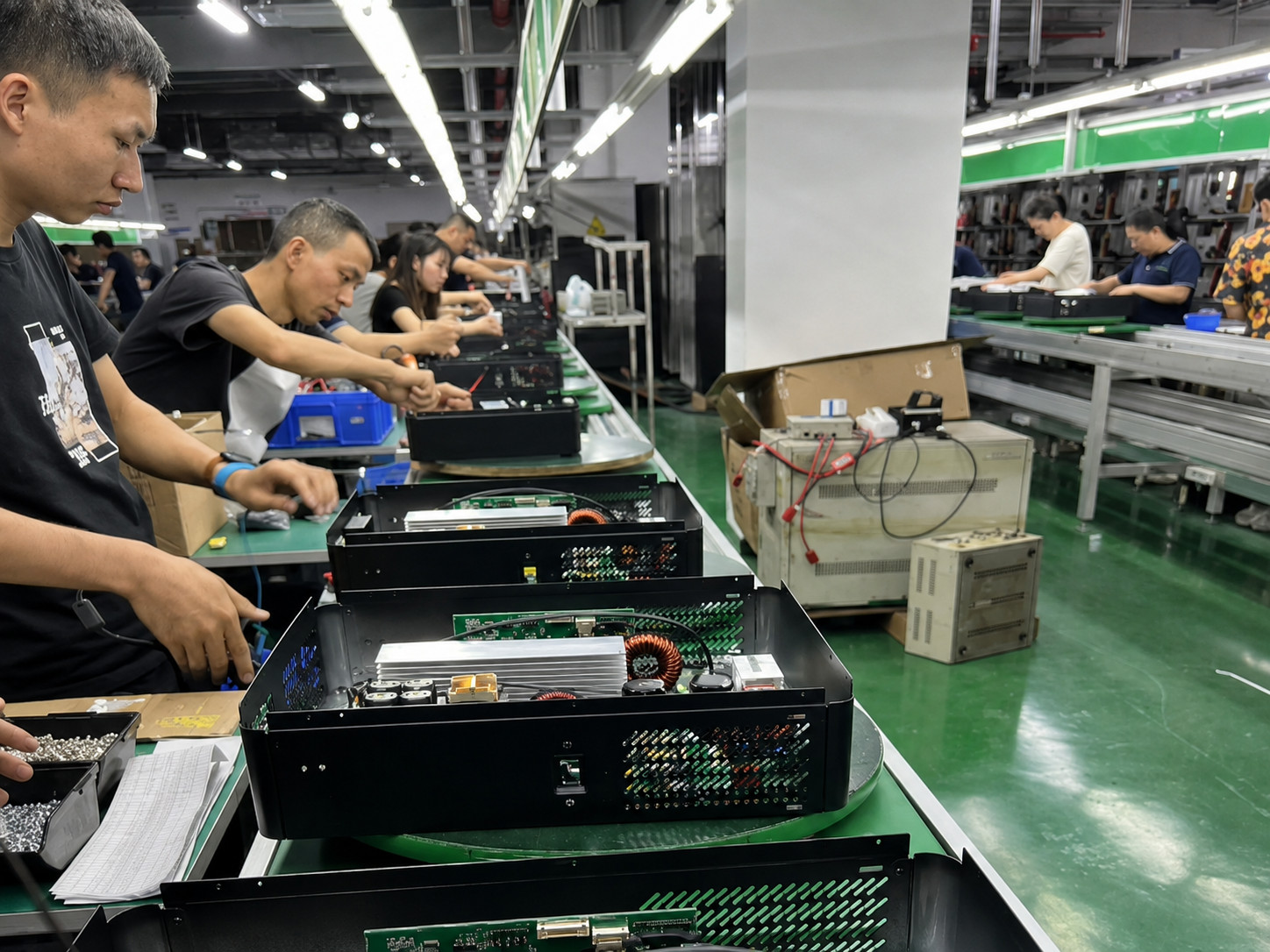
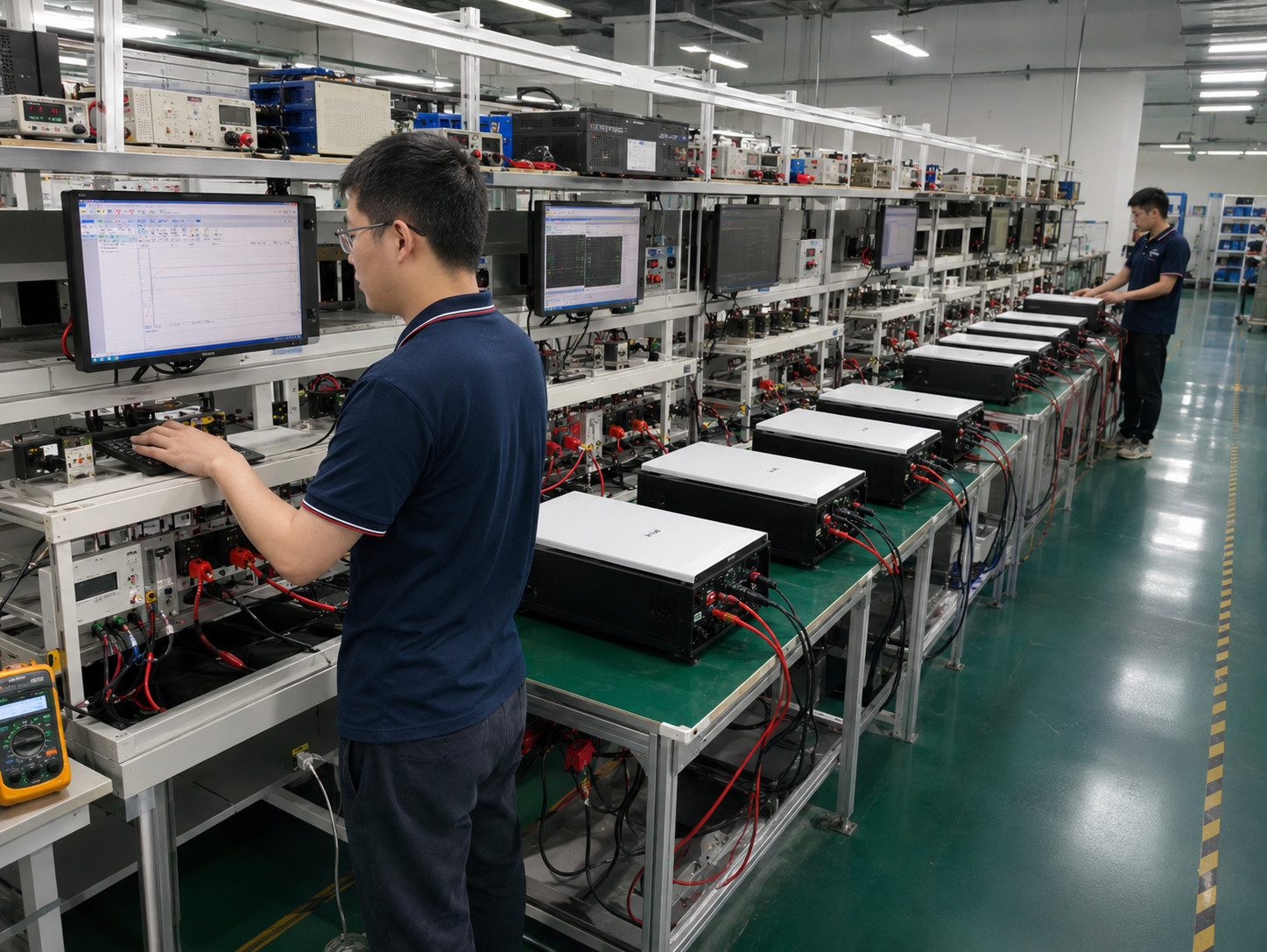
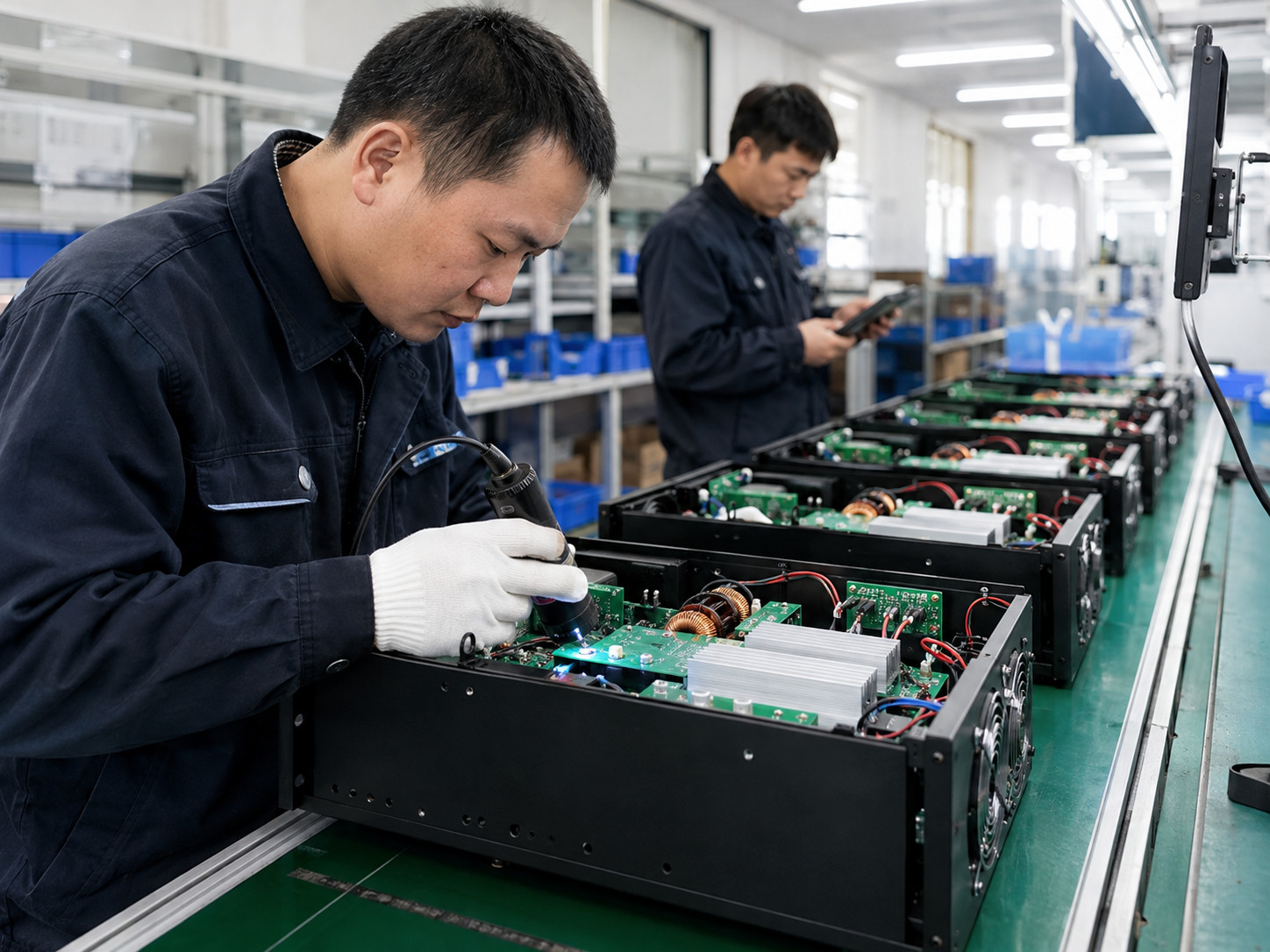

YASH presents the All In One Solar Inverter Energy Systems in 4.2KW and 6.2KW configurations, available at 24V and 48V. This hybrid solar inverter integrates inverter, MPPT charge controller, and inverter battery system management into a single unit. As a pure sine wave inverter, it delivers clean, stable AC power for residential, commercial, and off-grid applications.
Key Features
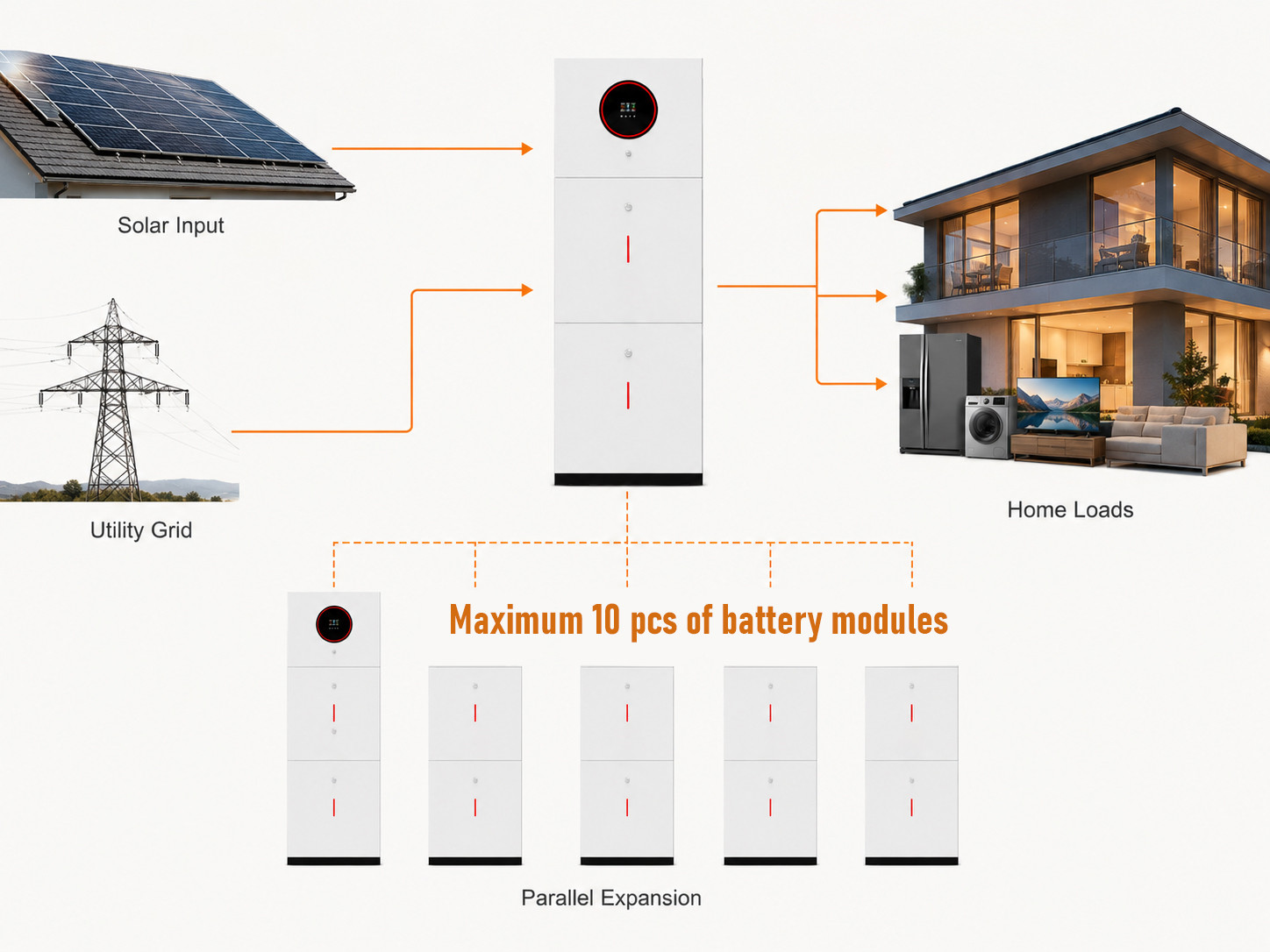
- Hybrid operation: This hybrid solar inverter supports grid-tied with backup, off-grid, and solar self-consumption modes, seamlessly managing PV, battery, and grid sources.
- Pure sine wave output: As a pure sine wave inverter, the system provides clean waveform with low THD, protecting sensitive electronics like computers, medical devices, and variable-frequency drives.
- Integrated battery management: The inverter battery system monitors SOC, health, and charge/discharge cycles with adaptive algorithms, supporting lead-acid, gel, AGM, and lithium chemistries.
- Advanced MPPT: Built-in MPPT maximizes solar harvesting across varying irradiance, coordinating with the hybrid solar inverter for optimal PV charging and AC supply.
- Scalable design: Supports parallel expansion and multi-unit stacking for higher capacity and redundancy.
- Protection features: Comprehensive safeguards include over-voltage, under-voltage, over-temperature, short-circuit, reverse polarity, and anti-islanding – essential for safe off-grid energy storage and grid-tied operation.
- Remote monitoring: Integrated communication interfaces enable real-time monitoring of solar generation and load consumption via web or mobile apps.
The hybrid solar inverter uses DSP-based control for high conversion efficiency and rapid source transition. The pure sine wave inverter stage maintains low harmonic distortion for safe operation of modern loads. The MPPT algorithm tracks efficiently across a wide voltage range, optimizing PV output under shading and fluctuating conditions. For off-grid energy storage, the system offers configurable charge/discharge limits, time-of-use scheduling, and load prioritization to maximize solar utilization.
The integration of hybrid solar inverter flexibility, pure sine wave inverter performance, and intelligent inverter battery system management simplifies installation, reduces wiring, and lowers total cost versus discrete components. Smart algorithms balance PV input, battery state, and load demand to maximize self-consumption and minimize degradation.
 EN