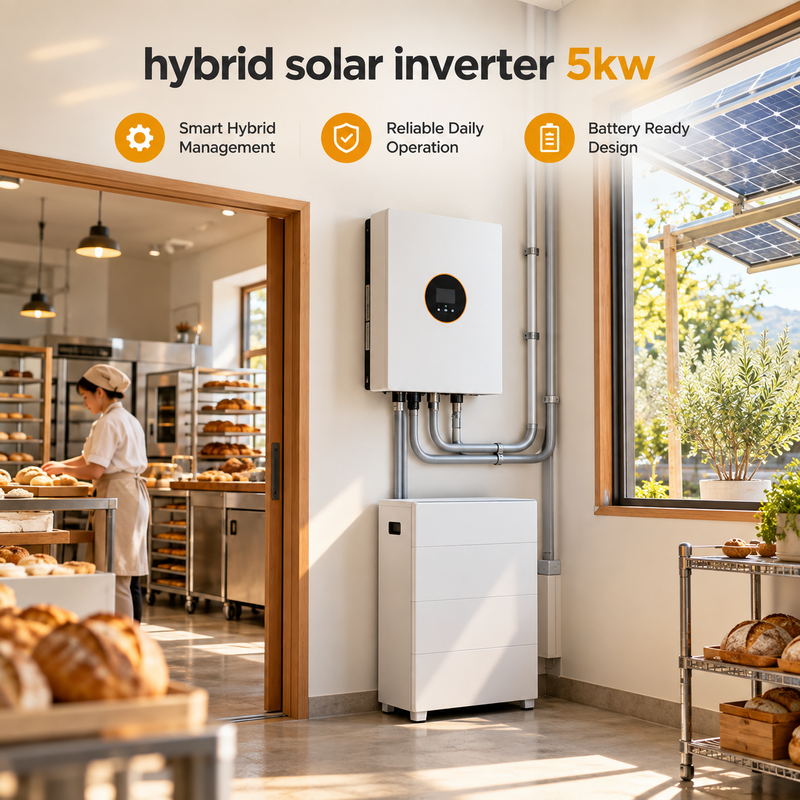
Choosing the Right 5kW Hybrid Solar Inverter

5,000+ units ready stock, 1–5 days fast global delivery

application/hybrid-solar-inverter-5kw, application/hybrid-solar-inverter-5kw, 
Inquiry
Inquiry

hybrid solar inverter 5kw

Hybrid solar  inverters are pivotal  components in solar energy systems,  particularly the 5kW  models,  which offer an  optimal  balance between performance and efficiency for residential  and commercial  applications. As a B2B  buyer, understanding the nuances of selecting the  right hybrid  solar inverter can significantly impact your project’s success. This article  will guide you  through the critical factors in  choosing a 5kW  hybrid solar inverter, ensuring you make an  informed decision that meets  your operational and  project requirements.

 
Key Specifications to Consider When Sourcing a 5kW Hybrid Solar Inverter

Key Specifications to Consider When Sourcing a 5kW Hybrid Solar Inverter

When  sourcing a 5kW hybrid solar inverter, several specifications should be prioritized:

Input Voltage Range:  Ensure the inverter can  accommodate the voltage output of your solar  panels. A mismatch can lead to  inefficiencies or system failures. Output Power Rating: Confirm that the inverter can handle the maximum load of your appliances.  A 5kW  inverter should be adequate for typical  residential applications, but commercial uses  may require additional  capacity. Efficiency Rating: Look for inverters with high efficiencies,  ideally above 90%. This indicates effective energy conversion and  lower losses. Battery Compatibility: Assess the inverter's compatibility  with LiFePO4 batteries  and other energy storage systems.  This ensures seamless integration for energy  storage applications. Safety Certifications: Check for  certifications such as UN38.3 and CE, which indicate  compliance with international safety and quality  standards.

Understanding  these specifications will help you avoid common pitfalls and ensure the inverter meets your specific operational needs.

Bulk Order Benefits of 5kW Hybrid Solar Inverters

Purchasing 5kW hybrid solar inverters in bulk can yield significant benefits for  businesses.  Firstly, bulk orders often result in  cost savings per unit, which can enhance your overall project budget. Suppliers may offer discounts or special pricing for  larger  orders,  making it economically advantageous.


Additionally, bulk  purchasing can  streamline the  supply chain process. By ordering in  larger quantities, you can ensure consistent availability of inverters, reducing lead times and preventing  potential project delays. This  is  particularly important in  industries where downtime can lead to significant  financial losses.


Moreover, establishing a good relationship with your supplier  through bulk orders can lead to better support and service. It allows for  more tailored solutions, such as customized configurations or specific product modifications that align with your project needs.


Best Practices

To ensure a smooth procurement  process for 5kW hybrid solar inverters, consider the following best practices:

Detailed RFQ Preparation:  When preparing a Request for Quotation (RFQ), include specific details such as required specifications,  quantity,  application  details, and delivery  timelines. This clarity  helps suppliers provide accurate quotes and reduces  miscommunication. Evaluate Samples: Prior to mass  production, request samples to assess quality and compatibility with your existing systems. Testing  these samples under real-world conditions can prevent issues during large-scale implementation. Quality  Control Checks: Implement quality control measures during the procurement process. This can include verifying certifications, inspecting incoming shipments, and performing functional tests  on the inverters before installation.  Supplier Evaluation: Conduct thorough evaluations  of potential suppliers. Consider their manufacturing capabilities, certifications, and  customer feedback to ensure  they  meet your quality and service expectations.

By following  these  best practices, you can mitigate risks and enhance the reliability of your  solar energy systems.

Cost Factors to Consider When Buying a 5kW Hybrid Solar Inverter

The cost of  a 5kW hybrid  solar inverter  can  vary based on several factors. First, the quality and brand reputation play a significant role in pricing. Established manufacturers often provide higher-quality products that come  with warranties and support services,  which can justify a higher initial investment.

Second, consider the  features  offered by  the inverter. Models equipped  with  advanced technologies, such as smart monitoring or enhanced efficiency ratings, may have higher upfront costs  but can lead to savings in the long run through improved energy management.

Additionally, installation costs should be factored into  your overall budget. Complex installations may require professional services, which can add to the total expenditure.  It’s also advisable to account for potential maintenance costs over the inverter's lifespan, as these can affect overall performance and longevity.

Lastly, evaluate any potential rebates or incentives available for solar energy  systems  in your region. These can significantly reduce the total cost of  procurement and installation, making it a  more attractive investment.

By considering these cost  factors, you can develop a comprehensive budget that aligns with your project’s financial  objectives.

In summary, the selection of a 5kW hybrid solar inverter requires careful consideration of specifications, sourcing practices, and cost factors. By following the guidelines outlined , B2B buyers can make informed decisions that enhance their solar energy systems' efficiency and reliability.

How to Choose the Right 5kW Hybrid Solar Inverter for Your Projec

Selecting the appropriate 5kW hybrid solar inverter involves assessing several key factors. Firstly, consider the inverter's compatibility with  your existing solar panel configuration and energy storage systems. It is  important to check the inverter's voltage  and current ratings  to ensure they match your  solar  panel specifications.

Next, evaluate the inverter's efficiency  rating, typically  expressed as a percentage. Higher efficiency ratings  indicate that the inverter can convert more of the  solar  energy into usable power, reducing energy loss  and improving overall system  performance. Additionally,  look for features such as grid-tie capabilities, which allow the inverter to work in conjunction with the grid to maximize energy use and savings.

Finally, consider  the inverter's integration with  your  energy management system. Many modern inverters come equipped with  smart technologies that enable real-time  monitoring and performance analytics, enhancing your ability  to manage energy consumption effectively.

Get a Free Quote

Our representative will contact you soon.
0/1000