Choosing the Right Microinverters for Solar Projects

5,000+ units ready stock, 1–5 days fast global delivery

application/microinverters-solar, application/microinverters-solar, 
Inquiry
Inquiry

microinverters solar

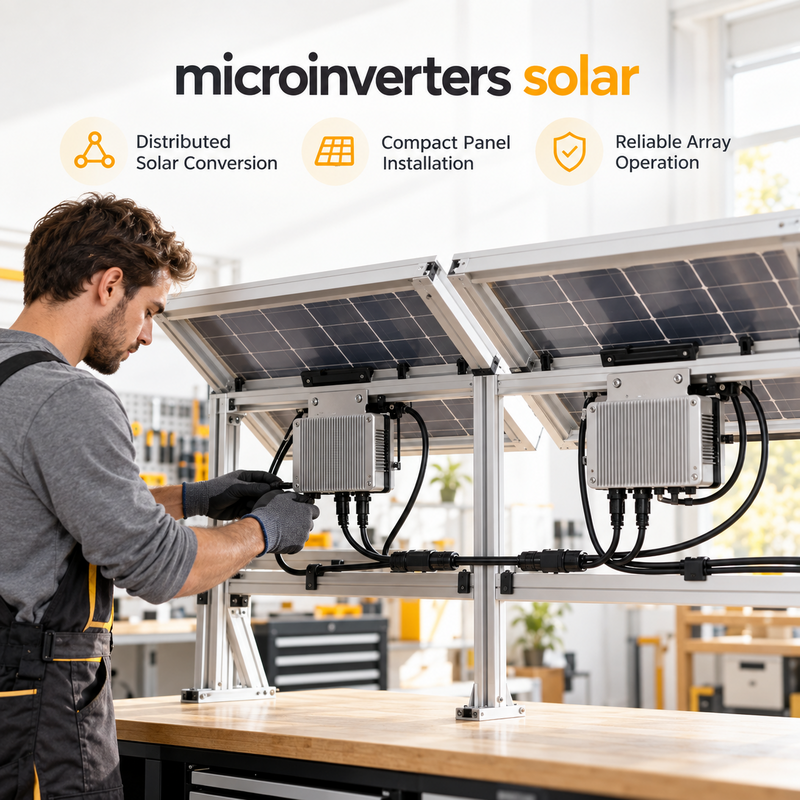
Microinverters are essential components in solar  energy systems, converting direct current  (DC) generated by solar  panels into alternating  current (AC) for  use in homes  and businesses. For  purchasing managers,  distributors,  and  engineers,  understanding  the right microinverters to  select can significantly impact the  efficiency  and reliability of solar projects. This  article  will cover key considerations when choosing microinverters,  sourcing trusted suppliers, important specifications,  applications, and essential features that project purchasers should  prioritize.

Finding Trusted Microinverter Sources for Importers

Finding Trusted Microinverter Sources for Importers

For importers,  sourcing reliable microinverters involves establishing a network of trusted manufacturers. Start by identifying manufacturers with a strong track record and  relevant certifications, such  as UN38.3 and CE certifications,  which are critical in ensuring product  safety and compliance with international standards.


Investigate the manufacturer's reputation within the industry. Reading reviews, testimonials, and case studies can provide insight into their reliability and product  performance.  Additionally, consider visiting manufacturing  facilities if possible, as this allows you to  assess production capabilities, quality control processes, and whether they meet  your standards.

Establishing clear communication  with potential suppliers is vital. Ensure that they are responsive and transparent about their manufacturing  processes, lead times, and any potential challenges that may arise during production. Establishing a good  relationship with manufacturers  can lead  to  better  pricing, availability  of customizations,  and priority during peak demand periods.

Key Specifications of Microinverters That Impact Performance and Cos

Several specifications directly influence the performance and cost of  microinverters. The maximum power point tracking (MPPT) capability is one such specification. Microinverters with multiple MPPTs can  optimize the output from each solar panel  independently, leading to better  overall performance,  especially in partially shaded installations.

The input voltage range is  another crucial specification. It must align with the solar panels' output voltage to ensure proper  operation. Additionally,  look for microinverters with a robust thermal management system, as overheating can reduce efficiency and lifespan.

The total harmonic distortion (THD) rating is also significant; lower THD  indicates cleaner power output, which is  essential for  compatibility with sensitive electrical equipment.  Buyers  should also consider  the inverter’s operating temperature range, as this  affects its reliability in different climates.

Finally,  pricing factors should be  examined closely. While it might be tempting to choose the lowest-priced option,  consider  the potential costs associated with lower efficiency, shorter warranties, and inadequate support. A higher initial investment in a quality microinverter  can yield better long-term returns.

Top Applications for Microinverters in Solar Energy Systems Today

Microinverters are  increasingly popular  in various  applications within the solar energy  sector. One of the primary applications is in residential solar systems, where homeowners benefit from  the ability to maximize  energy output from individual solar panels. This is  particularly advantageous  in  homes with  shading issues  or varied roof orientations.

Microinverters are also utilized  in commercial solar installations, where energy efficiency can  significantly impact operational costs. Businesses  looking  to reduce their carbon footprint and energy expenses can  benefit from the enhanced  performance and monitoring capabilities of microinverters. Furthermore, consider investing in an Energy Storage System to help manage energy consumption more effectively.

Moreover, microinverters play a crucial role in  off-grid and hybrid solar systems, especially those that integrate energy  storage solutions. By  optimizing energy production and ensuring compatibility with battery systems, microinverters support the growing demand for sustainable energy solutions in RVs, marine applications, and backup power systems.

Features That Matter for Project Purchasers

When purchasing microinverters, several features should be prioritized  to ensure project success. First, integrated monitoring capabilities are invaluable, as they provide real-time insights into system performance and enable prompt troubleshooting.  Look for microinverters  that allow remote monitoring via applications or web interfaces for convenient management.


Durability and environmental resistance are also crucial, especially  for installations in harsh  conditions. Features such as weatherproofing and robust materials can enhance longevity and reliability.

Additionally, consider the inverter’s scalability. If  future expansion of the  solar system is anticipated, choosing microinverters  that easily integrate with additional  panels can  save costs and time  down the line.

Another feature worth noting is communication protocols. Ensure the  microinverters  support common standards like Wi-Fi, Zigbee, or Ethernet for seamless integration into  existing smart home or building management systems.

Lastly, the supplier’s customer service and technical support should  not be overlooked. Reliable technical assistance can significantly ease installation and operational  challenges, making it a critical factor  for project purchasers.

Selecting the  appropriate microinverter for solar projects is a multifaceted process that requires careful consideration of specifications, supplier reliability, application suitability, and essential features. By prioritizing these factors, B2B buyers can make informed decisions that enhance the performance and longevity of their  solar energy systems.

What to Consider When Choosing Microinverters for Your Solar Projects

When selecting microinverters for solar  projects, several factors should  be at the forefront  of your decision-making process. First and foremost, consider the power output of the microinverter, typically measured in watts. It should  match or exceed the  power rating of the solar panels it will be paired with to ensure optimal performance. 

Another critical factor is the efficiency rating. High-efficiency microinverters convert  more  solar  energy into usable power, which can lead to increased energy yield over time. Look  for products with efficiency ratings above 95%, as these will maximize your energy output. Additionally, you might want to consider a High Performance 50Ah LiFePO4 Lithium Ion Battery Pack to complement your solar energy system for better efficiency.

Compatibility  with the solar panel type  is also essential. Not all microinverters work with every  kind of solar panel, so ensure that the inverter is compatible with the specific panels  you  intend to  use. Additionally, consider the inverter's warranty and reliability. A longer warranty often indicates a manufacturer's confidence  in their product and can provide peace of mind for long-term investments.


Lastly,  consider installation ease and monitoring features. Microinverters that offer integrated monitoring systems can help track performance and identify issues early, ultimately reducing maintenance  costs and downtime.

Get a Free Quote

Our representative will contact you soon.
0/1000