Sourcing High-Quality Microinverters for Solar Panels

5,000+ units ready stock, 1–5 days fast global delivery

application/microinverters-for-solar-panels, application/microinverters-for-solar-panels, 
Inquiry
Inquiry

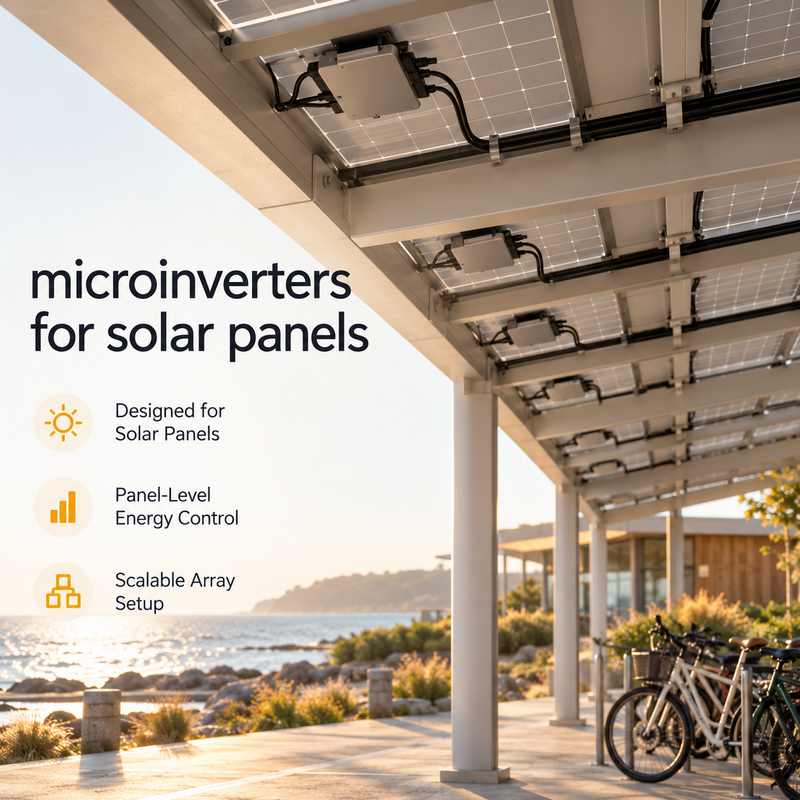
microinverters for solar panels

Microinverters  for solar panels  are  essential components that convert direct  current  (DC) produced  by solar  panels into alternating current (AC)  suitable  for household or grid use.  As a B2B buyer, understanding microinverters, their cost factors, potential issues, and applications is critical for  making  informed  purchasing decisions. This article  will guide you  through sourcing high-quality  microinverters,  evaluating their costs, identifying common problems and  solutions, exploring  their  applications, and ensuring supplier trustworthiness.

Understanding the Cost Factors of Microinverters for Solar Panels

Understanding the Cost Factors of Microinverters for Solar Panels

Several factors influence the  cost of microinverters for solar panels. Key elements include:

Technology  and Features: Advanced microinverters with enhanced monitoring capabilities, higher efficiency ratings, and integrated safety features tend to be more expensive. Evaluate whether these features align  with your project requirements.

Material and Manufacturing Quality: The quality of materials  used in microinverters, such as durable enclosures and high-grade electronic components,  can affect pricing. Cheaper materials may lead to  lower upfront costs but  can result in higher maintenance or replacement costs over time.

Production Volume: Bulk orders often come with discounted  pricing. Understanding the manufacturer's production capacity  and lead times is crucial for planning your purchase and ensuring timely delivery.


Market Conditions: Fluctuations in  demand, supply chain constraints, and geopolitical factors  can impact pricing. Staying  informed  about industry trends can help you negotiate better pricing.

Customizations: If you  require  specific features  or  branding, customization can add to the overall cost. Clearly define your needs when discussing  pricing with suppliers.


Common Problems with Microinverters and Their Effective Solutions

Microinverters can experience several  common issues that may affect their performance. Understanding  these problems and their solutions is vital for maintaining system  efficiency:


Overheating: Excessive  heat can lead to  reduced  efficiency or failure. Ensure proper ventilation and consider  the ambient temperature when installing microinverters. If overheating is a repeated issue, it may be worth exploring models with  enhanced thermal management features.

Communication Failures: Problems with  communication between the microinverter and monitoring systems can lead to  data loss. Regularly check  firmware updates and  ensure that communication  protocols are correctly configured.

Installation Errors: Improper installation can lead to operational failures. Work with experienced installers who understand the  specific requirements for microinverters. Providing detailed installation guidelines and training can mitigate these issues.

Compatibility Issues: Ensure that the microinverters are compatible with your  solar panels and the overall system design. Consulting with manufacturers about compatibility can  prevent costly mistakes.

Quality Control:  Conducting  quality inspections during  and after production can help identify defects early. Request detailed reports from suppliers regarding their quality assurance processes.

Applications of Microinverters in Residential and Commercial Solar Systems

Microinverters  are versatile components suitable for  a variety of applications in both residential  and commercial solar systems. Their ability to maximize energy harvest makes them ideal for:

Residential Installations: Homeowners benefit from the individual  panel optimization that microinverters provide. This is  particularly advantageous in shaded or  unevenly positioned installations,  where some panels may receive more sunlight than others.

Commercial Rooftops: Businesses  can leverage  microinverters to  enhance energy production on commercial  rooftops,  where space is often limited. The  scalability of microinverter systems allows for easy  expansion as energy demands grow.

Off-Grid Applications: Microinverters are  also used in off-grid solar systems, providing reliable AC power  for  remote locations, RVs, or marine  applications.

Energy Storage Integration: When paired with energy storage systems, microinverters can improve the efficiency  of energy usage, allowing for better management of energy supply and demand.

Understanding the specific application needs can  help buyers choose the right microinverter models that enhance overall system performance.

Ensuring Supplier Trustworthiness

Evaluating  the trustworthiness of suppliers is crucial when sourcing microinverters for solar panels. Here are  several steps to consider:

Research and Reviews: Investigate the supplier's reputation within the  industry. Look for reviews, testimonials, and case studies from previous clients to gauge their reliability and product quality.

Certifications and Compliance: Verify that the supplier holds relevant certifications and complies with  industry standards. This not  only ensures product safety but also  reflects  the manufacturer's commitment to  quality.

Transparency in Communication: A trustworthy supplier should provide clear  and prompt communication  regarding pricing, lead times, and any potential issues. This transparency  helps in building  a strong  business relationship.

After-Sales Support: Assess the level of after-sales support offered by  the supplier. A reliable company should  be willing to assist with installation, troubleshooting, and warranty claims.

Financial Stability: Consider the financial health of the supplier. A stable company is more likely to continue operating and supporting  your needs in  the long  run.

By following these  guidelines, buyers can make more informed decisions, ensuring they partner with  reputable suppliers who can meet their microinverter needs effectively.

Where to Source High-Quality Microinverters for Bulk Orders

When sourcing microinverters for solar  panels in  bulk, consider established  manufacturers like Shenzhen Yanshuosheng Technology Co., Ltd., known for  their expertise in energy  storage systems. Start by evaluating suppliers that  specialize in solar  technologies and have a track record of  providing reliable products.  Check for  certifications such as UN38.3 and CE,  which indicate compliance  with international safety standards.

Additionally, assess  the manufacturer's production capabilities and quality control processes. Look for suppliers that can meet your  specific requirements, such as customization options and minimum order quantities (MOQ). Request samples before placing bulk orders to verify product quality, performance, and compatibility with your solar panel systems. Engaging with  suppliers that have experience in international markets can also  help ensure smooth logistics  and compliance  with local  regulations.


Get a Free Quote

Our representative will contact you soon.
0/1000