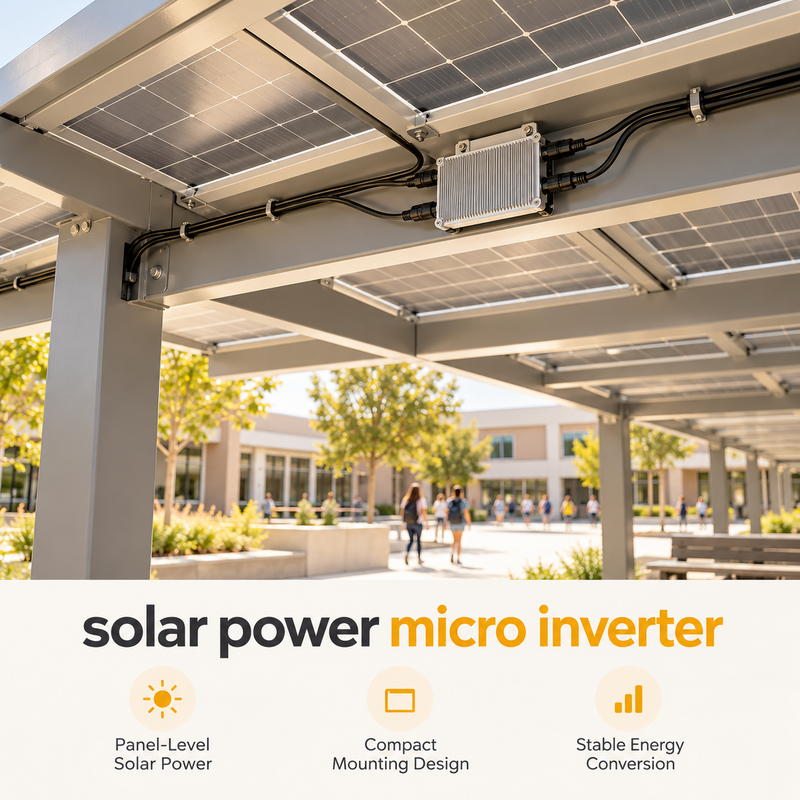
Key Factors for Choosing Solar Power Micro Inverters

5,000+ units ready stock, 1–5 days fast global delivery

application/solar-power-micro-inverter, application/solar-power-micro-inverter, 
Inquiry
Inquiry

solar power micro inverter

Solar power  micro inverters play a crucial role  in converting the direct current  (DC) generated by solar  panels into alternating current (AC) for  use in homes and  businesses. As B2B buyers, particularly  purchasing managers and  engineers, consider integrating  solar  power micro inverters  into  their systems,  they often focus on specifications, quality standards, cost, and potential issues. This article  will delve into the essential factors  to consider when sourcing solar  power micro inverters  to  ensure optimal performance  and  reliability in various applications.

Evaluating Quality Standards in Solar Power Micro Inverters

Evaluating Quality Standards in Solar Power Micro Inverters

Quality  assurance in  solar power micro inverters is  critical for ensuring long-term performance and reliability. Here are  some standards and certifications  to consider:


International Certifications: Look for micro  inverters that are certified by recognized standards such as UL (Underwriters Laboratories), IEC (International Electrotechnical Commission),  and CE (Conformité Européenne). These certifications indicate  compliance with safety  and performance standards.


Warranty Terms: A robust warranty can be an indicator of quality. Evaluate the warranty period and coverage. A longer warranty often reflects a manufacturer's confidence in their  product's durability.

Manufacturing Processes:  Inquire about  the manufacturing processes and quality control measures employed  by the manufacturer.  Strong quality control can minimize defects and  ensure consistency in production.

Customer Reviews and Case Studies: Research customer experiences and case studies to gauge the reliability and performance of  different micro inverter brands. This firsthand feedback can provide valuable insights into real-world performance.


By thoroughly evaluating these quality standards, buyers can  mitigate risks associated with product failure and ensure a sustainable investment.

Cost Factors to Consider When Buying Solar Power Micro Inverters

The cost of solar power micro inverters can vary significantly based on several factors:

Model Specifications:  Higher-efficiency models with advanced features will typically have a  higher price point. Assess whether the  additional cost aligns  with  your performance  requirements.

Volume Discounts: Purchasing in bulk  can  often yield significant discounts.  Consider your quantity needs and negotiate with suppliers for better pricing.

Installation Costs: Factor in  the potential  installation  costs, which  can vary based on the  complexity of the setup. Some micro inverters may be easier to install than others, impacting overall project costs.

Long-Term Savings: While upfront costs are important, consider the long-term savings associated with  energy efficiency and reliability. A higher initial investment in a quality micro  inverter may lead to reduced maintenance costs and improved energy savings over time.

Shipping and Import Fees: If  sourcing internationally, consider any shipping costs and import fees that may  apply. These can significantly impact the total cost  of ownership.

By understanding these cost factors,  buyers can make more informed purchasing decisions that align with their budget and project goals.

Common Problems with Solar Power Micro Inverters and Their Solutions

Even high-quality solar power micro  inverters may encounter issues. Here are some common problems and potential solutions:

Overheating:  Micro inverters can experience overheating due  to inadequate ventilation or high  ambient temperatures. Ensure proper installation with sufficient airflow  and consider models designed for higher temperature  resilience.

Communication Failures: Issues with  data communication  can occur, affecting  system monitoring. Regularly check connections and firmware  updates to mitigate communication-related issues.

Performance Degradation:  Over time, the efficiency of micro inverters may decline. Implement regular maintenance checks  and monitoring to identify performance drops early.

Installation Errors: Incorrect installation can lead to various problems, including  mismatched voltage or improper grounding. Ensure that installation is conducted by experienced professionals familiar with solar technologies.


Warranty  and Support Issues: Buyers may encounter difficulties with warranty claims or support. Be sure to clarify warranty terms and support processes  before purchase to avoid potential frustrations.

Addressing these  common  issues proactively can enhance the  longevity and  effectiveness of solar power micro inverters.

Comparing Solar Power Micro Inverters from Different Manufacturers

When sourcing solar power micro inverters, comparing products from different manufacturers is essential.  Here are  key comparison points:

Technical Specifications: Create a comparison chart to evaluate the specifications of  different models. Focus on efficiency, power output, and temperature ratings to find the best  fit for your application.

Price and Warranty: Compare pricing alongside warranty terms. A slightly more expensive inverter with a longer  warranty may  offer  better long-term value.

Customer  Support: Research the reputation of  manufacturers in terms of customer service and support. Manufacturers with responsive support can provide significant benefits in case of issues.


User  Reviews and Case Studies: Investigate user feedback and case studies for insights into real-world performance. Look for testimonials that highlight reliability  and efficiency in similar applications.

Customization Options: Determine if manufacturers offer customization options  for specific project requirements. Custom  solutions can help address unique challenges in your installation.

By systematically comparing these  aspects, buyers can confidently select  the most suitable solar power micro inverters  for their specific needs. 

In summary, understanding the specifications, quality standards, cost factors, common problems, and comparative metrics is crucial for B2B buyers when selecting solar power micro inverters. This article  aims to empower purchasing managers, engineers, and product managers with the knowledge necessary to make informed decisions that optimize energy efficiency and system  reliability.

Key Specifications of Solar Power Micro Inverters to Consider

When evaluating  solar power micro inverters, it's vital  to pay attention to specific technical specifications that directly impact performance. Key  specifications include:

Input Voltage and Current Rating:  Understanding the maximum input voltage and current rating is essential for  compatibility with solar panels. Choose inverters  that can handle the voltage and current output from your solar array.

Efficiency Rating: The efficiency of a micro inverter  indicates how well it converts DC to AC power. Look for models with an efficiency rating above 95%  to ensure minimal energy  loss.

Power Output: This specification defines the maximum AC output. Ensure that the  inverter can handle the total  power  requirements of the connected solar panels.

Temperature Range: Micro inverters are  exposed to  varying environmental conditions. Selecting models with  a wider temperature range ensures reliable performance  in diverse climates.

Communication Protocols: Many micro inverters support various communication protocols for monitoring  and control. Ensure compatibility with your existing systems or preferred monitoring solutions.

Size and Weight: Consider the physical dimensions and  weight of the inverter. Compact designs  may facilitate easier installation and integration.

These specifications not only affect the performance but also influence the installation process, maintenance considerations,  and overall system efficiency.

Get a Free Quote

Our representative will contact you soon.
0/1000