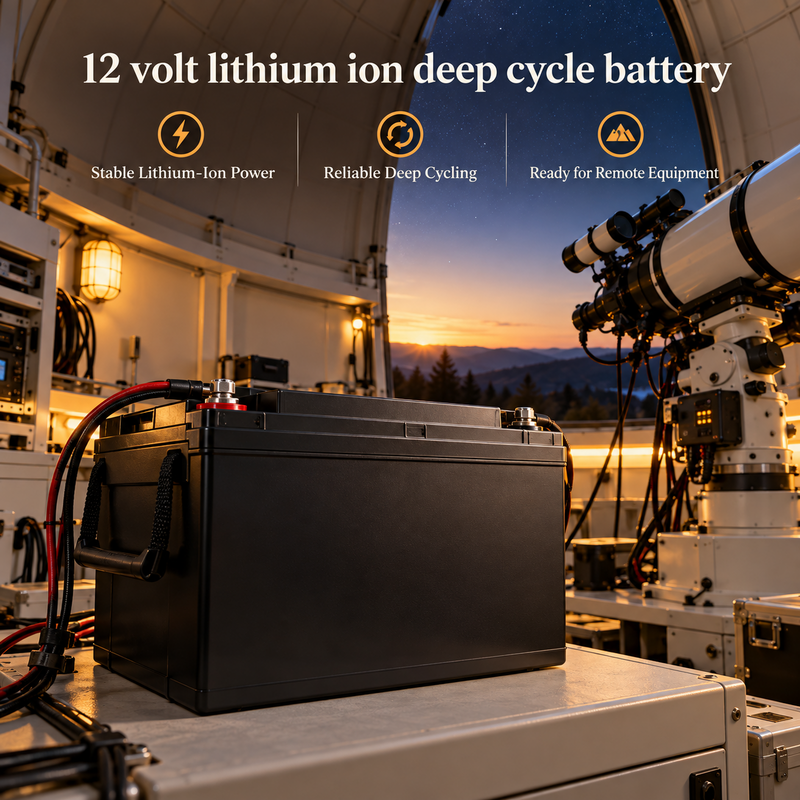
Understanding Material Advantages of 12 Volt Lithium Ion Deep Cycle Batteries
The materials used in 12 volt lithium ion deep cycle batteries contribute significantly to their performance and suitability for various applications:
Lithium Iron Phosphate (LiFePO4): This material is commonly used in deep cycle batteries due to its thermal stability, safety, and long cycle life. It provides excellent performance in high-temperature environments and is less prone to thermal runaway compared to other lithium chemistries.
Energy Density: Lithium-ion batteries have a higher energy density compared to lead-acid alternatives, meaning they can store more energy in a smaller footprint. This is particularly advantageous for applications with space constraints, such as RVs and marine vessels.
Weight Efficiency: The lightweight nature of lithium-ion batteries reduces overall system weight, which is critical for applications where weight affects performance, such as in electric vehicles or portable energy systems.
Low Self-Discharge Rate: Lithium-ion batteries have a lower self-discharge rate, allowing them to retain charge for longer periods. This feature is essential for applications where batteries may not be used frequently.
Recyclability: As the industry shifts toward sustainability, lithium-ion batteries are increasingly being designed with recyclability in mind. This factor can be a selling point for environmentally conscious buyers looking to minimize their ecological footprint.
By understanding the material advantages of lithium-ion batteries, buyers can make informed decisions that align with their operational needs and sustainability goals.
 EN