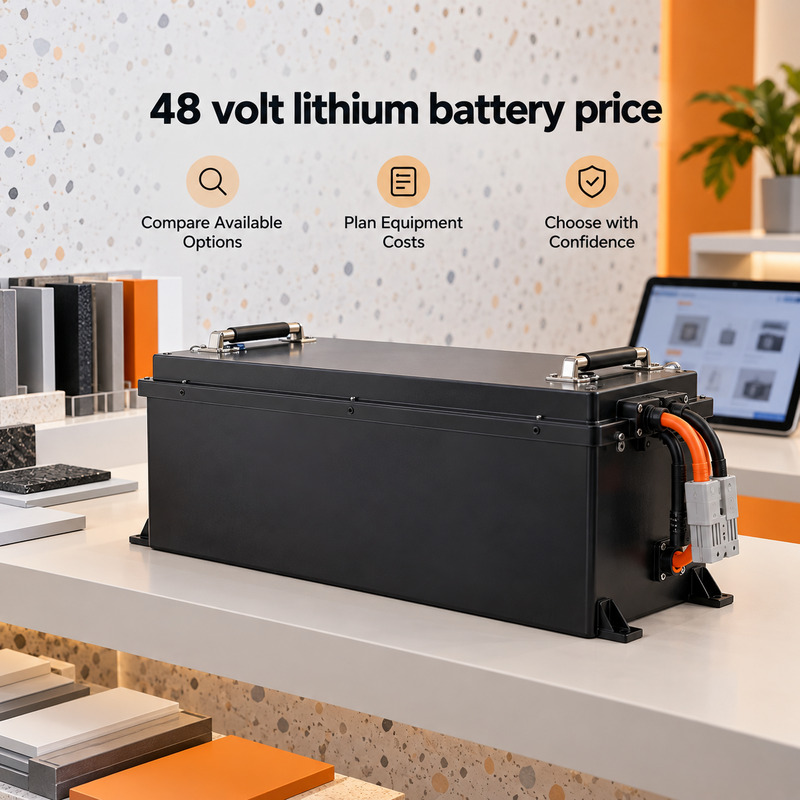
48 Volt Lithium Battery Pricing and Sourcing Guide

5,000+ units ready stock, 1–5 days fast global delivery

application/48-volt-lithium-battery-price, application/48-volt-lithium-battery-price, 
Inquiry
Inquiry

48 volt lithium battery price

The  demand  for  48  volt lithium batteries has surged  across  various industries, especially for applications in energy storage, RVs, solar  systems,  and marine uses. Understanding  the factors that influence the 48 volt lithium battery price is  crucial for B2B buyers  such  as  purchasing managers, engineers,  and distributors. This  article will  guide  you through key considerations when sourcing these  batteries, important specifications to evaluate, common  issues  associated with them, and how to select the right battery for your project.

Key Specifications to Evaluate in 48 Volt Lithium Battery Options

Key Specifications to Evaluate in 48 Volt Lithium Battery Options

When evaluating different 48 volt lithium battery options, various specifications must be considered. Key specifications  include:

Capacity (Ah): This indicates how much energy the battery can store. A higher capacity means longer usage times, which is critical for  applications like RVs and off-grid solar systems.

Cycle Life: This refers to how many times the battery can be  charged and discharged before its capacity significantly diminishes. For example, LiFePO4 batteries typically offer a cycle life of over 2000 cycles, making  them more economical in the long term.

Discharge Rate: This is important for applications requiring  high power output. Understanding the discharge rate helps ensure  that the battery can meet  the power demands  of  your specific application.

Weight and Physical  Dimensions: Depending on the installation environment, the weight  and size of the battery can impact usability and efficiency. Ensure these dimensions align with your  system requirements.

Operating Temperature Range: Different  applications may expose batteries to various  temperature conditions. Confirm that the chosen  battery can operate effectively within your specific temperature  range.


By thoroughly assessing these  specifications, buyers can make  informed decisions  that align with their operational needs.

Common Issues with 48 Volt Lithium Batteries and Solutions

B2B buyers should be  aware  of common issues  that can arise with  48 volt lithium  batteries. One prevalent problem  is thermal management. Lithium batteries can overheat during operation, which may  lead to safety hazards  or reduced performance. Implementing thermal  management solutions, such as  using a battery management system (BMS) with temperature regulation features, can mitigate this risk.

Another issue is capacity fade over time. It’s important to  choose batteries with a proven cycle  life and to adhere to  recommended charging practices. Regular maintenance and periodic checks can help in identifying early signs of capacity loss.

Lastly, compatibility  with existing  systems  can pose challenges. Before purchasing, ensure that the battery specifications align  with your current hardware and that the BMS can support the new battery type.  Conducting a  thorough compatibility check can prevent  operational disruptions.

How to Choose the Right 48 Volt Lithium Battery for Your Projec

Selecting the right 48 volt lithium  battery  for your project involves understanding both your application requirements and the battery's specifications. Start by defining the energy needs of your  project. For instance, an RV setup may require a battery with a different discharge rate and capacity compared to a solar  energy storage system.

Next, assess the  environmental  conditions where the battery will be used. Factors such as  temperature fluctuations, humidity, and  exposure to moisture can influence battery performance. Opt for batteries designed to withstand these conditions.

It's also advisable to request  samples before making a bulk purchase. Testing a sample under  actual  operating  conditions can  provide valuable  insights into the battery's performance and compatibility with your systems. This step  can help in confirming that the battery  meets your expectations in terms of efficiency and  reliability.

Lastly, don’t hesitate to engage  with the manufacturer to discuss your specific needs. They can  provide tailored recommendations  based on their expertise in the industry.

Benefits of Using 48 Volt Lithium Batteries in Energy Storage Solutions

48 volt  lithium batteries offer numerous advantages for  energy storage solutions, making  them an  attractive choice for  B2B applications. One significant benefit is their high energy density, which allows  for more energy storage in  a smaller footprint compared to  traditional lead-acid batteries. This feature is particularly beneficial  for applications with limited space, such as residential energy storage systems.

Another advantage is the long cycle life of lithium batteries, which can significantly reduce replacement costs over  time. With proper management, these batteries can last several years, providing a reliable energy source  without frequent replacements.

Additionally, lithium  batteries  generally have a faster charging capability compared  to other battery  types. This can translate to reduced downtime for  applications that require quick energy replenishment, such as in UPS  systems.

Finally, the lower maintenance requirements associated with lithium batteries make them a cost-effective  solution in the long run. Unlike lead-acid batteries, lithium does not require regular topping off with water, which simplifies management and reduces labor costs.

By considering these benefits, B2B buyers can make  informed decisions that enhance their operational efficiency  and reduce long-term costs.

What to Consider When Sourcing 48 Volt Lithium Batteries Wholesale

When sourcing 48 volt  lithium batteries wholesale, buyers should prioritize several factors to  ensure they choose the right supplier and product. First,  assess the manufacturer's reputation and experience in the industry.  A reliable manufacturer, like Shenzhen  Yanshuosheng  Technology Co., Ltd., which specializes in  LiFePO4 energy storage systems, can offer insights into their production capabilities and product quality.

Next, consider the certifications  that the batteries  hold. Look for products that  have  passed certifications such as UN38.3 and  CE, which indicate  compliance with international safety standards.  These certifications are particularly  important for buyers in the solar and marine applications, where safety and reliability are paramount.

Additionally, inquire about the minimum order quantity  (MOQ) and production capacity. Understanding these factors can help  you plan your inventory and manage costs effectively. Customization capabilities, including packaging and labeling  options,  are also essential to meet  specific business needs.

Get a Free Quote

Our representative will contact you soon.
0/1000