Choosing the Right 48 Volt Lithium Battery

5,000+ units ready stock, 1–5 days fast global delivery

application/48-volt-lithium-battery, application/48-volt-lithium-battery, 
Inquiry
Inquiry

48 volt lithium battery

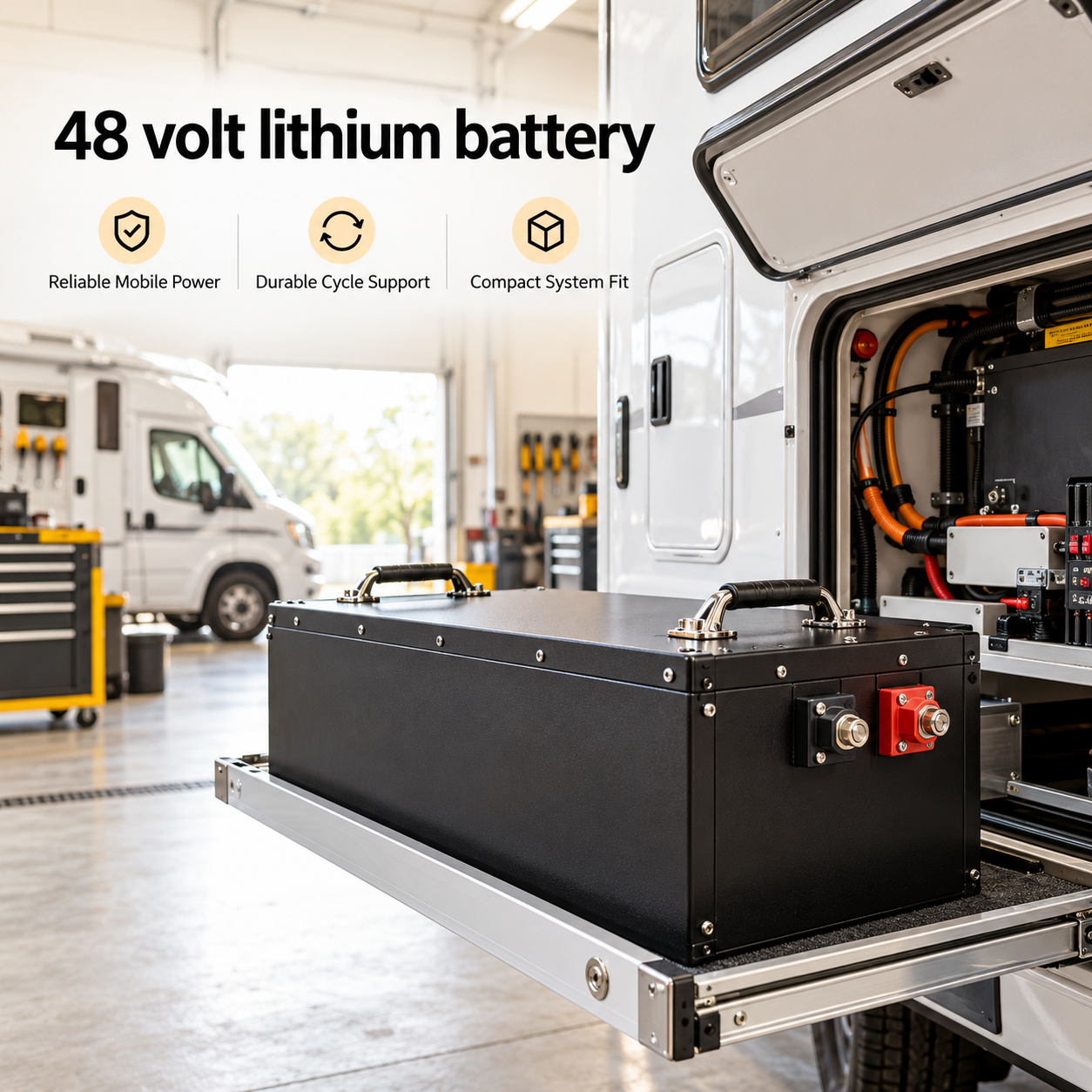
The 48 volt lithium  battery is a powerful energy storage solution increasingly utilized in various applications, including renewable energy systems, electric vehicles, and backup power systems. For B2B buyers, particularly  purchasing managers  and  engineers, the selection  of the right battery involves considering specifications, reliability, and  supplier  capabilities. This  article will guide you through how  to choose  the right battery,  identify  reliable suppliers,  provide  installation  guidance, outline common issues and  solutions,  and discuss the advantages of  48 volt lithium batteries in  renewable  energy applications.

Reliable Suppliers of 48 Volt Lithium Batteries for Bulk Orders

Reliable Suppliers of 48 Volt Lithium Batteries for Bulk Orders

When sourcing 48 volt  lithium batteries, partnering with a reliable supplier is crucial for ensuring consistent quality and availability. Here are some steps to identify trustworthy suppliers:

Check Certifications: Verify if the supplier holds relevant certifications, such as UN38.3 and CE,  indicating  compliance with international safety standards,  which can also reflect their commitment to quality.

Evaluate Experience: Suppliers with extensive experience in manufacturing lithium batteries are often more capable of providing reliable products. Research their history, including years in the industry and their customer base.


Production  Capabilities:  Assess the supplier's manufacturing capabilities, including their  technology, quality control processes, and production capacity. A supplier with advanced manufacturing processes can  often meet large orders with consistent quality.


Customization Options:  Some projects may require specific modifications to battery specifications. Ensure  that the supplier can accommodate custom requests, whether it involves altering dimensions, capacity, or other features.

Market Reach: Evaluate their  export  markets  and  whether they have successfully supplied batteries to similar applications in your  industry. A supplier with a global  presence may provide insights into best practices and innovations.

Choosing  a supplier who meets these criteria can lead to a successful  purchasing experience and ongoing support.

Installation Guidance for 48 Volt Lithium Batteries in Various Applications

Proper  installation of 48  volt lithium  batteries is essential  for optimal performance and safety. Here are some  installation guidelines tailored to different applications:

Solar Energy Systems: In  solar applications, batteries should be installed close to the inverter to minimize voltage loss.  Ensure proper ventilation around the  batteries to prevent overheating, especially in enclosed spaces.


Electric Vehicles (EVs): For EV applications, consider the integration of the battery management system (BMS) to monitor performance parameters. Proper mounting  and securing of batteries are crucial to withstand vibrations during operation.

Backup Power Systems: In UPS systems, batteries should be installed in a manner that allows for easy access for maintenance. Ensure that  the installation  complies with electrical codes and standards to prevent safety hazards.

Marine Applications: Marine installations  require additional protection from moisture and corrosion.  Batteries should  be housed in waterproof compartments, and terminals should be treated with anti-corrosive coatings.

General  Safety Practices: Always follow the manufacturer's installation guidelines  and safety protocols. Use appropriate tools and protective gear  during installation, and consult with an expert if needed.

Proper installation not only enhances  the lifespan of the batteries but also  ensures safe and efficient operation across various applications.

Understanding Common Problems with 48 Volt Lithium Batteries and Solutions

While 48 volt lithium batteries are robust, they can encounter issues  that may  affect  performance. Here are common problems and their solutions:

Overcharging: Overcharging can lead to battery damage. Ensure that your  system includes a reliable BMS to prevent overcharging by regulating the  charge levels.

Temperature Sensitivity: Lithium batteries can be sensitive to extreme temperatures.  If batteries are used in environments  that exceed  specified ranges, consider thermal management solutions like heating or cooling systems.

Self-Discharge: Lithium batteries typically  have low self-discharge rates, but  if a battery discharges rapidly when  unused, it might indicate a fault. Regularly monitor battery health and perform maintenance checks to identify any underlying issues.

Connection  Problems: Poor connections can lead to voltage drops and reduced performance. Use high-quality  connectors  and ensure all connections are tight and corrosion-free.

Battery  Aging: Over time, battery capacity can  diminish. Implement a regular monitoring  schedule to track performance and  replace batteries  when they no longer meet application requirements.

By proactively addressing  these common issues, you can maintain the efficiency and reliability of your 48 volt lithium batteries.

The Advantages of 48 Volt Lithium Batteries for Renewable Energy Systems

The adoption of  48 volt  lithium batteries in renewable energy  systems offers several advantages:

Efficiency: Lithium batteries have higher energy density compared to traditional lead-acid batteries, providing more energy in a smaller  size and weight. This efficiency is crucial for maximizing the effectiveness of solar or wind energy systems.

Longevity: With proper management  and  care, lithium batteries can last significantly longer  than  conventional batteries,  often exceeding  2,000 cycles. This longevity translates to lower replacement  costs  and reduced environmental impact.

Fast Charging: 48 volt lithium batteries can be charged much  faster than their lead-acid counterparts. This is especially beneficial  in applications where downtime must  be minimized, such as in backup power systems.

Low Maintenance: Unlike  lead-acid  batteries, lithium batteries require minimal maintenance, reducing the time and cost associated with upkeep. This is particularly advantageous in remote or challenging environments.


Scalability: Lithium battery systems can be easily scaled up or down depending on energy needs. This flexibility makes  them suitable for various applications, from residential solar systems to larger commercial energy storage setups.

Incorporating 48 volt lithium batteries into renewable energy systems not only enhances performance but also supports sustainability goals through improved efficiency and lower  environmental impact.

How to Choose the Right 48 Volt Lithium Battery for Your Project

Selecting the appropriate 48 volt lithium battery begins with understanding the specific requirements of your project. Key considerations include capacity, discharge rate, size, weight, and environmental conditions.

Capacity: This  is typically  measured in ampere-hours (Ah) and  indicates how much energy the battery can store. For  instance,  a 100Ah battery can  provide 48 volts at 100 amps for one hour. Assess your energy needs to determine the  right capacity.

Discharge  Rate: This refers to how quickly the battery can release its stored  energy.  Applications  that demand high power, such as electric vehicles, may require batteries with high discharge  ratings,  typically expressed in C-rates.

Size and Weight: Depending on the application—be it an RV, solar storage, or marine use—space  and weight can be critical factors. Ensure  that the chosen battery fits within the physical constraints of your installation.

Environmental Conditions: Consider the operational environment, including temperature ranges and exposure to moisture or corrosive elements. Batteries might require specific enclosures or protection mechanisms for longevity.

Certification and Compliance: Ensure that the  battery  meets necessary safety and transport regulations,  such as UN38.3 and CE certification, to avoid complications in logistics and usage.

By focusing on  these parameters, you can identify a battery  that aligns with your project requirements and ensures optimal performance.

Get a Free Quote

Our representative will contact you soon.
0/1000