Key Insights on 48V 100Ah Lithium Ion Batteries

5,000+ units ready stock, 1–5 days fast global delivery

application/48v-100ah-lithium-ion-battery, application/48v-100ah-lithium-ion-battery, 
Inquiry
Inquiry

48v 100ah lithium ion battery

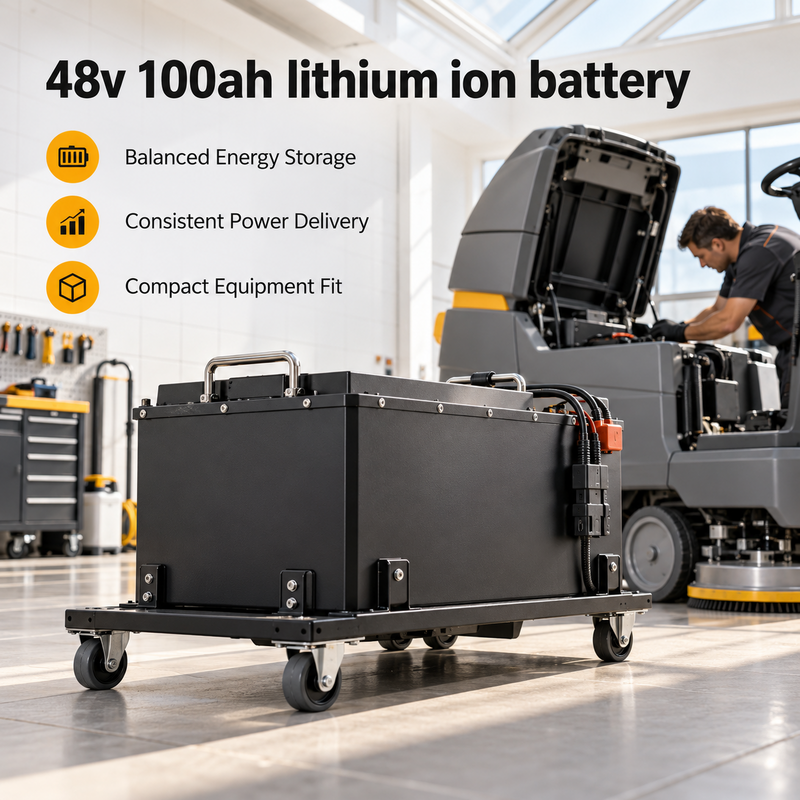
Lithium-ion batteries are essential components in various energy storage applications, and the  48V  100Ah lithium-ion battery is  particularly  popular due to its balance of capacity and voltage. This  article will cover  key  specifications, quality  evaluation,  cost factors for  bulk orders, applications  across industries, and solutions to common  problems associated  with these  batteries. Understanding  these aspects  will help  purchasing managers,  engineers, and product managers  make  informed decisions when sourcing these batteries.

How to Evaluate the Quality of 48V 100Ah Lithium Ion Batteries

How to Evaluate the Quality of 48V 100Ah Lithium Ion Batteries

Evaluating the quality of a 48V 100Ah lithium-ion battery involves several key steps:

Certifications: Always check for recognized certifications  such as UN38.3 and CE marking. These certifications indicate that the battery  meets international  safety  standards  for  transport  and usage.

Manufacturer Reputation: Research the manufacturer's track record in the industry. Companies like Shenzhen Yanshuosheng Technology  Co., Ltd.  have established expertise in lithium-ion  battery production and energy storage  systems. A reputable manufacturer will have quality control processes in place, ensuring  that products meet specified standards. For instance, their High Performance 50Ah LiFePO4 Lithium Ion Battery Pack Deep Cycle 12V High Efficiency Lithium Iron is a testament to quality.

Performance Testing:  Request performance data, including discharge rates, cycle life testing  results, and efficiency metrics. This information helps verify that the battery will  perform as expected in your specific application.

Customer Reviews and Case Studies: Look for testimonials or case studies from other users. These insights can reveal real-world performance and reliability.

Sample Testing: Before committing to  a bulk order, request samples and  conduct tests under actual operating  conditions. This practice can help  identify  any potential issues early on.

Cost Factors to Keep in Mind for Bulk Orders of 48V 100Ah Batteries

When considering bulk orders of 48V 100Ah lithium-ion batteries, various cost  factors come into play:

Unit Price: The unit price often decreases with larger orders. However, be cautious of the total cost, including shipping and handling fees.

Customization Costs: If  you  require custom features—such  as specific dimensions, connectors, or battery  management  system adaptations—factor in these additional costs.

Packaging and Shipping: Due to  the  nature of lithium-ion batteries, specialized  packaging  may  be  necessary to  comply with  safety regulations. Additionally, shipping costs can vary significantly based on  destination and required transport safety  measures.

Import Duties and Taxes: If sourcing from an overseas supplier, consider potential  import duties and taxes that  could affect the overall  cost.

Warranty and Support: Evaluate the warranty offered and any potential costs associated with  after-sales support or replacement parts. A solid warranty can justify a higher initial price.

Applications of 48V 100Ah Lithium Ion Batteries in Various Industries

The versatility of 48V 100Ah lithium-ion  batteries allows for applications across multiple industries:

Solar Energy Systems: These batteries are widely used  for energy storage  in solar power setups, providing reliable backup  energy and helping to manage peak loads. For example, using an Energy Storage Systems 3.6KW 5.5KW 24V 48V On/Off Grid Solar Inverter can enhance the efficiency of these systems.

Recreational Vehicles (RVs): The compact  size and weight make  them ideal for RV applications, where space  is limited yet reliable power is necessary for appliances and systems.

Uninterruptible  Power Supplies (UPS): In UPS systems, these  batteries ensure that critical systems remain operational during  power outages, making them essential for  data  centers and hospitals.

Marine Applications:  The durability and performance of  these batteries make them suitable for marine applications, where battery reliability is crucial for navigation  and onboard systems.

Electric  Vehicles: With the growing  demand  for electric vehicles, 48V 100Ah batteries play a significant role in providing  the necessary energy for efficient  operation.

Solutions to Common Problems with 48V 100Ah Lithium Ion Batteries

While 48V  100Ah lithium-ion batteries are generally reliable,  some common issues may arise:

Overheating: To prevent overheating, ensure proper ventilation and avoid exposing batteries  to extreme temperatures. Utilizing a quality BMS can help  manage temperature levels.


Self-Discharge: Lithium-ion batteries naturally self-discharge over  time. Regularly monitoring charge levels and using a battery  management system can help mitigate  this issue.

Cycle Degradation: Over time, repeated charging and discharging can lead to capacity loss. Implementing a proper charging schedule and avoiding deep  discharges  can extend battery life.

Compatibility Issues: Ensure that your battery specifications  align with your application requirements. Mismatched voltage or  capacity can lead to performance  issues. 

Quality Control Problems: If you encounter  inconsistent  performance, it may indicate quality control issues during manufacturing.  Engage with reputable suppliers that follow strict quality assurance protocols to minimize  this risk.

By understanding these  specifications,  evaluation techniques, cost factors, applications, and common problems associated with 48V 100Ah lithium-ion batteries, you can make informed purchasing decisions that meet your operational needs.

Key Specifications for 48V 100Ah Lithium Ion Batteries You Should Know

When selecting a 48V 100Ah lithium-ion battery, several specifications are critical to ensure optimal performance for your application.

Voltage and Capacity: The nominal voltage of 48V provides a reliable  output for many systems, while the 100Ah capacity indicates that the battery can deliver 100 amps for one hour or 50 amps for two  hours, making it suitable for  applications with  varying power demands.

Cycle Life: A key specification  is the cycle life, which  indicates the number of charge and discharge cycles  the battery can undergo before its capacity significantly diminishes. A high cycle life (typically over 2000 cycles) is essential for applications requiring  longevity, such as solar energy  systems or electric vehicles.

Battery Management System  (BMS): An independent BMS is crucial  for monitoring the  battery's health, managing charge levels, and ensuring safety during operation. It helps  prevent overcharging and excessive  discharging, enhancing battery life  and safety.


Weight and Dimensions: These physical characteristics affect installation and application compatibility. The  weight should be manageable  for your setup, and the  dimensions must fit the designated space.

Temperature Range: Understanding the operating temperature range is vital. Most lithium-ion batteries perform optimally  between 0°C and 60°C, but extremes can affect performance and lifespan.

Get a Free Quote

Our representative will contact you soon.
0/1000