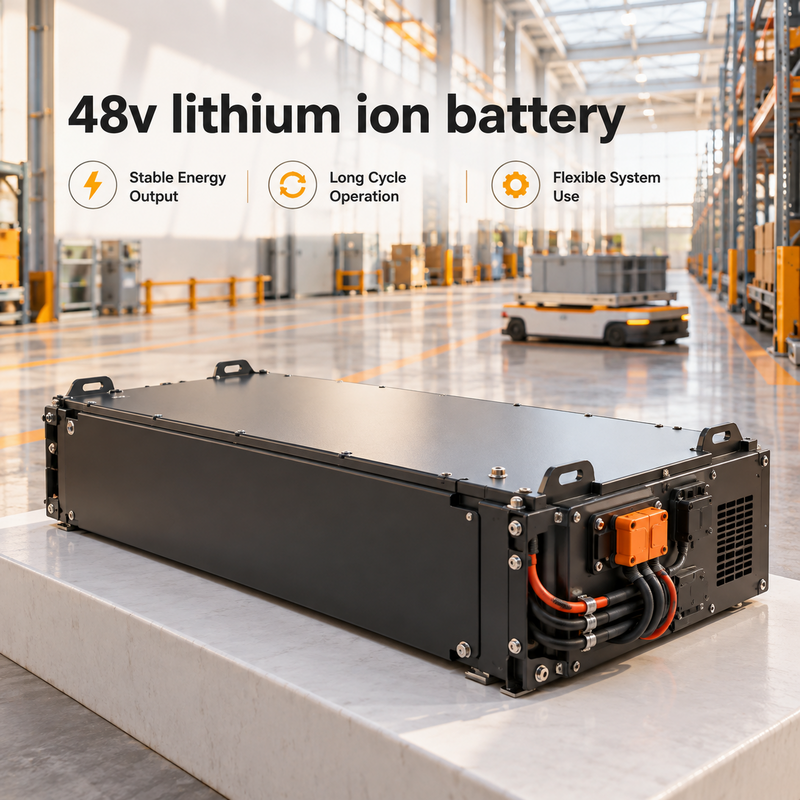
Evaluating 48V Lithium Ion Batteries for Bulk Orders

5,000+ units ready stock, 1–5 days fast global delivery

application/48v-lithium-ion-battery, application/48v-lithium-ion-battery, 
Inquiry
Inquiry

48v lithium ion battery

When it  comes  to sourcing 48V  lithium ion batteries, B2B buyers  face several  critical factors that can  significantly impact  performance, cost, and application suitability. A reliable  48V  lithium  ion  battery  serves  various applications, including solar energy storage, marine systems, and uninterruptible power  supplies  (UPS). This article will guide you through evaluating the  quality  of these batteries, understanding their technical specifications, considering cost factors, identifying potential issues,  and finding  trustworthy suppliers.

 
Technical Specifications of 48V Lithium Ion Batteries You Should Know

Technical Specifications of 48V Lithium Ion Batteries You Should Know

Understanding  the technical specifications of  48V lithium ion  batteries is essential for  selecting the right product for your needs. Key specifications include capacity (measured in amp-hours), discharge rate, cycle  life, and thermal stability.

Capacity: This indicates how much energy a battery can store and is critical for determining how long the battery will last under load. Ensure that the capacity aligns with  your application requirements.

Discharge  Rate: Measured in C-rates, this indicates how quickly a battery can  discharge its stored  energy. A higher discharge rate may be necessary for applications  requiring quick bursts of power, such as electric vehicles or high-demand commercial applications.

Cycle Life: This refers to the number of complete charge and discharge  cycles a battery can  undergo before its capacity significantly diminishes. A  longer cycle life  is preferable for reducing long-term replacement costs.

Thermal Stability: 48V lithium ion batteries can experience thermal runaway if they overheat.  Understanding the  thermal characteristics helps in  designing effective cooling strategies and ensuring safe operation in varied environments.

Buyers should verify these  specifications against the intended application and  conduct thorough discussions with suppliers  to ensure compatibility.

Cost Factors to Consider When Purchasing 48V Lithium Ion Batteries

Cost  considerations are critical  when  purchasing 48V lithium ion batteries, as they can  vary significantly based on several factors. First, the  choice of battery chemistry plays a significant  role. LiFePO4 batteries, for example, tend to offer better  thermal stability and cycle life, which might justify a higher upfront cost compared  to other lithium-ion chemistries.

Additionally, consider the scale of  your order.  Larger bulk  orders typically come with price breaks, but ensure you also evaluate the total cost of ownership, which includes installation, maintenance, and potential replacement  costs over the battery's lifecycle. 

Other cost factors include shipping logistics and any import tariffs if sourcing from international suppliers. Ensure that you factor in the cost  of quality  inspections and testing if your project requires stringent quality control measures.

Lastly, customizations—such as  specific dimensions, capacities, or integrated BMS features—can  impact the overall price.  Clearly communicating  your requirements during the RFQ process can help manage expectations and  prevent unexpected costs.

Common Problems with 48V Lithium Ion Batteries and Their Solutions

Despite  their advantages, 48V lithium ion batteries  can  encounter various  issues.  Common problems include capacity fade, thermal management challenges, and connectivity  issues.

Capacity Fade: Over time,  batteries may lose their capacity due to factors like improper  charging cycles or environmental stresses. To mitigate this, ensure that the  BMS is effectively managing charge and discharge cycles  and that users are following best practices for charging.

Thermal Management:  Inadequate  cooling can lead to overheating,  which can cause thermal runaway. Implementing a robust thermal management  strategy, which may include heat sinks or active  cooling systems, is essential for maintaining operational safety.

Connectivity Issues: Poor connections can lead to voltage drops or inconsistent  performance. Regular  maintenance checks,  including inspecting connections and terminals for corrosion or wear, can help avoid these  issues.

Understanding how to identify and address these common problems can enhance the reliability of your battery systems, minimizing downtime and ensuring optimal performance.


Where to Find Reliable Suppliers of 48V Lithium Ion Batteries

Finding a reliable  supplier for 48V lithium ion batteries involves thorough research and evaluation. Start by identifying manufacturers with a proven track record in the industry. Look for companies  that specialize in  energy storage systems and have experience serving your specific application sector, such  as  solar, marine, or UPS.

Review supplier certifications, as these can provide insights into their commitment to quality and  safety. Engaging  with suppliers that have independent BMS  and safety certifications will increase your confidence  in  their products.

Utilize industry trade  shows, online directories, and professional networks to gather information on potential suppliers. Requesting  references from previous clients can  also provide valuable insights into a supplier's reliability and responsiveness.

Finally, consider reaching out to  suppliers for  introductory discussions. Assess their willingness to provide technical  support and customization options, as this can be  an indicator of their commitment to customer satisfaction.

By following these guidelines,  you can effectively navigate the  complexities of sourcing 48V lithium ion batteries,  ensuring that you make informed decisions that align with your operational needs.

Evaluating the Quality of 48V Lithium Ion Batteries for Bulk Orders

When  evaluating the quality of 48V lithium ion batteries, several key aspects should be considered. First, look for comprehensive certifications such as UN38.3 and  CE, which signify compliance with international safety standards. These  certifications are crucial in  ensuring the batteries meet high-performance and safety benchmarks, particularly for applications in solar energy and marine  environments.

Another important quality indicator is  the battery  management  system  (BMS). A well-designed BMS enhances battery performance by monitoring  charge levels, temperature, and overall health, thus prolonging the battery's lifespan and  ensuring safety.  For bulk orders, it's advisable to request samples to assess their performance under actual operating conditions. This step can help mitigate risks associated with mass production,  ensuring the  quality meets your exact requirements.

Additionally, confirm the manufacturer's quality  control processes. Regular  inspections during production, along with rigorous testing  protocols for each batch, can provide  assurance of consistency and reliability. Experienced buyers often find that investing time  in supplier evaluations pays off in the  long run, reducing the likelihood of facing issues once the batteries are deployed.

Get a Free Quote

Our representative will contact you soon.
0/1000