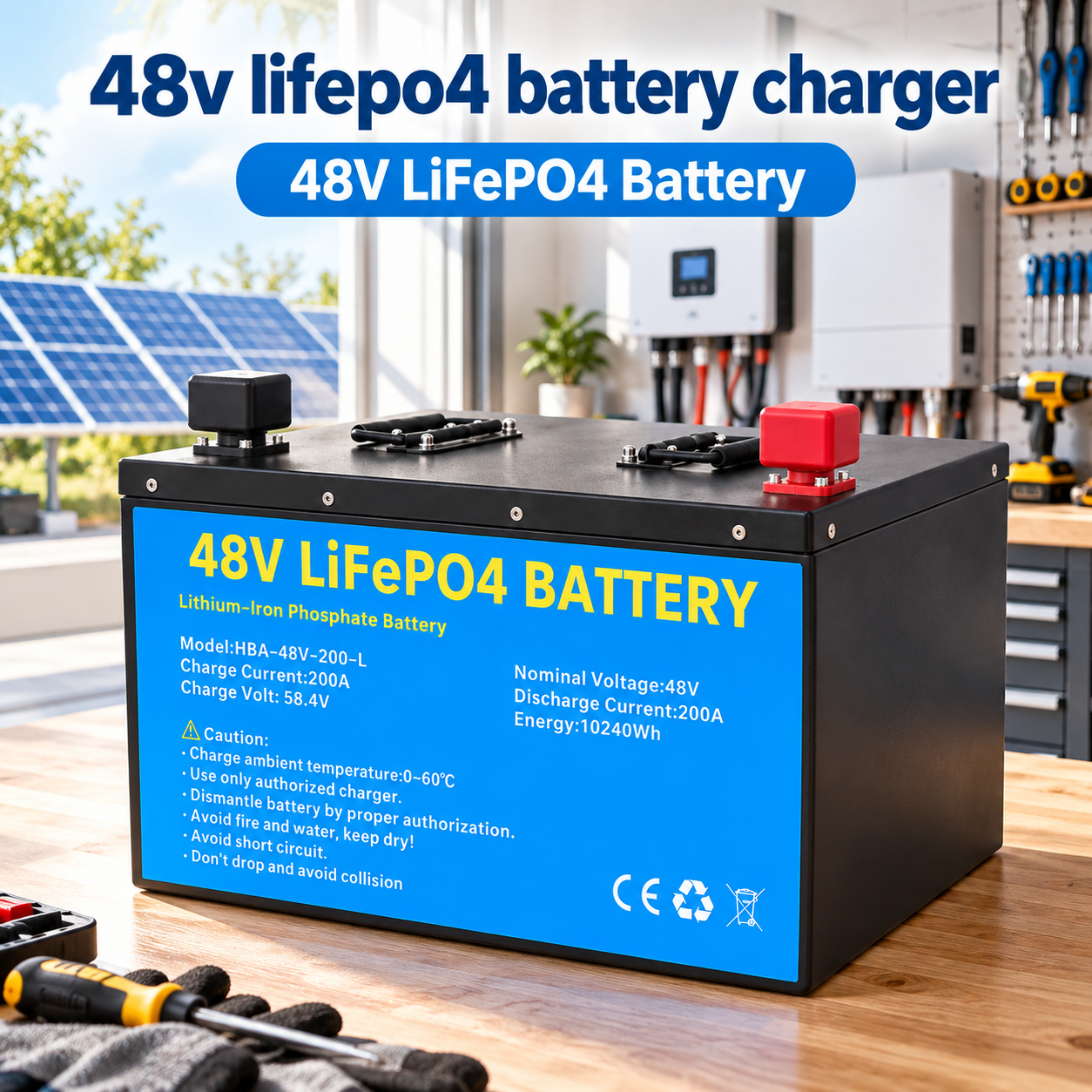
Choosing the Right 48V LiFePO4 Battery Charger

5,000+ units ready stock, 1–5 days fast global delivery

application/48v-lifepo4-battery-charger, application/48v-lifepo4-battery-charger, 
Inquiry
Inquiry

48v lifepo4 battery charger

The 48V LiFePO4  battery charger is essential for efficiently charging lithium  iron phosphate batteries, commonly used in applications like solar energy systems, RVs, UPS, and marine  environments. As a B2B buyer,  selecting the right charger involves  understanding specific  requirements,  compatibility,  and potential installation  issues. This  article aims  to guide purchasing managers, engineers, and distributors  through  key considerations  when  sourcing a 48V  LiFePO4 battery  charger, ensuring they  make informed decisions  that  meet their operational needs.High Performance 50Ah LiFePO4 Lithium Ion Battery Pack Deep Cycle 12V High Efficiency Lithium Iron

Common Installation Issues with 48V LiFePO4 Battery Chargers and Solutions

Common Installation Issues with 48V LiFePO4 Battery Chargers and Solutions

Installation of a 48V  LiFePO4  battery charger can present several  challenges, but  understanding these potential issues can help streamline the process.  One common problem is incorrect wiring, which  can lead  to  charger failure or even damage to the battery. To mitigate this risk, always refer to the manufacturer’s wiring diagram and double-check connections  before powering up the charger.

Another  issue may arise  from inadequate ventilation. Many  chargers  generate heat  during operation, and  insufficient airflow can lead to overheating, potentially triggering safety shutdowns. Installing the charger in  a well-ventilated area or incorporating cooling  mechanisms can alleviate this concern.


Additionally, mismatched voltage levels between the charger and battery can cause  inefficiencies or damage. Always verify that the charger is rated for 48V systems and compatible with the specific LiFePO4 battery in use. If uncertain, consult with the manufacturer to ensure compatibility and optimal  performance.

Applications of 48V LiFePO4 Battery Chargers in Various Industries

48V LiFePO4 battery chargers are versatile and find applications across several  industries. In the  renewable energy sector, these chargers are commonly used  with solar energy storage systems, enabling efficient energy  management for residential and commercial applications. Their  ability to handle deep-cycle  charging makes them ideal for solar setups where energy storage is critical.

In the recreational vehicle (RV) industry, these chargers  support off-grid living by providing reliable power for appliances and  systems. Their lightweight design and efficiency  make them a preferred choice for RV enthusiasts looking to maintain battery health during travel.

The marine industry  also benefits from 48V LiFePO4 chargers, as they provide  robust performance in  harsh environments. These chargers ensure that batteries are maintained at optimal levels  during extended periods at sea, reducing the risk of battery failure and enhancing vessel safety.

Lastly,  in uninterruptible power supply (UPS) systems,  these chargers help ensure that critical  systems remain powered during  outages.  Their reliability and efficiency make them essential for maintaining  business continuity in  various commercial operations.Deep Cycle 12V 24V 50Ah 100Ah 200Ah LiFePO4 Lithium Ion Solar Energy Battery Storage Systems With BMS

Comparing Different Models of 48V LiFePO4 Battery Chargers for Projects

When  assessing various models  of 48V LiFePO4 battery chargers for specific projects, buyers  should consider several key specifications. First, evaluate the charging speed, typically indicated by the output current. Chargers  with  higher amperage can significantly reduce charging time,  which may be an  essential factor for time-sensitive projects.


Next, examine the efficiency rating of  each charger. More efficient models will convert a higher percentage of input power into usable  output, reducing  energy waste and operational costs. Look  for products that provide efficiency ratings, as this will help in selecting  models that align with sustainability goals.

Additionally, warranty and customer support are crucial factors. A robust warranty indicates manufacturer confidence  in their  product, while responsive customer service can assist buyers with installation or troubleshooting issues.

Lastly, consider any additional features such as programmable settings or  integrated monitoring  systems. These  can provide added convenience  and allow for  better management of the charging process, especially in large deployments or complex systems.

Expert Guidance on Sourcing 48V LiFePO4 Battery Chargers for Distributors

For distributors looking to source  48V LiFePO4 battery chargers, understanding supplier capabilities is vital. Start by assessing the manufacturer's production  capacity and  lead times. This information will help determine if they can meet your volume requirements and delivery schedules.

Request product samples to evaluate build quality, performance, and compatibility with your existing systems. Testing samples under actual operational conditions  is recommended to ensure they meet specifications before committing  to larger orders.

Additionally, inquire about  customization options. Some manufacturers may  offer personalized  solutions tailored to specific applications or branding requirements, which can provide a competitive edge in the marketplace.

Lastly, verify the manufacturer's  certifications. Ensure they comply with relevant safety standards, which  can enhance trustworthiness and reliability in  your supply chain.  Engaging  with  suppliers who have a robust quality control process will also ensure that the products consistently meet  your quality expectations.

By  considering these factors, distributors can make informed decisions that align with their  business objectives and customer needs,  ultimately ensuring  a smooth procurement process for 48V  LiFePO4 battery chargers.

How to Choose the Right 48V LiFePO4 Battery Charger for Your Needs

Selecting the right 48V LiFePO4 battery charger  involves several critical factors.  First, consider the charger's  output current, which typically ranges from 10A to  60A.  A higher output current can  reduce charging time but may not be suitable for all battery configurations.

Next, evaluate  the charger's compatibility with your specific  battery management system (BMS). Since your batteries may come equipped with an independent BMS, ensure the charger can communicate effectively with it to prevent overcharging  and enhance battery longevity.


Additionally, look for chargers with advanced safety features such as over-voltage, over-current, and short-circuit protection. Certifications like  CE  and UN38.3  demonstrate  compliance with safety standards, which is crucial for reliability in commercial applications. Finally,  consider  the environmental conditions where the charger will be used.  Chargers designed for outdoor or  marine  environments should have appropriate ingress protection (IP)  ratings to withstand moisture and dust.Energy Storage Systems 3.6KW 5.5KW 24V 48V On/Off Grid Solar Inverter Pure Sine Wave Inverter MPPT Hybrid Inverters

Get a Free Quote

Our representative will contact you soon.
0/1000