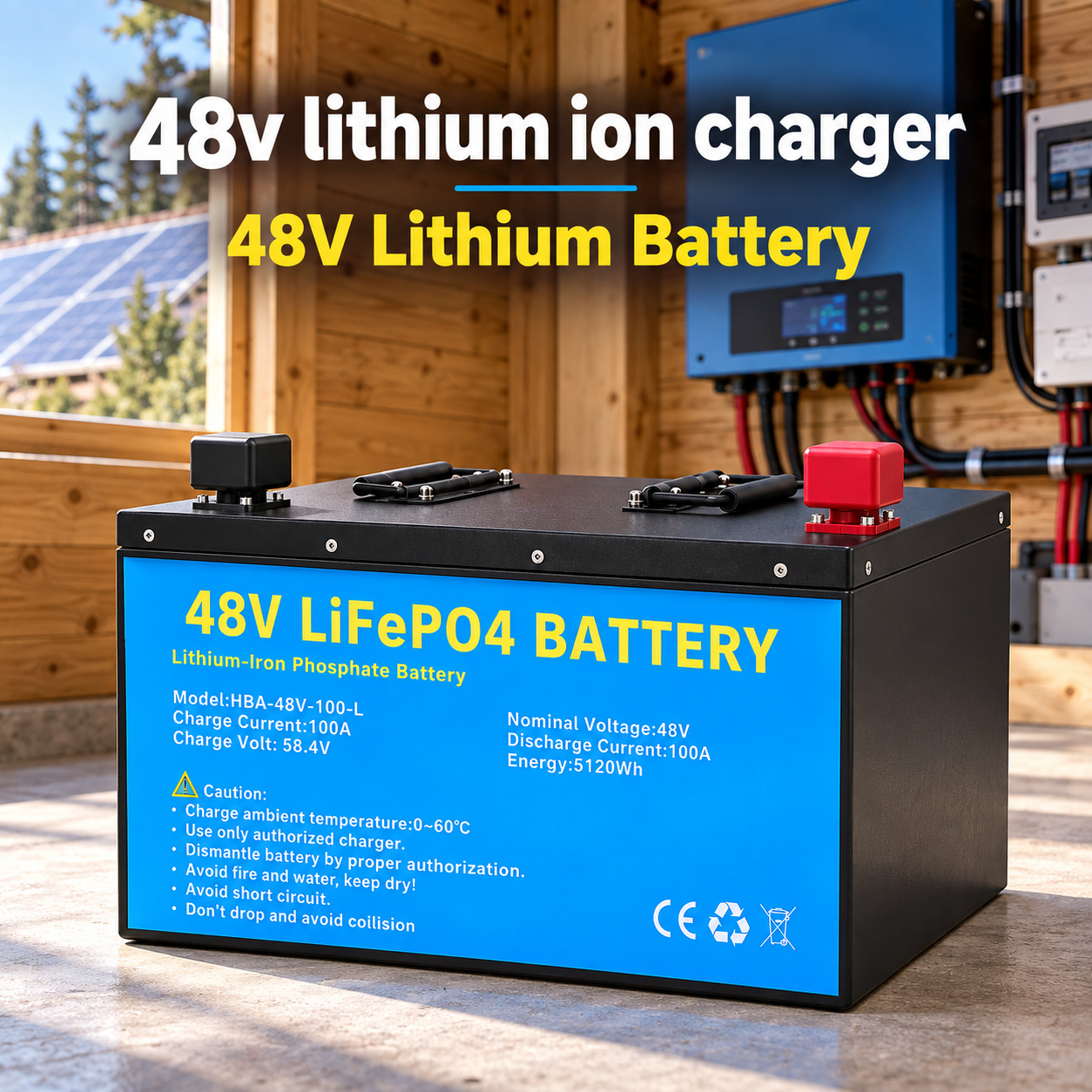
Key Factors for 48V Lithium Ion Chargers

5,000+ units ready stock, 1–5 days fast global delivery

application/48v-lithium-ion-charger, application/48v-lithium-ion-charger, 
Inquiry
Inquiry

48v lithium ion charger

48V lithium ion chargers play a crucial role in powering various  applications,  from renewable  energy systems to  electric vehicles.  As a B2B buyer, understanding the key features and specifications of these  chargers is  essential for making informed  purchasing decisions.  This  article will guide  you through evaluating the quality factors,  finding  reliable  suppliers,  installation guidelines,  cost considerations, and  the advantages of using  48V lithium ion chargers in energy storage  systems. For instance, using a High Performance 50Ah LiFePO4 Lithium Ion Battery Pack can significantly enhance your energy storage efficiency.

 
Where to Find Reliable Suppliers of 48V Lithium Ion Chargers

Where to Find Reliable Suppliers of 48V Lithium Ion Chargers

Finding trustworthy suppliers for 48V lithium ion chargers requires  careful research and evaluation.

Industry Directories and Trade Shows: Utilize industry directories that list certified manufacturers and suppliers. Attending  trade shows can also provide  direct access to suppliers, allowing for face-to-face discussions  about product specifications and  capabilities.

Supplier Reviews  and Testimonials: Investigate potential suppliers by looking for reviews and testimonials  from previous clients. This feedback  can provide insights into the supplier’s reliability, product  quality,  and customer service.

Certifications and Compliance: Ensure  that the  supplier holds necessary  certifications  relevant to your industry. This not only guarantees product quality  but also signifies a commitment to safety  and environmental standards.


Request for Quotations (RFQs): When reaching out to suppliers, prepare detailed RFQs that specify your requirements, including  application type,  expected performance, and any customization needed. This will help suppliers provide accurate quotes and  minimize misunderstandings.

Installation Guidelines for 48V Lithium Ion Chargers in Various Applications

Proper installation of 48V  lithium ion chargers  is crucial for maximizing efficiency and  safety.  Here are  key guidelines for different applications:

Solar Applications: Install  the charger in a shaded area to prevent overheating, and ensure proper ventilation around the unit. Connect the charger to  solar panels and battery  systems according to the  manufacturer’s wiring diagrams to  avoid damage.

Marine Applications: In marine environments, ensure that all connections are waterproof and corrosion-resistant. Chargers should be mounted securely to withstand vibrations and shocks commonly experienced on vessels.

RV and UPS Systems:  Place the charger in a dry, accessible location  to facilitate maintenance. Ensure that the charging  cables are adequately rated for the load  and that the installation complies  with relevant  electrical  codes.

General Safety Measures: Always follow the  manufacturer’s installation instructions. It’s advisable  to consult with a qualified  electrician for installations involving high voltages or complex systems.

Cost Factors to Consider When Purchasing 48V Lithium Ion Chargers

Understanding the cost factors  associated  with 48V lithium ion chargers can help in budgeting and financial planning for your projects.

Initial Purchase Price: The  upfront cost  can vary significantly based on charger specifications, features, and brand reputation. Higher-quality chargers  may have a higher purchase price but can  lead  to long-term  savings through improved efficiency and durability.

Installation Costs:  Factor in  the cost of installation, which may  require professional services. The complexity  of the  installation  can also affect costs, particularly for integrated systems in commercial  or industrial settings.

Maintenance and Operational Costs: Consider ongoing maintenance requirements and any potential downtime costs. Chargers  with built-in protective features may  require less frequent maintenance, leading to lower operational costs over time.


Warranty and Support: Evaluate the warranty  terms offered by the supplier. A robust warranty can provide  peace of mind and protect against manufacturing defects, which can affect long-term costs.

Advantages of Using 48V Lithium Ion Chargers in Energy Storage Systems

Utilizing 48V lithium ion chargers in energy storage systems  offers several benefits that enhance overall system performance. For example, using an All-in-One Energy Storage System can boost the efficiency of your charging setup.

Energy Efficiency: These chargers typically exhibit higher  energy efficiency compared to traditional lead-acid chargers. This efficiency  reduces energy costs and improves the overall sustainability  of energy storage solutions.

Longer Battery Life: By employing advanced charging algorithms and BMS features, 48V lithium ion chargers help to optimize charging cycles, significantly extending the life of lithium iron phosphate  batteries.

Lightweight and Compact Design:  48V lithium ion chargers are generally more compact  and lighter than their counterparts,  making them suitable for applications where space and weight are critical factors, such  as in RVs  and marine environments.

Scalability: These chargers can easily be integrated into larger systems, allowing for scalable energy solutions. This is particularly  beneficial for businesses looking to expand their  energy storage capacity in the future.

In  summary,  understanding the various aspects of 48V lithium ion chargers is vital for making informed  purchasing decisions.  By evaluating  quality factors, identifying reliable suppliers, following installation guidelines, considering cost factors, and recognizing the advantages, B2B buyers  can effectively integrate  these chargers into their energy storage systems.


Key Quality Factors to Evaluate in 48V Lithium Ion Chargers

When selecting a  48V lithium ion  charger, several quality factors must be considered to ensure optimal  performance and safety.


Charging  Efficiency: Evaluate  the charger’s efficiency rating, as higher efficiency translates to reduced energy losses during the charging process. A well-designed charger will have an efficiency  rating above 90%, which directly impacts energy costs and system performance.

Compatibility: Ensure the charger is compatible with the battery type  (LiFePO4 in your case) and the overall energy storage system. Mismatched chargers  may not deliver optimal charging profiles, leading to reduced battery lifespan.

Safety Certifications: Look for chargers with certifications such as  UN38.3 and CE, which indicate compliance with  international safety standards. This is particularly important for applications in critical sectors  like solar energy and marine environments.

Built-in Protection Features: Essential safety features include over-voltage, over-current, and  temperature protection. These features help prevent  damage to the charger and connected  batteries, ensuring longevity and reliability.


Independent  Battery Management System (BMS): A charger that  incorporates an independent BMS will  better monitor battery health, optimizing charging cycles  and enhancing overall system performance.

Get a Free Quote

Our representative will contact you soon.
0/1000