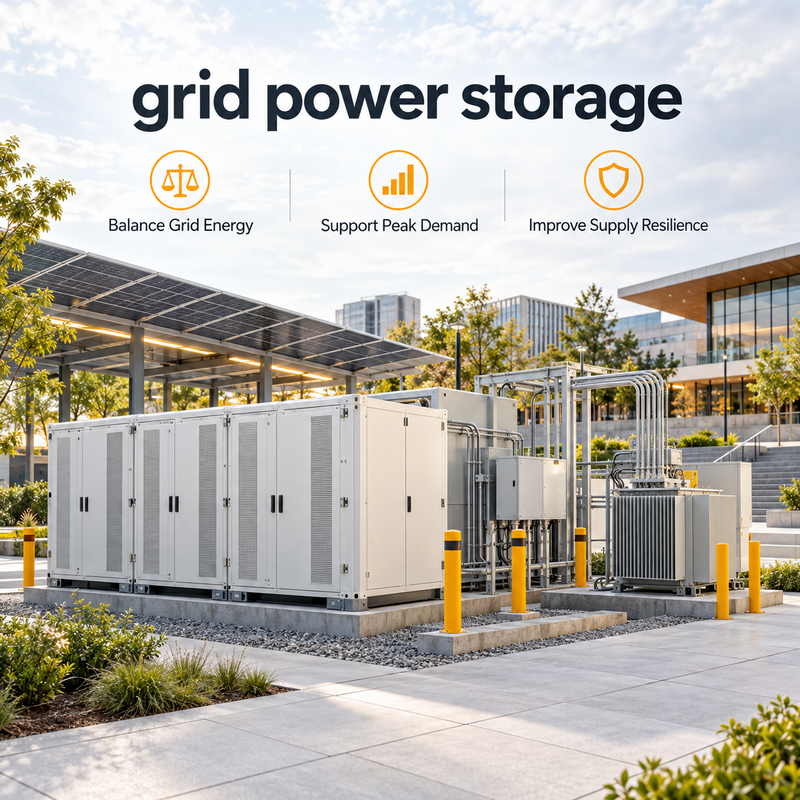
Choosing the Right Grid Power Storage Solutions

5,000+ units ready stock, 1–5 days fast global delivery

application/grid-power-storage, application/grid-power-storage, 
Inquiry
Inquiry

grid power storage

Grid power storage systems  are essential components  for  modern energy  management, allowing businesses to efficiently store and utilize energy from renewable sources or  other power inputs. For B2B buyers,  particularly in the manufacturing  and industrial sectors, selecting  the appropriate grid power  storage  solution involves addressing key  concerns such as compatibility, efficiency,  and overall cost.  This article will provide insights into  choosing  the right systems, evaluating essential  specifications,  understanding cost factors, exploring  various applications,  and identifying common challenges along with their  solutions.

Key Specifications to Evaluate in Grid Power Storage Systems

Key Specifications to Evaluate in Grid Power Storage Systems

Evaluating key specifications is  critical when selecting grid  power storage systems. Buyers should focus on the following technical parameters:

Capacity: Measured in  kilowatt-hours (kWh), capacity indicates how much energy a system can store.  It's essential to match the capacity  with  your energy consumption patterns for optimal performance.

Discharge Rate: This specification determines how  quickly the stored energy can be released.  A system with a higher discharge rate is preferable for applications requiring quick bursts of energy.

Cycle  Life: The number of charge/discharge cycles a battery  can undergo before its capacity  significantly  diminishes is vital for long-term planning and cost efficiency.

Efficiency: Look for  systems with  high round-trip  efficiency, which indicates how much energy is recovered from  storage compared to the energy used  to charge it. Higher efficiency means lower operational costs.

Temperature Range: Ensure the system can operate  effectively within the temperature conditions  typical  of your application environment. Extreme temperatures can impact performance and lifespan.

Understanding these specifications allows buyers to make informed decisions that align with their operational needs and financial constraints.

Understanding Cost Factors in Grid Power Storage Purchases

The cost  of grid power storage systems can vary significantly based  on several factors. Here are some key elements that influence  pricing:

Technology Type: Different battery  technologies, such as lead-acid versus LiFePO4, have different cost structures.  LiFePO4 batteries, for example, may have a higher  upfront cost but offer longer life and better performance, making them  more economical in the long run. Consider options like Deep Cycle 12V 24V 50Ah 100Ah 200Ah LiFePO4 Lithium Ion Solar Energy Battery Storage Systems With BMS for effective solutions.

Capacity  and Scale: Larger systems with higher capacity  will generally incur higher costs. Buyers should evaluate  their energy needs to avoid investing in  unnecessary capacity.

Customization: Custom solutions tailored to specific  applications or operational  requirements may come at a premium. Consider discussing customization options with suppliers to understand potential cost implications.

Installation  and  Maintenance:  Include costs associated with installation, as well  as ongoing maintenance and operational costs. Systems that require frequent  maintenance may increase total cost of ownership.

Market Conditions: Fluctuations in raw material prices and demand for energy storage solutions can impact pricing. Staying informed about market trends can aid in budgeting for future purchases.

By understanding these cost factors, buyers can better prepare for negotiations and ensure their investments align with  their financial strategies.

Applications of Grid Power Storage in Industrial and Commercial Use

Grid power storage systems find diverse applications  across various sectors, enhancing energy efficiency and  reliability. Here are some  common uses:

Renewable Energy Integration: Many businesses are using grid  power storage to store energy generated  from renewable sources, such  as solar and wind. This  enhances energy security by allowing companies to use stored energy during peak demand or when  renewable generation is low.

Backup  Power Solutions: For industries that require uninterrupted power supply, such as manufacturing and healthcare, grid power storage can  serve as a reliable backup power source during  outages, ensuring operational  continuity.

Load Shifting: Businesses can utilize energy storage  systems to shift energy usage from peak to off-peak times,  reducing energy costs. By charging during  low-demand periods and discharging during peak demand, companies can  capitalize on lower energy rates.

Frequency Regulation: In grid management, energy storage systems can help stabilize frequency by absorbing excess energy or providing power when the demand spikes, thus enhancing grid reliability.

Understanding these applications can  help buyers identify how grid  power storage can meet their specific operational needs while supporting sustainability goals.

Common Problems with Grid Power Storage and Their Solutions

While grid  power storage systems  offer  significant benefits, they  may also encounter common challenges. Here are typical problems and practical solutions:

Capacity Degradation: Over time, battery capacity can degrade due to repeated charge/discharge cycles. To mitigate this, buyers  should select systems  with a proven track record of longevity and  consider regular monitoring to optimize performance.

Temperature Sensitivity: Extreme temperatures can negatively impact  battery  performance. Ensuring proper  installation in climate-controlled environments or selecting batteries designed for harsh conditions can alleviate this issue.

Compatibility Issues:  New systems may not integrate seamlessly with existing infrastructure. Engaging with suppliers  that offer comprehensive support  and  expertise can help ensure compatibility and smooth integration.

Maintenance  Requirements: Some systems require regular maintenance to ensure optimal performance. Buyers should factor in maintenance schedules and related costs when evaluating potential solutions.

Financial Constraints: High upfront costs can deter investments in energy storage. Exploring financing options, such as leasing or energy-as-a-service models, can provide flexible financial solutions  that align with budget constraints.

By being  aware  of these common challenges and their solutions, buyers can make strategic decisions that enhance their energy storage investments’ effectiveness and reliability.

Choosing the Right Grid Power Storage Solutions for Your Projects

When selecting a grid power storage solution,  it’s crucial to consider the specific energy needs of your project.  Factors such as the scale of energy storage, discharge rates, and the  type of applications  (e.g.,  residential, commercial, or industrial) will  influence  your choice.

Start  by assessing the energy demand and usage patterns of your operations. For example, if  your project involves  solar  energy integration, deep-cycle LiFePO4 batteries may be suitable  due to their efficiency and longevity. Additionally, consider the system's compatibility with existing energy infrastructure, including inverters and control systems. For instance, solutions like High Performance 50Ah LiFePO4 Lithium Ion Battery Pack Deep Cycle 12V High Efficiency Lithium Iron can be an excellent choice for energy storage needs.

It's  also essential to look into the manufacturer's certifications, such as UN38.3 and CE, which ensure  safety and compliance with international standards. Engaging with suppliers  that  have experience in your specific application  area—such as solar,  RV, or marine—can provide valuable  insights into tailored solutions.

Get a Free Quote

Our representative will contact you soon.
0/1000