250Ah Inverter Battery Pricing and Insights

5,000+ units ready stock, 1–5 days fast global delivery

application/inverter-battery-250ah-price, application/inverter-battery-250ah-price, 
Inquiry
Inquiry

inverter battery 250ah price

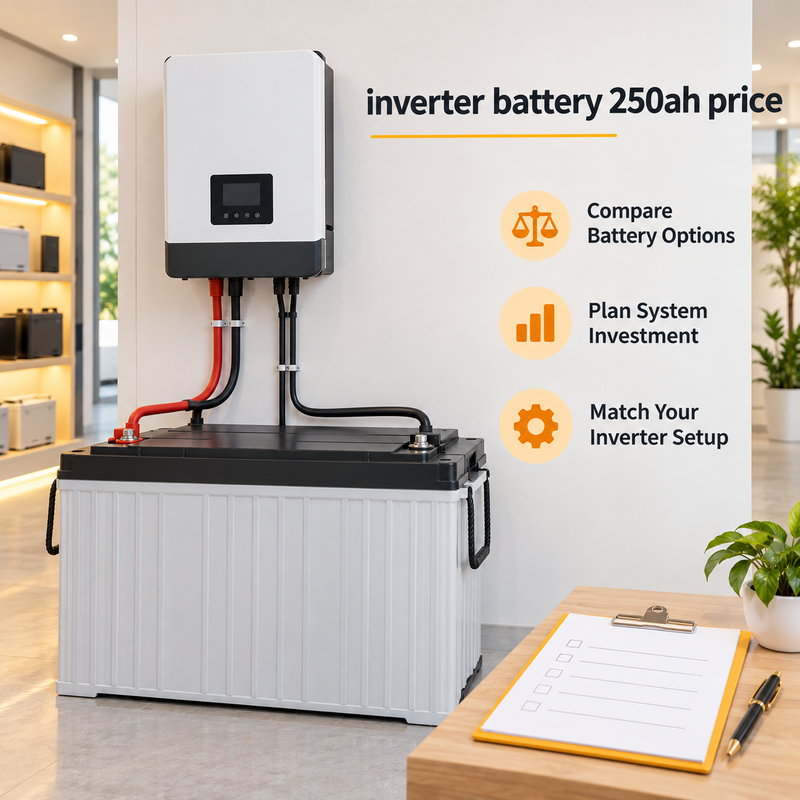
Inverter batteries play a crucial role in energy storage systems, providing reliable power  for various applications, including solar energy,  recreational vehicles  (RVs), uninterruptible power supplies (UPS), and marine  operations.  Among the  available options, the  250Ah inverter battery  stands out  for its capacity  and  versatility.  This  article  will delve into the specifications,  pricing insights, quality comparisons, installation tips, and common  issues associated with 250Ah inverter batteries, helping purchasing  managers, engineers, and product managers  make  informed decisions.

 
Wholesale Pricing Insights for 250Ah Inverter Battery Purchases

Wholesale Pricing Insights for 250Ah Inverter Battery Purchases

Pricing for  250Ah inverter batteries can  vary significantly based  on several factors, including material quality, manufacturer  reputation, and order volume. For wholesale purchases, buyers should consider the following pricing insights:

Material  Costs: The use of  Lithium Iron Phosphate (LiFePO4) technology generally  results in higher upfront costs but  offers longer life cycles and greater safety compared to traditional lead-acid batteries. Quantity Discounts: Many manufacturers offer tiered pricing based on order  volume. Higher quantities can lead to significant savings  per unit, making it essential to assess  your long-term needs.  Shipping and Handling: Freight costs can impact the total price, especially for international shipments. Understanding  the shipping terms and associated costs can help in budgeting  effectively. Certification and Compliance: Batteries that meet international standards,  such as UN38.3 and CE certifications, may carry a  premium. However, they also ensure  safety and  reliability, particularly in critical applications.

By evaluating these factors, buyers  can  make more informed purchasing decisions that align with their budget and operational needs.

How to Compare 250Ah Inverter Battery Quality and Performance

When comparing the quality and performance of 250Ah inverter batteries, focus on several  key aspects: 

Brand Reputation: Established manufacturers like Shenzhen Yanshuosheng Technology Co., Ltd. have proven track records and are often more reliable than newer or  lesser-known brands. Performance Metrics: Look for  performance data, including actual discharge rates and  cycle life under various  conditions. Requesting third-party testing results can provide additional assurance of quality.  Warranty and Support: A robust  warranty indicates the manufacturer's confidence in their product. Consider the length and terms of the warranty as  well  as the  level of  customer support available.  User Reviews and Case Studies: Real-world applications can provide  insights into how a  battery performs in specific situations. Seek testimonials or case studies from other businesses that have  used  the battery.

By  systematically evaluating these criteria, buyers can select a high-quality 250Ah inverter  battery that meets  their  performance requirements.

Installation Tips for 250Ah Inverter Batteries in Various Applications

Proper installation of a 250Ah inverter battery is essential to  ensure optimal  performance and longevity. Here are some practical installation tips for different  applications: 

Solar Energy Systems: Ensure that the battery is installed in a well-ventilated area to prevent  overheating. When connecting  to solar inverters,  follow the manufacturer's guidelines for wiring and ensure that all connections  are  secure to prevent  voltage  drops. RVs and Marine Applications: Mount the battery securely to minimize movement during travel. Use appropriate battery terminals and ensure that  the battery is protected  from moisture and extreme temperatures. UPS  Systems: Position the battery close to  the inverter  to  reduce cable lengths, which can  decrease voltage drop. Regularly  check connections for corrosion to maintain optimal performance.

In each application,  it is vital  to follow the manufacturer's installation guidelines and local regulations to ensure safety and compliance.

Common Problems with 250Ah Inverter Batteries and Their Solutions

Despite their reliability, 250Ah inverter  batteries can encounter a few common issues. Understanding  these problems and their solutions can help buyers  mitigate risks: 

Overcharging:  This can lead  to battery damage and decreased lifespan. Use a charge controller to prevent overcharging and monitor battery levels regularly. Temperature Sensitivity: Extreme temperatures can affect battery performance. Ensure that the  battery is installed in an environment  that maintains  a stable temperature, and consider using thermal management systems for  outdoor applications.  Self-Discharge: Over time, all batteries will self-discharge, but  LiFePO4  batteries have a  lower self-discharge rate  than  lead-acid options. However, regularly check charge levels and recharge if necessary to prevent deep  discharge.

By being  proactive about these common issues,  buyers can extend the life  of their 250Ah inverter batteries and ensure reliable performance in their  applications.

250Ah Specifications Explained

A 250Ah inverter battery typically  refers to its  capacity to deliver a continuous current  of  250 amps for one hour, or  a  proportionate amount over a different time frame. This specification is  crucial for determining how long the battery can  support  devices  before needing a recharge. For example, if a device requires 50 amps,  a 250Ah battery would theoretically run it for five hours under ideal conditions.

When evaluating a 250Ah battery, consider the following specifications:

Voltage: Most commonly available in 12V, 24V, or 48V configurations, the voltage will determine compatibility with the inverter and overall system requirements. Cycle Life: This indicates  how many complete  charge and discharge cycles the battery can handle before its capacity drops significantly. A higher cycle life means lower replacement costs over time. Depth of Discharge (DoD): This specification indicates how much of the battery's capacity can be used without  damaging it. For LiFePO4 batteries, a DoD of 80-90% is typical. Weight and Dimensions: These factors affect transportability and  installation flexibility. Ensure that the  chosen  battery fits  into the designated space and  meets weight requirements for the application. 

Understanding these specifications ensures that you select the right battery for your specific needs, optimizing performance and longevity. For optimal energy solutions, consider using the High Performance 50Ah LiFePO4 Lithium Ion Battery Pack.

Get a Free Quote

Our representative will contact you soon.
0/1000