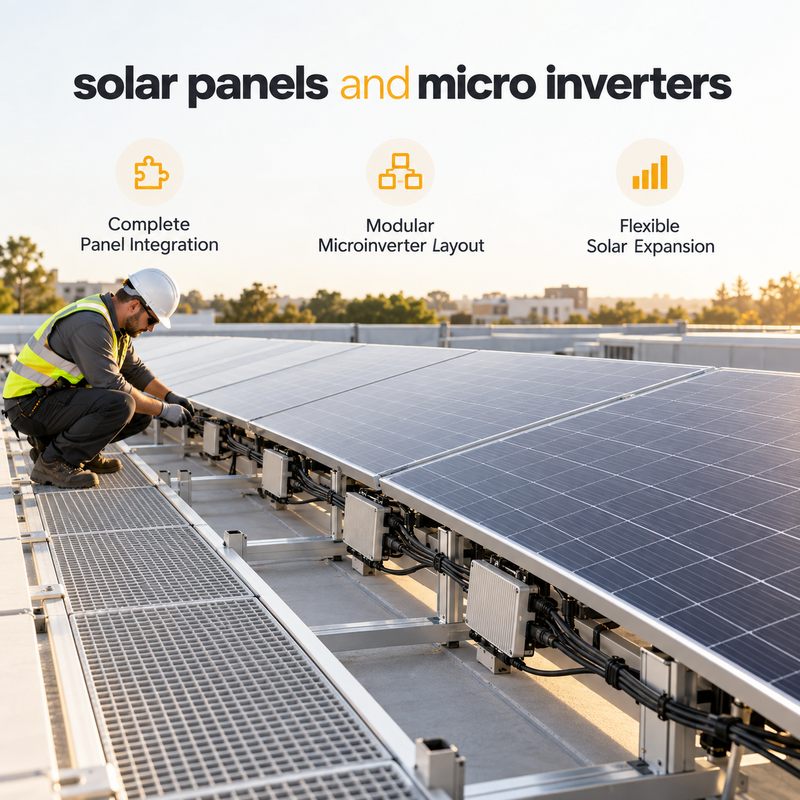
Quality Solar Panels and Micro Inverters for B2B

5,000+ units ready stock, 1–5 days fast global delivery

application/solar-panels-and-micro-inverters, application/solar-panels-and-micro-inverters, 
Inquiry
Inquiry

solar panels and micro inverters

In the evolving landscape  of renewable energy, solar panels  and micro inverters  are becoming integral  components for various applications,  including residential energy  storage  and commercial usage.  As a B2B buyer,  understanding  the  nuances  of  these products is  crucial  in  making informed  purchasing  decisions. This article will address key factors  such  as quality evaluation, sourcing techniques, critical specifications, common issues, and comparisons tailored to meet diverse project needs.

Sourcing Solar Panels and Micro Inverters

Sourcing Solar Panels and Micro Inverters

Sourcing solar panels and micro inverters effectively requires a strategic  approach. Begin by identifying reliable manufacturers  with a proven track record  in the industry. This includes verifying their experience, production capabilities, and export  markets;  for instance, Shenzhen Yanshuosheng Technology Co., Ltd. serves  over 50 countries, showcasing their global presence and adaptability.


Utilizing online platforms and industry trade shows can also enhance sourcing efforts. These venues  provide opportunities to connect  directly with suppliers, allowing  buyers  to ask specific questions about product specifications, MOQ (minimum order quantity),  and  lead times. Additionally, requesting samples before committing to larger orders can help evaluate the product's  performance under actual working  conditions, ensuring compatibility with your intended applications.

Consider  forming long-term partnerships with manufacturers who demonstrate flexibility  in customization. This can be crucial for tailoring products to  meet  specific project requirements, whether for  residential storage solutions or larger commercial installations.

Specifications That Matter for Solar Panels and Micro Inverters

When selecting solar panels and micro inverters, certain specifications are critical to  ensure optimal performance and compatibility with  your energy system.  For solar panels, key specifications include:

Efficiency Rate:  This  indicates how effectively a panel converts sunlight into  electricity. Higher efficiency rates are essential for maximizing energy output, especially in limited space scenarios. Power Output: Measured in watts, this specification determines the panel's energy generation capacity. Understanding  your energy needs will help in  selecting the appropriate wattage. Temperature Coefficient: This measures how well the  panel  performs under varying temperature conditions. A lower coefficient indicates better  performance in high-temperature environments.

For micro inverters, consider:

Rated Output Power: This  defines the maximum power  the inverter can handle. Ensure it  matches or exceeds  the combined  output of the solar panels in your system. Compatibility:  Micro inverters must be compatible with the specific models of solar panels being used. Confirming this compatibility helps prevent integration issues. Monitoring Features: Advanced micro inverters  offer monitoring capabilities, allowing users to track performance and diagnose potential issues in real-time. 

Understanding these specifications will enable buyers to make informed choices that  align with their energy needs and operational requirements.

Common Problems and Solutions for Solar Panel Systems

Solar panel systems can experience  a variety of issues that  may affect performance. One  common problem is shading, which can significantly reduce  energy output. Buyers should consider the installation location's shading factors, including  nearby trees or buildings, and opt for panels with  high shading tolerance.

Another issue is inverter failure. Micro inverters can sometimes fail due  to  overheating or manufacturing defects.  To mitigate this  risk, ensure that the chosen micro inverter has adequate thermal management features  and is rated for the expected operational environment. Regular monitoring and maintenance can  also help identify issues early, allowing for timely interventions.

Lastly,  water intrusion can damage  both solar panels and micro inverters. Buyers  should ensure that all  components are  weatherproof and designed to  withstand local environmental conditions. Opting  for products with high IP  (Ingress Protection) ratings will provide additional assurance against moisture-related problems.

Comparing Solar Panels and Micro Inverters for Your Project Needs

When comparing solar panels and  micro inverters for  specific projects, it’s important to consider the unique requirements of each application. For residential setups, where space may be  limited, high-efficiency solar panels paired with micro inverters that offer monitoring  capabilities can maximize  energy production and provide insights into system  performance.

In commercial applications, buyers  may prioritize  cost-effectiveness alongside performance. This might involve selecting standard efficiency panels with robust warranties and micro inverters that can handle larger power outputs, ensuring scalability for future  energy needs.

Another factor is the ease  of installation. Some micro inverters are designed for plug-and-play installation,  which  can reduce labor costs and installation time. Ensure that  the  chosen products align with your project timelines and budget constraints.


Ultimately, the right combination of solar  panels and micro inverters will depend  on your specific energy requirements, installation  conditions, and financial  considerations. By carefully evaluating these factors, buyers can make  informed decisions that enhance the efficiency and reliability of their solar energy systems.

How to Evaluate the Quality of Solar Panels and Micro Inverters

When assessing the quality  of solar panels  and micro inverters, several  key factors  come into play.  First, consider the certification standards  such as UN38.3 and CE, which ensure compliance with safety  and performance standards.  These certifications indicate that  the  products have undergone rigorous testing, making them reliable for use in various applications.


Next,  evaluate the materials used in manufacturing. High-quality solar  panels typically employ monocrystalline or polycrystalline silicon, while  micro inverters should  utilize durable, weather-resistant components. Inspecting  the manufacturer’s production processes and quality control measures is also vital; look for factories that implement stringent testing protocols and have robust quality assurance systems in place.

Finally, pay attention to the warranty and performance guarantees offered. A longer warranty period often reflects the manufacturer's  confidence in  their product quality. Buyers should seek warranties that cover both the  solar panels and micro inverters comprehensively, ensuring peace of mind regarding  longevity and performance.

Get a Free Quote

Our representative will contact you soon.
0/1000