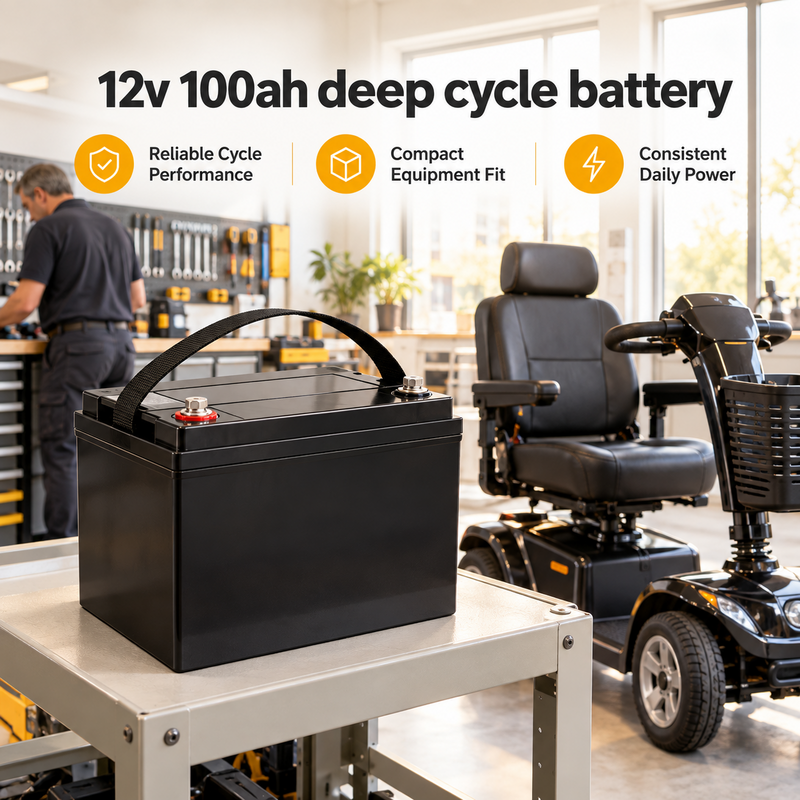
Choosing the Right 12V 100Ah Deep Cycle Battery

5,000+ units ready stock, 1–5 days fast global delivery

application/12v-100ah-deep-cycle-battery, application/12v-100ah-deep-cycle-battery, 
Inquiry
Inquiry

12v 100ah deep cycle battery

12V 100Ah deep  cycle batteries are essential  for various applications, including  renewable  energy  systems,  recreational  vehicles, and marine use. For  B2B  buyers, understanding the right specifications, cost factors, installation requirements, and  industry applications is critical to making informed purchasing decisions. This  article will provide insights  into selecting  the right  battery for your needs,  key  features  to consider,  and practical installation guidance, ensuring  you choose a reliable energy storage solution  for your operational requirements.

Key Specifications and Features

Key Specifications and Features

When evaluating  12V 100Ah deep cycle batteries, pay attention to these key specifications and features:


Chemistry: Lithium Iron Phosphate (LiFePO4) batteries, like those offered by Shenzhen Yanshuosheng Technology Co., Ltd., provide superior thermal stability, longer cycle life,  and faster charging  capabilities  compared to traditional lead-acid batteries.

BMS Integration: A built-in Battery Management System (BMS) is crucial for monitoring voltage, current, and temperature. This feature enhances battery safety, performance,  and lifespan by preventing overcharging and deep discharging.

Weight and Dimensions: Standard dimensions for a  12V 100Ah battery are approximately 12.9 x 6.8  x 8.5 inches, but variations exist. Weight typically ranges from  25 to 30 lbs. Ensure that selected batteries fit within the designated space in your  application.

Discharge Rate: Look for batteries with a continuous  discharge rate that matches your application  needs. A battery capable of  100A continuous discharge  will be suitable for most high-demand applications.

Cycle Life: LiFePO4  batteries  can generally offer 2000-5000 cycles at 80% depth of discharge, significantly outlasting  lead-acid alternatives.

Certifications: Ensure that the battery meets relevant safety and quality standards,  such as UN38.3 and CE certifications, which are critical in international shipping and  use.


Understanding the Cost Factors of 12V 100Ah Deep Cycle Batteries

The cost of 12V 100Ah deep cycle batteries can vary widely  based on several factors:

Chemistry: Lithium batteries tend to have a higher upfront cost compared to  lead-acid options. However, their longer lifespan and efficiency can result in lower total cost of  ownership.

Quality  and Brand Reputation: Established brands with proven reliability may charge a premium compared  to lesser-known manufacturers.  Investing in a  reputable brand can reduce risks associated with failure and warranty issues.

Customization and Features: Batteries with advanced features  such as integrated BMS or specific  design  modifications for unique applications may  incur additional costs.

Order Quantity: Purchasing in bulk can often lead to  significant discounts. Establishing a relationship with the supplier can also provide opportunities for  negotiation on pricing.


Shipping and Handling: Depending on  your  location, shipping costs and import tariffs can influence the overall  price. Always factor in  these costs when budgeting  for  your purchase.

Installation Guidance for 12V 100Ah Deep Cycle Batteries in Various Applications

Proper  installation of a 12V  100Ah deep cycle battery is critical to ensuring optimal performance and  safety.  Follow these guidelines for  different applications:

Solar Energy Systems: Connect the battery to your solar charge controller, ensuring the controller is compatible with LiFePO4 batteries. Use appropriate cables that  can handle the maximum current  and ensure all  connections are secure to prevent arcing.

Marine Applications: When installing batteries on a boat, ensure they are mounted securely to avoid  movement during travel. Use marine-grade connectors and  fuses to enhance safety.

Recreational Vehicles (RVs): For RV applications, ensure proper ventilation to prevent overheating and monitor  the battery regularly. Regularly check connections and clean  terminals  to prevent  corrosion.

UPS Systems: When integrating with uninterruptible power supplies, ensure that the battery  meets the UPS's  specifications for voltage and  current. Follow the manufacturer's guidelines for connection and configuration.

For all installations,  adhere to safety protocols, including using personal protective equipment (PPE) and double-checking  all connections before powering up  the system.

Exploring Applications of 12V 100Ah Deep Cycle Batteries in Different Industries

12V  100Ah deep cycle batteries find  applications across various  industries:

Renewable Energy: These batteries are commonly used in solar energy systems for energy storage, ensuring a  reliable power supply during non-sunny hours.


Recreational Vehicles (RVs): They  power appliances and systems in  RVs,  providing a sustainable energy source for travelers.

Marine Applications: Used in boats for starting engines and powering onboard electronics,  these  batteries withstand harsh marine environments.

Telecommunications: In remote locations, these batteries  provide backup  power to critical communication infrastructure, ensuring uninterrupted service.

Electric Vehicles and  Mobility: Increasingly used in electric scooters and bicycles, their lightweight  and high energy density make them ideal for  portable applications.

Understanding these applications helps buyers make informed decisions based on their  specific needs, ensuring they select the right battery for their operational context.

By considering  these  factors,  you can make a well-informed decision when purchasing a 12V 100Ah deep cycle battery, ensuring  it meets your current and future energy storage needs.

How to Choose the Right 12V 100Ah Deep Cycle Battery for Your Needs

Selecting the right 12V 100Ah deep cycle battery begins with understanding  your specific application  requirements. Factors such as energy demand,  cycle depth, and  intended usage—be it for solar energy systems, RVs, or marine setups—play a crucial  role in  your selection.

Consider the battery's discharge rate, as this affects how quickly the battery can  supply  energy. For applications requiring high power  output in a short time,  look for batteries with a higher C-rate. Additionally, assess the  cycle life, which indicates how many charge  and discharge  cycles the  battery can endure before its capacity diminishes significantly.  A longer cycle life translates to lower replacement costs over time.


It's also essential to consider  the battery's weight and size, especially for mobile applications where space is limited. Ensure compatibility with your existing systems, including battery  management systems  (BMS) and charging  equipment.

Get a Free Quote

Our representative will contact you soon.
0/1000