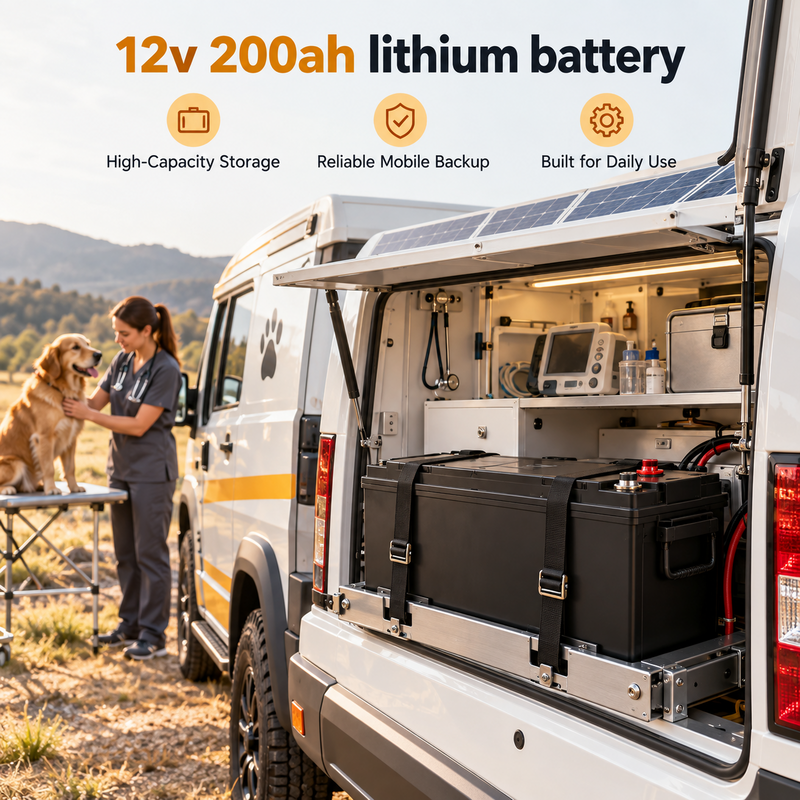
12V 200Ah Lithium Battery Applications and Guidance

5,000+ units ready stock, 1–5 days fast global delivery

application/12v-200ah-lithium-battery, application/12v-200ah-lithium-battery, 
Inquiry
Inquiry

12v 200ah lithium battery

A 12V 200Ah lithium battery is  a powerful energy storage solution widely  used across various sectors,  including solar energy systems, RVs,  UPS systems, and  marine applications. B2B  buyers  often  face concerns around capacity, compatibility, quality, and supplier reliability when selecting this  type of battery. This  article will  guide  you through  evaluating manufacturers, understanding  key specifications,  assessing quality  factors, installation guidance,  and addressing common issues with 12V  200Ah lithium batteries to  help streamline your purchasing decision.

 
Key Specifications of 12V 200Ah Lithium Batteries You Should Know

Key Specifications of 12V 200Ah Lithium Batteries You Should Know

Understanding key specifications is essential when selecting a 12V  200Ah  lithium battery. Key  aspects  to consider include:

Nominal Voltage: This should be 12V, which is standard  for  most applications. Capacity: Measured in amp-hours (Ah),  a 200Ah rating indicates how much energy the battery can store and deliver over time. Cycle Life: LiFePO4  batteries typically offer 2000-5000 cycles, depending on usage conditions. A higher cycle life  translates to lower long-term costs. Discharge Rate: This is crucial for applications  requiring high power. Look for batteries that can  sustain high  discharge  rates without  significant voltage drop. Operating Temperature Range: Ensure the  battery can operate effectively within the temperature range of your application environment.  Weight  and Dimensions:  These factors are important for installation compatibility  and  transportation.

Understanding these specifications allows buyers to choose a battery that meets their specific operational needs, ensuring optimal performance.

Assessing Quality Factors in 12V 200Ah Lithium Battery Products

Quality assessment is paramount when purchasing 12V  200Ah  lithium batteries. Here are some critical quality factors to consider:

Material Quality: High-quality lithium cells and  components  are essential  for battery longevity and performance. Inspecting  the material specifications can provide insight into expected durability. Battery Management System (BMS): A robust BMS is  vital for protecting the battery from overcharging, deep  discharging, and  thermal runaway. Ensure the BMS is integrated and tested for reliability. Manufacturing Process: Evaluate the manufacturer’s processes  for  consistency and adherence to standards. Companies that  provide details about their manufacturing practices often  have higher quality assurance. Testing and Certification: Ask about testing  protocols for performance, safety, and environmental standards. Manufacturers should be transparent about their  testing procedures  and provide certifications. Warranty and Support: A solid warranty indicates confidence in the product’s quality. Evaluate the support  services provided for troubleshooting and maintenance. 

By carefully assessing these quality factors, you can mitigate risks  and ensure the  reliability of your energy storage solution.

Installation Guidance for 12V 200Ah Lithium Batteries in Various Applications

Installing  a 12V  200Ah  lithium battery correctly is crucial for optimal  performance. The installation process may vary depending on  the application—be it  solar, RV, UPS, or marine. Here are some general guidelines:

Location: Choose a dry, ventilated area that is not exposed to extreme temperatures. Ensure there is adequate space for connections and air  circulation.

Connections:  Use appropriate gauge wiring for connections to  minimize  voltage drop and ensure safety. For most applications, 8 AWG wiring is suitable, but consult the manufacturer for specific recommendations.

Mounting:  Ensure the battery is secured properly to avoid movement during operation,  especially in mobile applications like  RVs or boats.  Use brackets or straps designed for battery mounting.

Inverter and Charger Compatibility: Verify that your inverter and charger are compatible with lithium batteries. Some chargers  require specific settings for  lithium chemistry.

Monitoring:  If available, integrate battery monitoring  systems to track performance metrics such as voltage, current, and state of  charge. This helps in proactive maintenance and ensures longevity.

Following these guidelines will facilitate a successful installation, ensuring your battery operates efficiently in its  intended application.

Common Problems with 12V 200Ah Lithium Batteries and Their Solutions

Despite their advantages, 12V 200Ah lithium  batteries can encounter several issues. Here  are some common problems  and their solutions:

Battery Not Charging: This may occur due to a faulty charger  or incorrect settings. Check the charger compatibility and ensure it is set for lithium batteries. Also, inspect  connections for corrosion  or damage.


Reduced Capacity: Over time, capacity may diminish due to deep discharges or poor management. Implement a regular maintenance  schedule that includes keeping the battery  within optimal charge levels and avoiding deep discharges.

Overheating: High temperatures can lead to safety risks and decreased performance. Ensure proper ventilation during operation and avoid direct  sunlight exposure. If overheating persists, consult  the manufacturer for  advice on cooling solutions.

BMS Malfunction: A  failing battery management system may  lead to  performance issues. If the BMS is not functioning correctly, it may require replacement or reprogramming. Regularly check the BMS status through monitoring systems.

Self-Discharge: Lithium batteries typically have low  self-discharge rates, but prolonged inactivity can lead to lower charge levels. If a battery sits unused for extended periods,  implement periodic charging to maintain optimal performance.

By understanding these  common issues and  their respective  solutions, buyers can enhance the longevity and effectiveness of their 12V 200Ah lithium batteries.

Evaluating 12V 200Ah Lithium Battery Manufacturers

When you're in the market for a 12V 200Ah lithium battery, evaluating potential  manufacturers is critical to ensure you receive a reliable product.  Start by looking for companies that specialize  in lithium iron phosphate (LiFePO4) technology, as  this  chemistry offers enhanced safety, stability, and  longevity compared to traditional lithium-ion batteries.

Check for certifications such  as UN38.3  and CE, which indicate that the products meet  international  safety  and quality standards. Manufacturers with  a  strong export track record in diverse markets, such as those serving over  50  countries, often demonstrate reliability and commitment to  quality. Additionally, consider their manufacturing capabilities, including their production equipment and quality  control processes. A  supplier that invests in advanced production  technology is more likely to produce  consistent, high-quality products.

Get a Free Quote

Our representative will contact you soon.
0/1000