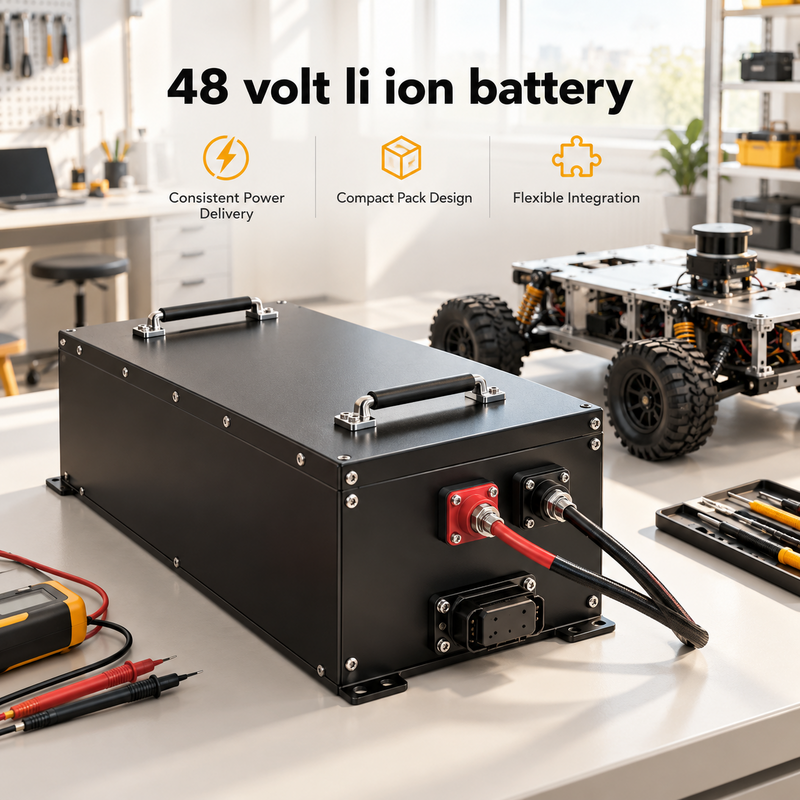
48 Volt Li-Ion Battery for Reliable Energy Solutions

5,000+ units ready stock, 1–5 days fast global delivery

application/48-volt-li-ion-battery, application/48-volt-li-ion-battery, 
Inquiry
Inquiry

48 volt li ion battery

When selecting a 48 volt Li-Ion battery for your  projects, understanding the key  specifications and quality  standards  is crucial. These batteries are  widely used in various  applications, including solar energy  storage, RVs,  uninterruptible power  supplies (UPS), and  marine  systems. This article will address  the primary  considerations for B2B buyers, including what  to look for in terms  of specifications, quality  control processes,  cost factors,  and common problems associated  with these  batteries.

Key Specifications of 48 Volt Li-Ion Batteries for Bulk Orders

Key Specifications of 48 Volt Li-Ion Batteries for Bulk Orders

When  purchasing 48 volt Li-Ion batteries in  bulk, understanding the key specifications is essential for ensuring performance and  compatibility. Some of the key specifications to consider include:

Nominal Voltage: The  standard voltage level, which should be consistent with your application requirements. Capacity (Ah): The total amount of energy the  battery  can  store, which affects  runtime and performance. Cycle Life: The number of charge and discharge cycles  the battery can undergo before its capacity  significantly diminishes. A longer cycle life  indicates better durability. Discharge Rate (C-rate): This indicates how  quickly the battery can be discharged relative to its  capacity. Higher discharge rates are necessary for  applications  requiring quick bursts of energy. Operating Temperature  Range: Batteries should be rated for the expected environmental conditions in which they will  operate. This  affects performance and longevity.

For bulk orders, also consider minimum order  quantities (MOQ) and whether the manufacturer offers custom  specifications or packaging options to meet your requirements. Options like the All-in-One Energy Storage System can also be beneficial for tailored solutions.

Understanding the Quality Control of Our 48 Volt Li-Ion Batteries

Quality control is paramount in manufacturing 48 volt Li-Ion batteries. At Shenzhen Yanshuosheng Technology Co., Ltd., we implement a rigorous quality management system throughout the production process. This includes:

Raw  Material Inspection: All  incoming materials, such as  cells and  components, are inspected for quality and compliance with specifications.  In-Process Testing: During manufacturing, various tests are conducted to ensure the integrity of  the  battery. This includes checking for defects, ensuring proper assembly, and verifying safety  features. Final Testing: Before shipping,  each battery undergoes extensive  testing, including performance assessments under  simulated operational conditions. This step ensures that  the batteries meet all specified requirements. Certification Compliance: We ensure that our  products conform to industry standards, providing documentation for certifications  such as UN38.3 and CE. 

This thorough quality control process helps mitigate risks and ensures that  every 48  volt Li-Ion battery we  supply is reliable and safe for  use in  demanding applications.

Cost Factors to Evaluate for 48 Volt Li-Ion Battery Purchases

When considering the purchase of 48 volt  Li-Ion batteries, several cost  factors  should be evaluated to  ensure  that you're making a  wise investment:

Unit Price: The base  price per battery can vary significantly  based on specifications and order volume.  Bulk purchases often come with discounted rates. Shipping  Costs: Depending on where the batteries are being  shipped,  transportation costs can impact the overall price. Consider logistics and potential import duties. Lifecycle Costs: Evaluate not just the initial purchase price but the long-term costs associated with maintenance, replacements, and energy efficiency. Warranty and Support: A more extended warranty may come with a  higher upfront cost but can save money in the long run if issues arise. Consider the manufacturer's support services as part of the total cost. Customization: If your application requires  specific features or customization, be aware that these additions can affect the pricing. It's essential to communicate your needs  clearly  to the supplier.

Understanding these  factors can help you make an  informed decision that aligns with your budget while  meeting  your application requirements.

Common Problems with 48 Volt Li-Ion Batteries and Their Solutions

While 48 volt Li-Ion batteries are generally reliable, they can encounter some common  issues. Recognizing these problems can help prevent downtime and ensure smooth operations:


Overheating: Batteries can overheat  during  operation or charging, leading to reduced lifespan or failure.  Ensure that your application provides adequate ventilation and thermal management. If overheating occurs,  check the charging parameters and load conditions.


Cell Imbalance: Over time, cells within a battery pack can become imbalanced, affecting overall performance. Regular monitoring and  balancing during charging can help maintain cell health. Some advanced battery management systems (BMS) include features to automatically balance cells.

Aging and Degradation: Li-Ion batteries naturally degrade over time, which can  lead to reduced capacity.  Implementing a proper charging regimen  and avoiding deep discharges can help extend battery life. It's beneficial  to have a replacement plan in place for long-term applications.

Compatibility Issues: Ensure that the  battery is compatible  with your specific application,  including  voltage and  power requirements. If integrating with existing systems, verify compatibility  with inverters or  chargers.

By being aware of these potential issues and their solutions,  buyers can proactively address challenges and maintain optimal battery performance.

What to Consider When Choosing a 48 Volt Li-Ion Battery for Your Projec

When selecting  a 48 volt  Li-Ion battery, there are several  key factors to consider. First,  evaluate the  specific  application requirements. For example, the power output,  discharge rate, and cycle life are  vital specifications that will affect performance.  It’s essential to ensure that the battery can handle the  intended load and provide the necessary runtime. Additionally, exploring options like the Energy Storage Systems can provide sustainable solutions for various applications.

Next, assess the battery’s capacity measured in amp-hours (Ah), which indicates  how much energy the  battery can store. The capacity should align with your application’s energy demands. Additionally, consider the battery's size and weight, especially for portable applications like  RVs or  marine systems, where space  is limited.

Certification is another critical aspect; look for batteries that have been tested to meet standards such as UN38.3 and CE. These certifications ensure that the  battery complies with safety regulations for transport and usage.  Finally, consider  the manufacturer’s warranty and  support options, as these can provide peace of mind regarding product  reliability.

Get a Free Quote

Our representative will contact you soon.
0/1000