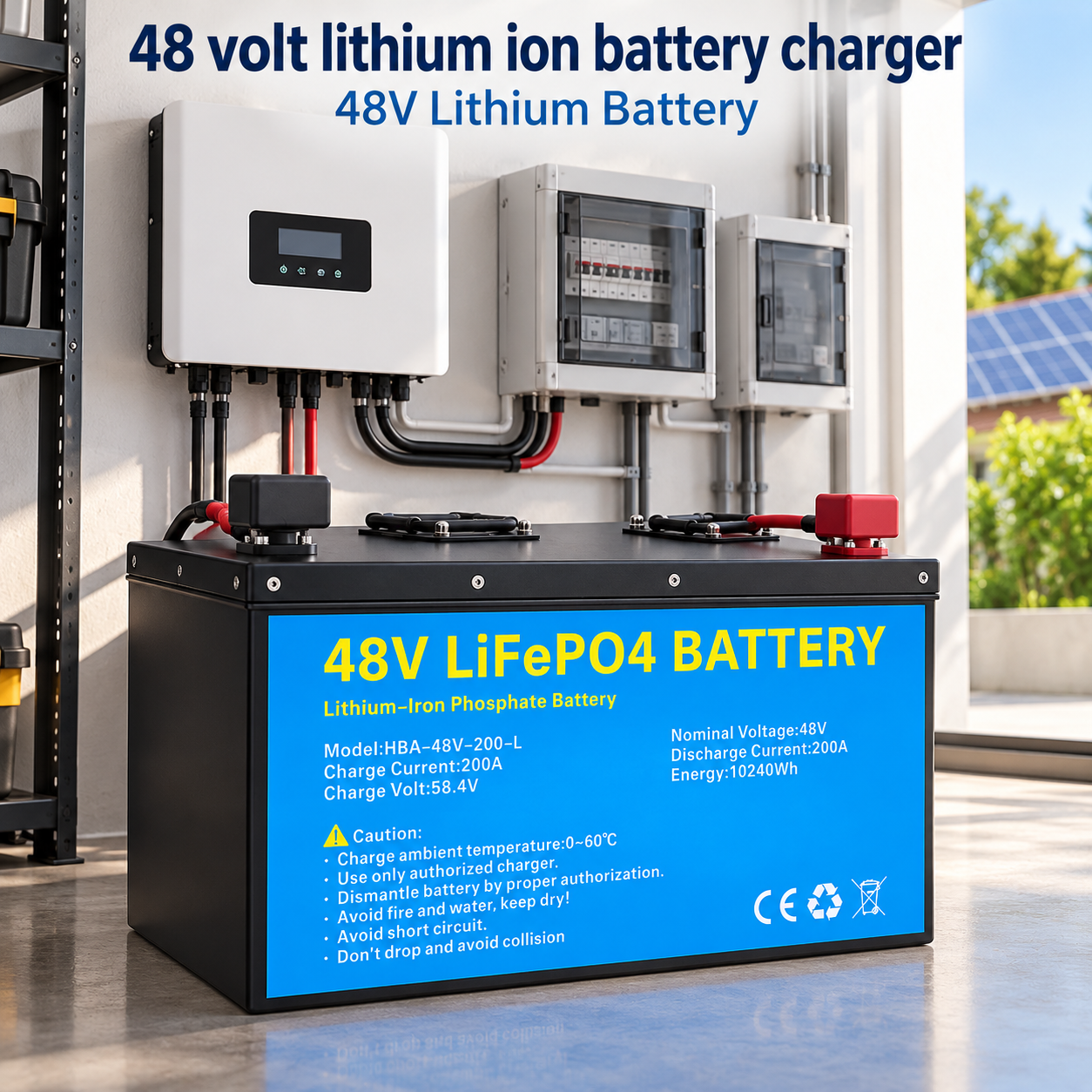
Key Specifications to Evaluate in 48 Volt Lithium Ion Battery Chargers
When selecting a 48 volt lithium ion battery charger, several key specifications must be evaluated to ensure compatibility and performance.
Charging Current: The charging current, typically measured in amperes (A), determines how quickly the battery can be charged. A higher current allows for faster charging, but it’s essential to match the charger’s output with the battery's specifications to avoid damage. For instance, if a battery has a maximum charge current of 30A, using a charger that exceeds this rating could lead to overheating or reduced battery lifespan.
Charging Method: Chargers may use various charging methods, such as constant current (CC), constant voltage (CV), or a combination of both. Understanding these methods is crucial because they affect how the charger interacts with the battery. A smart charger that uses a multi-stage charging method can optimize battery health and longevity by adjusting the charging process based on the battery's state.
Efficiency Rating: Efficiency ratings indicate how effectively a charger converts AC power to DC power. Higher efficiency reduces energy wastage and can lead to cost savings over time. Look for chargers with efficiencies above 90% to ensure minimal energy loss during the charging process.
Protection Features: Safety features like over-voltage protection, over-current protection, and short-circuit protection are vital to prevent damage to both the charger and the battery. These features should be confirmed during the selection process to ensure safe operation.
Certifications: Ensure the charger meets relevant safety and performance certifications, such as UN38.3 and CE, which indicate compliance with international standards. This is particularly important for applications in sensitive environments, such as solar energy systems or marine applications, where safety is paramount.
 EN