Home Battery Inverter Price: Key Factors & Suppliers

5,000+ units ready stock, 1–5 days fast global delivery

application/home-battery-inverter-price, application/home-battery-inverter-price, 
Inquiry
Inquiry

home battery inverter price

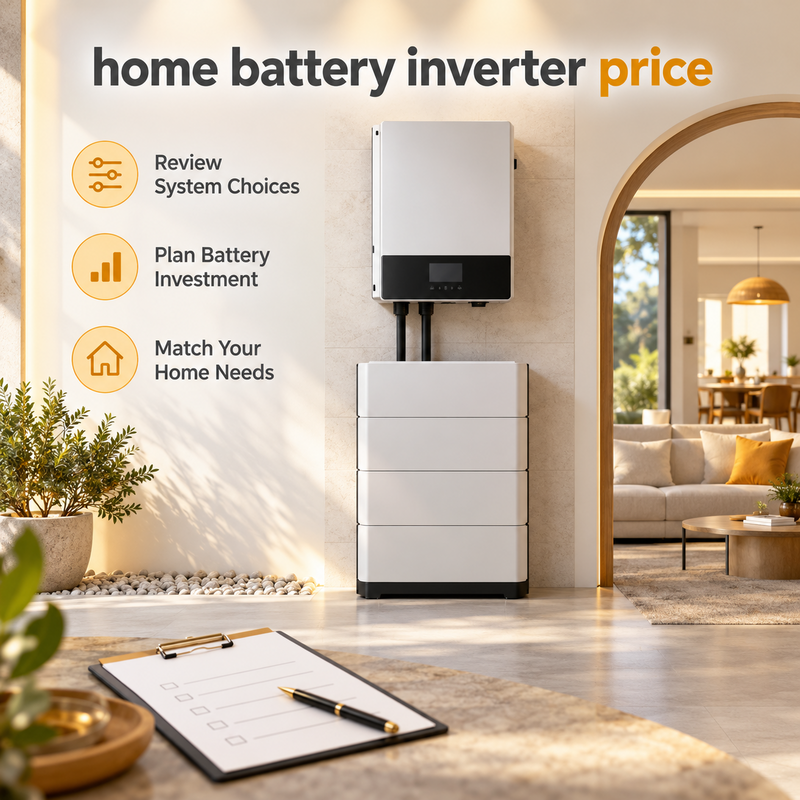
When considering a  home battery inverter, one of the  key factors for potential buyers is the home battery  inverter price. This critical component of energy storage systems is essential for efficient  energy  management in residential  applications, especially in solar energy  setups. B2B  buyers, including purchasing managers and project engineers,  often  seek  to understand the various factors  influencing prices to make  informed purchasing decisions. This article will break down  the specifications to evaluate, cost determinants,  reliable suppliers, the advantages  of  bulk orders, and best practices to  ensure  a satisfactory  procurement process.

What Affects Costs?

What Affects Costs?

Several factors influence the home battery inverter price. One primary consideration is the inverter's capacity and efficiency.  Higher capacity inverters that can manage larger loads typically command higher prices. Additionally, inverters with advanced features such as smart monitoring or grid-tied capabilities may also come with a premium.

The choice of materials  and manufacturing processes impacts costs as well. Inverters constructed with high-quality components tend to be more  durable and efficient, thus justifying  their higher price tags in the long run. For example, using robust heat sinks or  advanced cooling systems may increase upfront costs but enhance  performance  and lifespan.

Supplier reputation and market demand also  play a role. Established manufacturers with proven track records may  charge more due  to their  reliability and customer support. Furthermore,  fluctuations in raw material costs  can  affect pricing, especially in a global market where materials like semiconductors  are in  high demand.

Finally, customization options can  significantly influence the final cost. If  your project requires  specific features or operational capabilities, expect to pay more for custom solutions tailored  to your needs.

Where to Find Reliable Suppliers for Home Battery Inverters

Finding trustworthy suppliers for home battery  inverters can be daunting, but there are several effective strategies. Start  by researching manufacturers with a strong reputation in the energy  storage sector. Look for companies that  provide  detailed product specifications, have transparent pricing, and offer robust customer support.

Trade  shows  and industry conferences  are excellent venues for meeting  suppliers and assessing their products firsthand. These events allow you  to ask questions, see demonstrations,  and collect literature on various options.

Utilizing online  marketplaces and platforms dedicated to industrial products can  also help. Websites that specialize in B2B procurement often feature  reviews and ratings, which can  guide you in selecting  suppliers with a solid track record.


Lastly, networking with  industry peers can provide insights into reliable suppliers. Recommendations from colleagues who have gone through the procurement process can lead you to trusted  manufacturers and help you avoid  potential pitfalls.

Advantages of Bulk Orders for Inverters

Purchasing home battery inverters in bulk offers several advantages, particularly for companies looking to optimize their costs. One significant benefit  is the cost savings associated with larger orders. Many suppliers provide discounts for bulk purchases, which can lead to substantial savings over time.

Bulk orders also help  ensure  consistency in product specifications and performance. When ordering multiple units at  once, you reduce variability, which is critical for projects requiring  uniformity across  installations. This is particularly vital in applications like  solar energy  systems, where inverter  compatibility directly affects overall efficiency.


Furthermore, establishing  a relationship with a supplier through bulk orders can enhance customer service. Suppliers  may prioritize your needs, provide faster lead times, and  offer better  terms for  future orders, creating a beneficial  partnership  that  can  facilitate  smoother project execution.

Best Practices

To ensure a successful procurement process for home battery  inverters, consider implementing the following best practices:

Specify Requirements Clearly: When requesting quotes,  provide detailed information about your application, including required capacity, efficiency, and any specific features needed. This clarity helps suppliers provide accurate pricing and product recommendations.

Request Samples:  Before moving to mass production, request  samples to evaluate performance under actual operating conditions. This step allows you to assess compatibility  with existing systems and verify the inverter's efficiency and reliability.

Verify Certifications: Ensure that the  inverters meet relevant industry  certifications. This verification  is essential for ensuring safety and compliance, particularly in regulated markets.

Conduct Quality Inspections:  Implement quality control processes during production and prior to delivery. Inspecting units  for defects  and performance ensures that  you receive high-quality products.

Plan  for Installation: Consider  the installation  requirements and any associated costs. Proper planning can prevent  delays and additional expenses during the setup phase.

By adhering to these best practices,  B2B buyers can navigate  the  procurement process more effectively and secure reliable home battery inverters that meet their specifications and  budget.

Key Specifications to Evaluate in Home Battery Inverters

When evaluating home battery  inverters,  several specifications are crucial. First, assess the inverter's capacity, usually measured in kilowatts (kW) or kilovolt-amperes (kVA). This determines how much energy the inverter can convert  from the battery to power your home. A mismatch between  the inverter capacity  and your energy needs can lead to inefficiencies or insufficient power supply.

Next, consider the efficiency rating, which indicates how well the inverter converts DC (direct  current) energy from batteries  to AC (alternating current). A higher efficiency rating—typically above 90%—ensures minimal energy  loss, which is vital for optimizing your energy  usage and reducing operating costs.

Compatibility with battery types is another factor. Many inverters work best with specific battery chemistries, such  as  Lithium Iron Phosphate (LiFePO4), which offers advantages like longer cycle life and better thermal stability. Ensure that the  inverter  you select  is  compatible  with your existing or planned battery system.

Finally, look at the inverter's certifications, such as UN38.3 and CE, which demonstrate compliance with safety and quality standards. These certifications are essential for ensuring  reliable  operation and safety in applications ranging from  solar power systems to UPS and marine  uses.

Get a Free Quote

Our representative will contact you soon.
0/1000