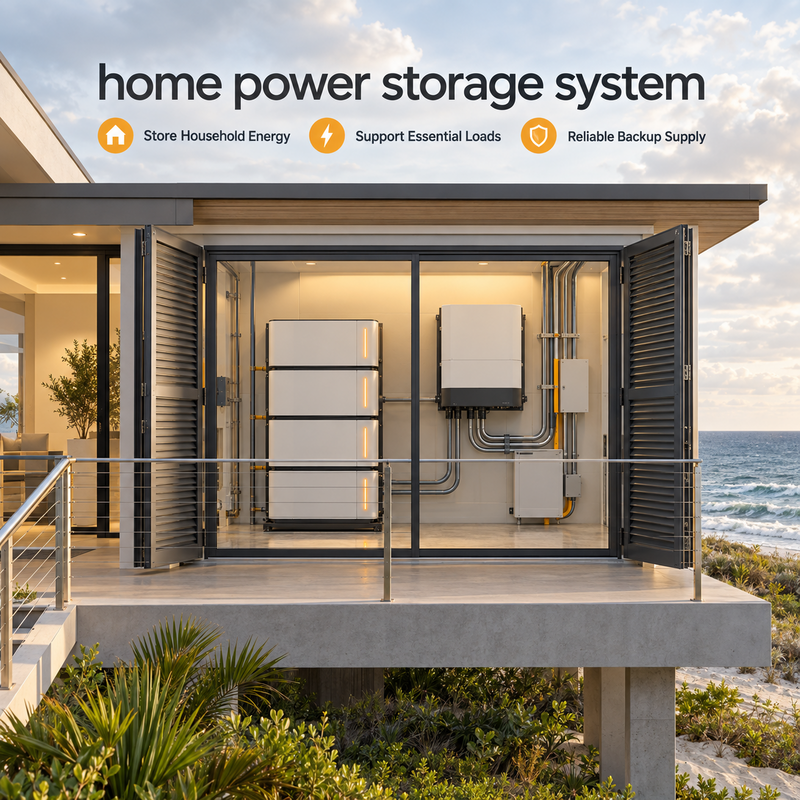
Home Power Storage System: Essential Guide

5,000+ units ready stock, 1–5 days fast global delivery

application/home-power-storage-system, application/home-power-storage-system, 
Inquiry
Inquiry

home power storage system

Home power storage systems are essential for maximizing  energy efficiency and  ensuring a  reliable power supply in residential and commercial applications.  As businesses  and homeowners increasingly adopt renewable energy sources,  understanding how to choose the  right  home power storage  system becomes critical. This  article will guide purchasing managers,  engineers,  and  product managers through  selecting  the ideal  system, sourcing reliable solutions,  evaluating cost factors,  and  exploring various applications.

 
Sourcing Reliable Home Power Storage Solutions

Sourcing Reliable Home Power Storage Solutions

When sourcing  home power storage solutions, it is  vital to partner with reputable manufacturers like Shenzhen Yanshuosheng Technology Co., Ltd.,  which specializes  in LiFePO4 energy storage systems.  Consider the following when evaluating potential suppliers:


Certifications: Ensure that the manufacturer holds relevant certifications such as UN38.3 and CE, which indicate  compliance with safety and performance standards. This adds a layer of reliability to the products.


Manufacturing  Capabilities: Assess the manufacturer's production capacity  and  technology. Advanced manufacturing processes and quality control measures ensure  consistent  product performance.

Customization Options: Many buyers benefit from customized solutions tailored to specific  applications, whether for residential, RV, or marine use. Discuss your requirements to determine whether the manufacturer can  provide tailored solutions.

Market  Experience:  Look for providers with experience in exporting to various countries and understanding local regulations and standards. This experience often  translates  into better product quality and  compliance.

What to Look for in Home Power Storage Systems

When  evaluating home power  storage  systems, several technical specifications and features should be prioritized:

Battery  Type: LiFePO4 batteries are gaining  popularity due to  their safety, stability, and  longevity compared to  traditional  lead-acid  batteries. This chemistry is  less prone to overheating and offers a longer lifecycle. Consider options like the Deep Cycle 12V 24V 50Ah 100Ah 200Ah LiFePO4 Lithium Ion Solar Energy Battery Storage Systems With BMS for enhanced performance.

Depth of Discharge (DoD): This indicates  how much of the battery's capacity  can be used  without significantly shortening its  lifespan. A higher DoD means  more usable energy, which is particularly important for homes with  high energy demands.

Efficiency Ratings: Check the round-trip efficiency, which measures how much energy is retained after charging and discharging. A higher  efficiency rating indicates  better energy retention and lower losses.

Warranty:  Review the warranty terms offered by the manufacturer. A longer warranty period often reflects the manufacturer's confidence in their product's durability and performance.

Understanding Cost Factors When Buying Home Power Storage Systems

The cost of home  power storage systems can vary significantly based on  several factors:


Initial Investment: This  includes the purchase  price of  the system, installation costs, and  any additional  components needed, such as inverters or wiring.

Maintenance Costs: While LiFePO4 batteries generally require less maintenance than other  types, it's essential  to consider  potential costs for upkeep and replacements  over the system's lifespan.

Operational Costs: Evaluate the potential savings  on energy  bills. A well-chosen home  power storage system can reduce reliance on grid power, especially during  peak hours when energy prices are higher.

Incentives and Rebates: Research any available government  incentives or rebates for energy storage  systems  in your region, which can substantially reduce the  overall cost.

Applications of Home Power Storage Systems in Various Industries

Home power storage systems  have diverse applications across multiple sectors, enhancing energy efficiency and reliability:

Residential: Homeowners utilize these  systems to store excess energy generated from solar  power,  enabling  self-consumption and  minimizing energy costs.

Recreational Vehicles (RV): RV  owners benefit  from portable home power storage systems, allowing  them to power  appliances and devices while on the road without relying solely on generator  power.

Uninterruptible Power Supplies (UPS): For businesses, integrating home power  storage systems with UPS  ensures that critical equipment remains operational during power outages, enhancing business continuity.

Marine Applications: In marine environments, energy  storage solutions  are vital for powering onboard systems, ensuring reliable energy access while minimizing environmental impact.

selecting the right home power storage system involves careful consideration of various factors, including capacity, compatibility,  and cost.  By understanding these aspects and sourcing  from reputable manufacturers, buyers can enhance energy efficiency and achieve greater independence from  traditional energy sources.


How to Choose the Right Home Power Storage System for Your Needs

Selecting the right home power storage system begins with assessing your specific energy requirements. Key considerations include  your total energy consumption, peak  power demand, and the type  of renewable energy system you are using, such as solar panels.

Capacity and Performance: Look for systems that provide  sufficient capacity  to meet your energy needs during peak usage.  This is typically measured in kilowatt-hours (kWh). For example, a household with a daily consumption of 30 kWh should  consider systems that can store at least that amount, factoring in system inefficiencies. You might explore options like the High Performance 50Ah LiFePO4 Lithium Ion Battery Pack Deep Cycle 12V High Efficiency Lithium Iron for effective storage solutions.

Compatibility: Ensure  the storage system  is compatible with your existing energy infrastructure. For  instance, if you're using a solar power system, verify that the energy storage system can seamlessly  integrate  with your solar inverter  and panels.

Scalability: Choose a system that can be easily scaled in the future to  accommodate increasing energy needs or additional renewable sources.

Safety Features: Look for systems  with built-in  Battery  Management Systems (BMS)  that  monitor battery  health, temperature, and charge cycles to enhance safety and longevity.

Get a Free Quote

Our representative will contact you soon.
0/1000