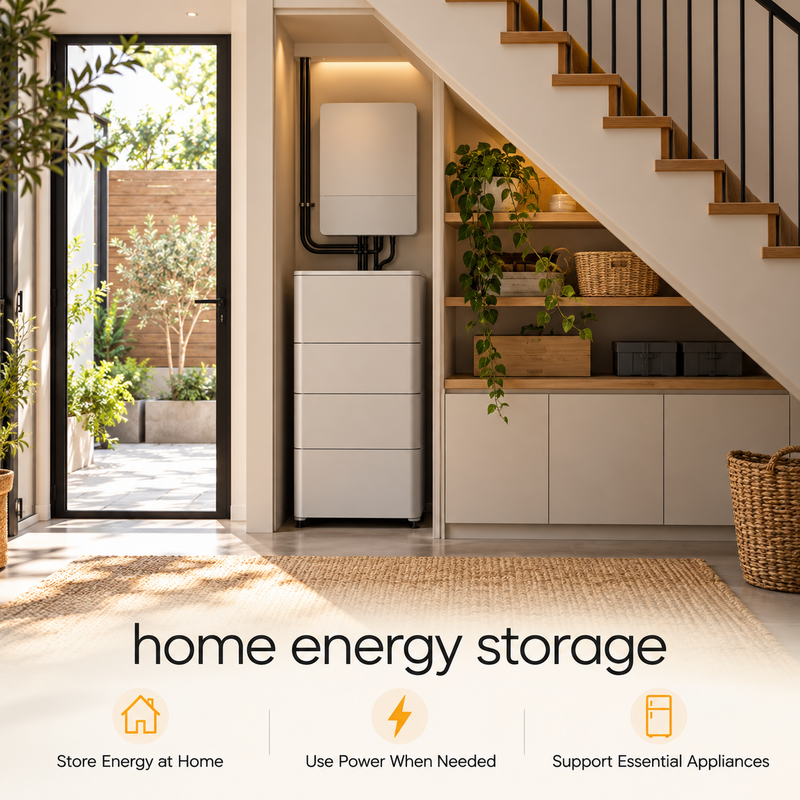
Home Energy Storage Solutions for Your Needs

5,000+ units ready stock, 1–5 days fast global delivery

application/home-energy-storage, application/home-energy-storage, 
Inquiry
Inquiry

home energy storage

Home energy storage systems, particularly LiFePO4 batteries, are becoming  increasingly vital as more households and  businesses  look to harness renewable energy sources. These  systems allow  users to store  excess energy generated  from solar panels or other sources for later use, ensuring energy availability  during peak hours or  outages. For  B2B buyers,  understanding  key factors such as product  specifications, supplier reliability, and  installation  requirements is crucial for making informed purchasing decisions. This  article aims to equip  purchasing managers,  distributors,  and engineers  with the necessary insights into sourcing home energy storage solutions.

Wholesale Buying Guide for Home Energy Storage Systems

Wholesale Buying Guide for Home Energy Storage Systems

When  engaging in wholesale purchasing of home energy  storage systems, a structured  approach can lead to a more favorable outcome. Begin by defining your needs in  detail, including the expected energy usage, system scalability, and integration with  existing infrastructure.


Request quotes from multiple suppliers while ensuring they  provide detailed specifications, including battery type,  capacity, and expected performance metrics. Compare pricing structures, but be  mindful  that the lowest price  does  not always  equate to the best value. Assess factors like warranty terms, customer support,  and availability of spare parts, as these can significantly affect long-term satisfaction and operational  costs.

Additionally, inquire about minimum  order quantities  (MOQ) and lead times. Understanding these parameters allows for better inventory  management and cost forecasting. Finally, always ask for  samples or trial units when available to evaluate  the product’s performance under real-world conditions before committing to larger orders.

Where to Find Reliable Suppliers of Home Energy Storage Products

Identifying reliable suppliers for home energy storage products involves a multi-faceted approach. Start by researching manufacturers  known for their  expertise  in LiFePO4 battery technology, as this is critical for  high-performance energy  storage solutions. Online directories, trade shows, and  industry publications  are excellent resources for discovering established manufacturers.


Check supplier certifications and  customer reviews  to gauge reliability and service quality. Engaging  with industry forums  can also provide insights into suppliers’  reputations and product performance from real-world users. Additionally, consider reaching  out to  existing clients of potential suppliers to assess their experiences regarding product quality, delivery times, and customer service.

Networking with industry professionals can also yield recommendations and firsthand experiences  that highlight trustworthy suppliers. Finally,  verify that the supplier has a robust quality control process and  a history of successful international exports to  ensure  they can meet your specific requirements.

Installation Guidance for Home Energy Storage Systems and Solutions

Proper installation of home energy storage systems is crucial for optimal performance and safety. Start by  reviewing the installation manual  provided by the manufacturer, as it will contain vital information specific to the  product. Key installation considerations include the location  of the system, which should be dry, well-ventilated, and easily accessible for maintenance.

Before installation, ensure that all electrical work complies with local  regulations and standards, which may  require certification.  Collaborating with a qualified technician  or electrician  familiar with battery systems can help ensure  proper installation.  They can assist in selecting the right inverter and confirm  the compatibility of the energy storage  system with existing solar setups.

Moreover, it is essential  to conduct a  pre-installation inspection to verify that all components, including batteries and  inverters, are  in good condition and meet the specifications. This step  helps  prevent operational issues and ensures that the system performs  as intended from the outset.

Common Issues with Home Energy Storage and Their Solutions

Home energy storage systems can present several common issues  that may affect performance or operational reliability. One frequent  problem  is insufficient capacity, which can arise if the system is not accurately sized  for the intended energy consumption. This can lead to frequent cycling and ultimately reduce battery lifespan. To address this, buyers should  conduct a thorough energy audit to determine appropriate capacity  needs.

Another issue is  thermal management. LiFePO4 batteries operate best  within  specific temperature ranges. If installed  in extreme conditions, battery performance can degrade. To  mitigate this, ensure that the installation site is climate-controlled or  consider battery management systems that  monitor and regulate temperature effectively.

Additionally, communication errors between  the battery management system (BMS) and the inverter can lead to performance issues. Regular software updates and system checks can help maintain optimal  functionality.  Lastly, buyers should be aware of the importance of routine  maintenance checks to  identify and rectify problems  early, ensuring that the system continues to operate efficiently over its lifecycle.


What to Consider When Sourcing Home Energy Storage Solutions

When sourcing home energy  storage systems, several critical factors must be evaluated  to  ensure the right fit for your application. First, consider the capacity of the energy storage  system, typically measured in kilowatt-hours (kWh).  This determines  how much energy can be stored and subsequently used; larger systems are suitable for high-consumption applications, while smaller systems may suffice for limited energy needs.

Next, evaluate the  battery technology.  LiFePO4 batteries, known for their thermal stability and  long cycle life, are increasingly popular in home energy  storage. Assessing performance specifications such as charge/discharge rates, lifespan, and efficiency is  essential, as these can vary significantly among manufacturers.

Additionally,  consider  certifications such as UN38.3 and CE, which indicate compliance with safety  and quality standards. These certifications not only  assure reliability but can  also influence your product's acceptability in different markets. Lastly, think  about the customization capabilities offered by  suppliers, which can ensure the system meets specific operational requirements  without compromising safety or performance.


Get a Free Quote

Our representative will contact you soon.
0/1000