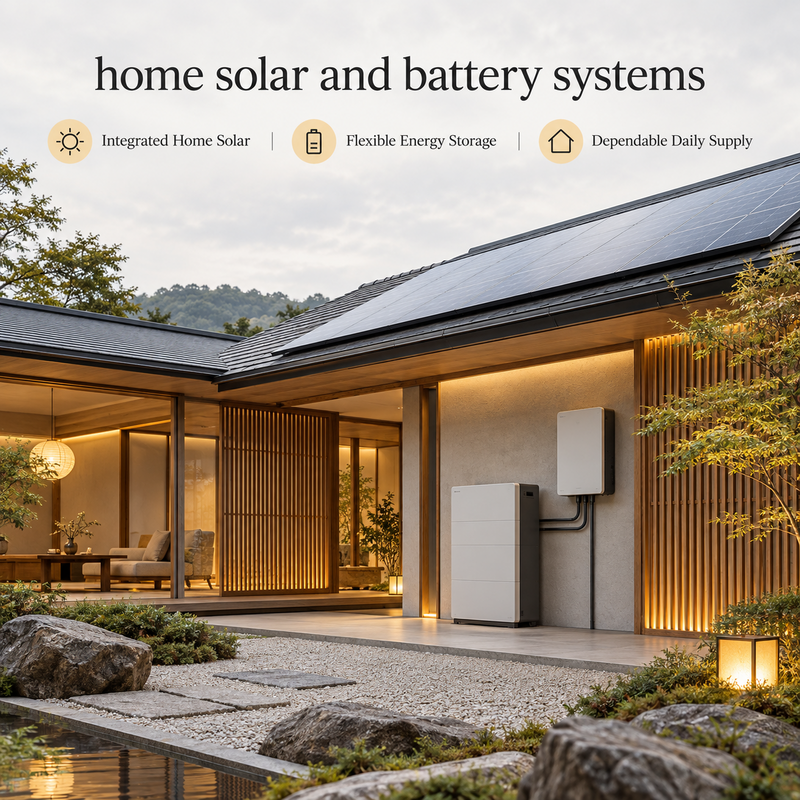
Home Solar and Battery Systems for Energy Solutions

5,000+ units ready stock, 1–5 days fast global delivery

application/home-solar-and-battery-systems, application/home-solar-and-battery-systems, 
Inquiry
Inquiry

home solar and battery systems

Home solar and  battery systems are becoming  increasingly  essential for residential energy management, particularly in  the face of rising energy  costs  and environmental concerns. These  systems  allow homeowners to harness solar energy  and store it for later use, significantly reducing reliance on the grid. For purchasing managers, distributors,  and engineers, understanding the key features, installation  processes, and supplier considerations  is vital to making informed decisions. This article will  explore the  critical  aspects of home solar  and battery systems,  helping you navigate the  purchasing landscape  effectively.

 
How to Choose the Right Supplier for Solar and Battery Systems

How to Choose the Right Supplier for Solar and Battery Systems

Choosing the right supplier for home solar and battery systems is  a critical step  that can impact your  project's success. Here are several key considerations:

Certifications  and Compliance: Ensure that the supplier's products meet relevant certifications, such as UN38.3 and CE standards, which  guarantee safety and reliability. These certifications indicate that the batteries and systems have  undergone rigorous testing.

Experience and Reputation: Look for suppliers with a  proven track record in the industry. A reputable supplier will have experience working in diverse markets, including residential, RV, UPS, and marine applications. This experience  can  provide insights into different installation scenarios and customer requirements.

Product Range and Customization: A supplier that offers a range of products  and customization options can  better  meet your specific needs. Check if they provide various capacities, configurations, and installation solutions. For example, consider Energy Storage Systems that are tailored for your requirements.

Technical Support and Warranty: Evaluate the technical support offered by the supplier, including installation guidance and post-sale assistance. A comprehensive  warranty is also essential, as it reflects the supplier's confidence in their  products.


Pricing and Payment Terms: Compare pricing structures among suppliers but be cautious of the lowest  bid. Understand the  total cost of  ownership,  including installation, maintenance, and  potential upgrades.

Installation Guidance for Home Solar and Battery Energy Solutions

Proper installation of home solar and battery systems is crucial for optimal performance. Here  are some key steps and considerations:


Site Assessment: Before installation, conduct a thorough site  assessment to evaluate solar exposure, shading issues, and roof integrity. This ensures  the solar panels are positioned to maximize sunlight intake.

System Design:  Collaborate with your supplier to  design a system that meets your energy needs.  This includes  determining the appropriate battery size, solar panel configuration, and inverter specifications.

Permits and Regulations: Familiarize yourself with local building codes  and regulations. Obtain any necessary permits before proceeding  with installation. Compliance with these regulations is critical to avoid fines  and ensure safety.

Professional Installation: While some homeowners may opt for DIY  installation, hiring certified professionals is recommended for complex systems. Professional  installers are trained to handle  electrical connections safely and efficiently.

Post-Installation Testing: After installation,  conduct thorough testing  of the system to  ensure all components work seamlessly together. This includes checking battery charging and  discharging cycles, inverter  functionality, and solar panel performance.


Identification and Solutions

When implementing home solar and battery systems,  buyers may  encounter various challenges. Identifying  potential issues  early can lead to effective solutions:

Compatibility Issues: Ensure that all components, including the inverter, battery, and solar panels, are compatible. Incompatibility can lead to inefficiencies or system failures.


Performance Limitations: Assess the performance of the  system regularly. Monitoring tools can help identify underperformance, allowing for  timely maintenance or adjustments.

Battery  Lifespan: Understand battery lifespan and degradation rates. LiFePO4 batteries typically have a longer lifespan than other lithium technologies,  but factors such as temperature  and charging cycles  can impact longevity.

Maintenance  Requirements:  Regular maintenance is  essential to ensure the longevity and efficiency of the  system. This includes cleaning solar  panels, checking  electrical connections, and monitoring battery health.

User  Education: Educating users on system  operation, maintenance, and troubleshooting can significantly enhance performance  and satisfaction.

Bulk Order Considerations for Home Solar and Battery Products

For purchasing managers  and distributors, bulk ordering  of home solar and  battery products involves  unique considerations:


Minimum Order Quantity (MOQ): Understand the  supplier’s MOQ, as this can impact pricing and inventory management. Negotiating MOQs can help balance stock levels with demand.

Lead Times: Discuss lead  times for bulk orders, as this can vary based on  production capacity and customization requirements. Ensure that lead times align with your project schedules.

Shipping  and  Packaging: Confirm shipping  methods and packaging standards to ensure products arrive in good condition. Discuss options for bulk packaging that minimizes shipping  costs and risks of damage.

Quality Control: Establish quality control processes for bulk orders, including pre-shipment inspections. This  helps ensure that the products meet your specifications and  quality standards.


Custom Solutions: If your order requires specific customizations, engage with the supplier early in the process. This allows for necessary adjustments to be made in the production  schedule.

By understanding these key aspects of  home solar and battery systems, B2B buyers can make informed decisions that align with their operational needs and project goals. The right supplier, installation  guidance, and proactive  problem-solving strategies will lead to successful implementation and long-term  satisfaction.

Key Features and Benefits

Home solar  and battery systems offer a variety of features that enhance energy efficiency and reliability. One of the  standout components is the LiFePO4 (Lithium Iron  Phosphate) battery, which is known for its safety, longevity, and thermal stability. These batteries are designed to withstand deep cycling, making them  ideal for daily energy storage and discharge.

The benefits of these systems include:

Cost Savings: By generating and storing energy, homeowners can  decrease  their  electricity  bills  significantly, especially  during peak usage times. Energy Independence: Solar systems reduce dependence on the local electricity  grid, providing  an alternative power source  during  outages. Environmental Impact: Utilizing renewable energy sources contributes to lower carbon emissions,  aligning with global sustainability goals. Scalability: These systems can  be tailored to fit various energy needs and home sizes, allowing for customization  based on individual requirements.

When selecting a home solar and battery  system, consider factors such as the capacity of the battery, the efficiency of the solar panels, and  the overall integration of  the system. For instance, using a High Performance 50Ah LiFePO4 Lithium Ion Battery Pack can enhance performance.

Get a Free Quote

Our representative will contact you soon.
0/1000