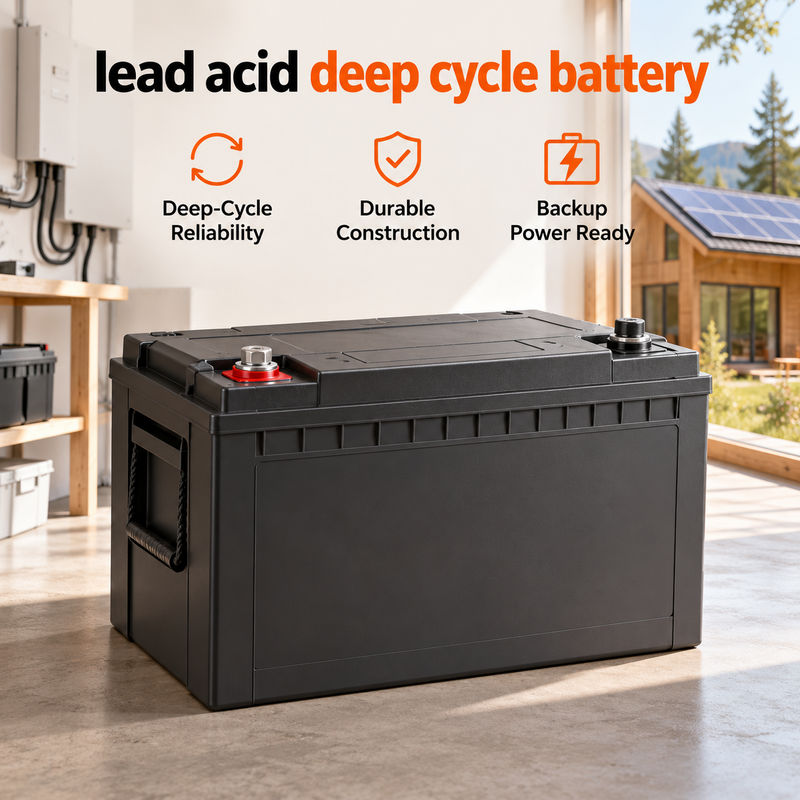
Lead Acid Deep Cycle Batteries: Key Specifications

5,000+ units ready stock, 1–5 days fast global delivery

application/lead-acid-deep-cycle-battery, application/lead-acid-deep-cycle-battery, 
Inquiry
Inquiry

lead acid deep cycle battery

Lead acid  deep cycle batteries are specifically designed to  provide a steady  power output over long  periods, making them  ideal for applications such  as  renewable  energy systems, recreational vehicles (RVs), uninterruptible power supplies (UPS), and  marine environments. For B2B buyers, understanding  the key specifications,  installation requirements,  and common  issues associated  with these batteries is crucial for making informed purchasing  decisions. This article  will guide you through  essential  considerations and practical information related to lead acid deep cycle batteries,  ensuring you are well-prepared to meet your project's needs.

 
Lead Acid Deep Cycle Batteries for Wholesale Orders

Lead Acid Deep Cycle Batteries for Wholesale Orders

For businesses looking to purchase lead acid  deep cycle batteries in bulk, understanding the wholesale process is essential. Manufacturers often have minimum order quantities (MOQs) that vary based on battery type and specifications. Here are some practical considerations:

MOQ and Pricing: Confirm the MOQ with your  supplier,  as this can affect pricing significantly. Typically, larger orders result in lower  per-unit costs. Discuss potential discounts based on the volume ordered.

Customization Options: Many manufacturers, including Shenzhen Yanshuosheng Technology Co., Ltd.,  offer custom solutions depending on your specific requirements, such  as branding or packaging preferences. Be prepared to discuss your needs to get the best solution.

Lead  Time: Lead times can vary based  on production capacity and order size. Ensure to communicate your project deadlines with the manufacturer to align your order's delivery with your needs.

Quality Assurance: When purchasing wholesale, it’s critical to establish quality control  measures. Request  samples  to  evaluate performance and ensure that the batteries meet your  specifications before committing to larger orders.

Shipping Considerations: Be  aware of shipping  logistics and costs. Factors such  as destination, battery weight, and packaging can influence overall expenses. Discuss these details  with  your  supplier to avoid surprises.

Understanding these aspects will facilitate a smoother procurement process for wholesale orders of lead acid deep cycle  batteries.

Installation Guidance for Lead Acid Deep Cycle Batteries in Projects

Installing lead acid deep cycle batteries requires careful planning to ensure optimal performance and longevity. Here are key installation considerations:

Ventilation: Lead acid batteries can emit gases during charging. Ensure that the installation area is  well-ventilated  to prevent gas  accumulation, which could pose safety risks.

Orientation: While many lead acid batteries can be installed in various orientations, it is generally advisable to keep  them  upright to  prevent leakage of electrolytes. Always check the manufacturer’s recommendations  regarding orientation.

Connections: Use appropriate gauge wiring to connect  the batteries to the  application. Undersized wiring can lead  to power loss and overheating. Ensure that all connections are tight and secure  to minimize  resistance.

Charge Controller: Incorporate a  reliable charge controller in the system to manage charging and prevent overcharging, which can damage the batteries and reduce their lifespan. Utilizing systems like the Energy Storage Systems 3.6KW 5.5KW 24V 48V On/Off Grid Solar Inverter Pure Sine Wave Inverter MPPT Hybrid Inverters can enhance overall efficiency.

Monitoring: Consider installing a  battery  management system (BMS) to monitor voltage, temperature, and overall battery health. This proactive approach  can help identify issues  early and extend the battery's service life.

By adhering  to these installation guidelines, buyers  can  maximize their lead acid deep cycle battery's performance and longevity.

Common Problems with Lead Acid Deep Cycle Batteries and Solutions

Despite their reliability, lead acid deep cycle batteries  can experience common issues. Here are some potential  problems and their solutions:

Sulfation: This occurs when lead sulfate crystals build up  on the battery plates, reducing capacity. To prevent sulfation,  ensure that the battery regularly undergoes a full charge. Consider periodic equalization charging to help break down sulfate crystals.

Overcharging: Overcharging can lead to excessive gassing, water loss, and permanent damage.  Use a quality charger with an automatic shutoff or a smart charger that adjusts charging based on battery needs to prevent this issue.


Undercharging: Insufficient charging can lead to  shortened battery life. Always  check the  voltage  levels and use a reliable charger designed  for lead acid batteries to ensure  they receive  adequate power.

Corrosion: Corrosion at the terminals can impede  electrical flow. Regularly clean battery terminals with a solution of baking soda  and water  to remove corrosion and ensure good connectivity.

Physical Damage: Inspect batteries regularly for signs of physical damage or  leaks. If any damage is  detected, replace the battery immediately to prevent hazards.

Addressing these common issues can significantly enhance the performance  and reliability of lead  acid deep cycle batteries.

Applications of Lead Acid Deep Cycle Batteries in Various Industries

Lead acid deep cycle batteries find applications across multiple industries due to  their reliability and capacity to provide sustained  power.  Key  sectors include:

Renewable Energy: These batteries are widely used in solar energy systems to store excess power generated during the day for  use at night or during cloudy days. Their ability to handle deep discharges makes them suitable for this application.

Recreational Vehicles (RVs): In  RVs, deep  cycle batteries power appliances, lights, and other  electrical systems  when not connected to a power source. Their robustness and reliability  make  them a preferred choice for mobile applications.

Uninterruptible Power Supplies (UPS): Lead acid batteries are commonly used in UPS systems to  provide backup power during outages. Their capacity to deliver consistent  power over extended periods is critical for protecting sensitive equipment.

Marine  Applications: In marine environments, deep cycle  batteries  are essential for powering navigation systems, lights, and other onboard equipment. Their ability to withstand the rigors of marine conditions makes them a reliable  choice.

Electric Vehicles: While lithium-ion batteries are gaining popularity in electric vehicles, lead acid batteries still serve  in some low-speed electric vehicles due to their lower initial cost  and simplicity.

Understanding these applications can help buyers identify the right lead acid deep cycle batteries for their specific needs, ensuring optimal performance in their respective industries.


Key Specifications of Lead Acid Deep Cycle Batteries for Buyers

When evaluating lead acid deep cycle batteries, several key specifications should be considered:

Capacity: Measured in amp-hours (Ah), capacity indicates how much energy the battery can store. A higher capacity means longer usage times, especially important for applications like solar energy storage. Buyers should assess their energy needs carefully to select an appropriately sized battery, such as the High Performance 50Ah LiFePO4 Lithium Ion Battery Pack Deep Cycle 12V High Efficiency Lithium Iron.

Cycle Life: This refers to the  number  of charge and discharge cycles a battery can undergo before its capacity  significantly diminishes. Typical deep cycle  batteries may offer 500–1,200 cycles, depending on the depth of  discharge.  Understanding this metric helps  in estimating the battery's lifespan and overall cost-effectiveness.

Self-Discharge Rate:  This specification  indicates how quickly a battery loses its charge while not in use.  A lower self-discharge rate is preferable, especially for applications where batteries may not be charged regularly.

Voltage: Most  deep cycle batteries are  available in 6V, 12V, or higher configurations. The voltage must match your system requirements to ensure compatibility and  optimal  performance.

Weight and Dimensions: Depending on the installation space and mobile  applications,  the weight and physical dimensions of the battery can be critical. Ensure that the selected battery fits well  within the intended application.

Terminal Type: Consider the terminal design, as it affects compatibility with connections and installation.  Different  applications may require specific terminal types for optimal performance.

By paying attention to these specifications, buyers can make better-informed decisions regarding their lead acid deep cycle battery  purchases.

Get a Free Quote

Our representative will contact you soon.
0/1000