Choosing Lithium Ion Batteries for Solar Storage

5,000+ units ready stock, 1–5 days fast global delivery

application/lithium-ion-battery-for-solar-storage, application/lithium-ion-battery-for-solar-storage, 
Inquiry
application/lithium-ion-battery-for-solar-storage, application/lithium-ion-battery-for-solar-storage, 
Inquiry

lithium ion battery for solar storage

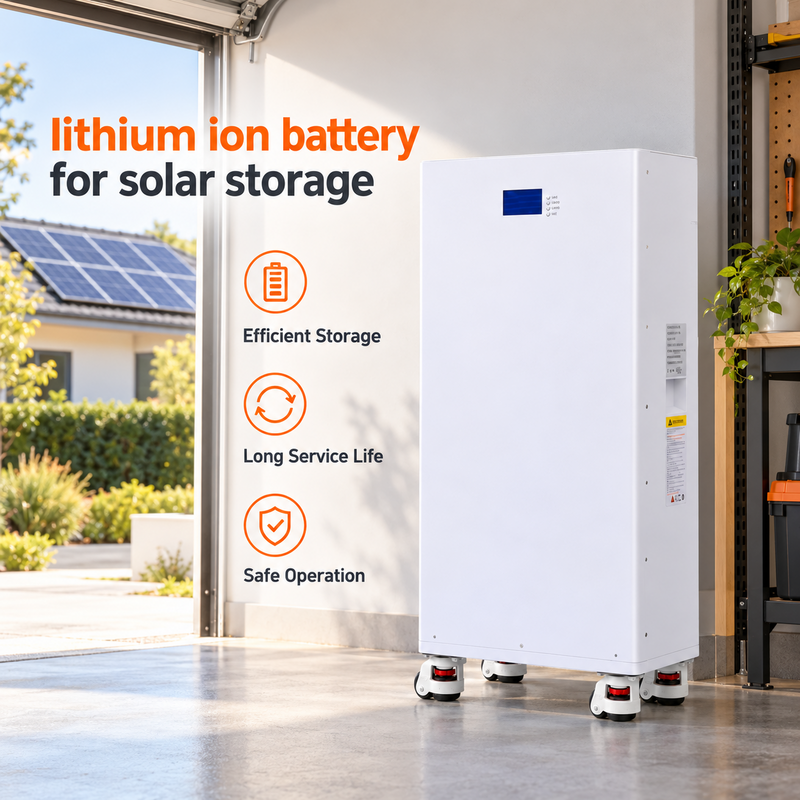
Lithium ion  batteries  for solar storage  are crucial components in energy  management systems, allowing  for efficient energy capture, storage, and usage. As businesses and homeowners increasingly turn to  renewable energy sources,  understanding the nuances of  lithium ion  batteries becomes essential  for  purchasing  managers, engineers, and product managers.  This article will provide insights into  selecting the right lithium ion battery  for solar  storage applications, the key specifications to consider for bulk orders, cost  factors,  common issues, and  various  applications of these batteries.

Key Specifications to Consider for Bulk Lithium Ion Battery Orders

Key Specifications to Consider for Bulk Lithium Ion Battery Orders

When placing bulk  orders for lithium ion batteries, several  specifications  should be confirmed to ensure compatibility  and performance.

Nominal Voltage: The voltage of the battery impacts  how it integrates with the solar energy system. Common  configurations include 12V, 24V, and 48V systems, each suited for different applications.

Capacity: As  mentioned earlier, the capacity in Ah will dictate  how much energy can be stored. Consider your energy consumption patterns to select a suitable capacity.

Dimensions and Weight: The physical characteristics of the battery are crucial, especially for space-constrained applications.  Ensure that  the  battery fits within the designated space and can be handled safely during installation.

Safety Certifications: Look  for batteries with certifications such as  UN38.3 and CE, which indicate compliance with international safety  standards. This is  essential for ensuring product reliability and safety.

Battery Management System (BMS): A robust BMS is vital for monitoring battery health, balancing charge levels,  and protecting  against overcharging or short-circuits.


Warranty and Support:  Verify the warranty period and the level of technical support offered by the manufacturer. This can greatly affect long-term  operational reliability.

Understanding Cost Factors in Lithium Ion Battery Purchases

Several factors influence the  cost  of lithium ion batteries for solar storage,  and understanding these can help in budgeting  for your procurement.

Material Costs: The cost of raw  materials, particularly  lithium, cobalt,  and nickel, plays a significant role in  the overall price. Fluctuations in the market can lead to varying prices.

Manufacturing Processes:  The  complexity of manufacturing processes and the technology used  will  also impact costs. For instance, batteries with  advanced thermal management systems may incur higher production  costs.

Volume Discounts: Purchasing in bulk typically offers cost advantages. Suppliers may provide tiered pricing based on order quantity, which can  significantly reduce  per-unit costs.

Customization: Custom specifications will generally increase  costs. If specific dimensions, capacities, or features are required, be prepared for a possible increase in pricing.

Logistics and  Shipping: Don’t overlook shipping costs, especially for international orders. Batteries are often classified as  hazardous materials, which can  result in higher shipping fees and regulatory considerations.

Common Problems with Lithium Ion Batteries and Their Solutions

While lithium ion batteries are generally reliable, several common issues can arise, and knowing how to address them can save time  and resources.

Overcharging: This can lead  to reduced battery life or even catastrophic failure. Implementing  a  high-quality BMS can mitigate this risk by regulating charge levels.

Thermal Runaway:  High  temperatures can lead to thermal runaway, where the  battery overheats  and fails. Ensuring proper  ventilation and using batteries designed for thermal stability,  like LiFePO4 batteries, can reduce this risk.

Capacity  Fade:  Over time, batteries lose capacity. Regular monitoring and appropriate charging practices can help extend the useful life  of the battery.

Compatibility Issues: Ensure that the battery's voltage and current  specifications match the rest  of your solar  energy system. Mismatches  can  lead to inefficiencies  or damage.

Physical Damage: Batteries should be  mounted securely to prevent movement and damage. Inspecting batteries regularly for signs of wear or damage is essential.

Exploring Applications of Lithium Ion Batteries in Energy Storage Systems

Lithium  ion batteries are versatile and can be employed in various applications beyond traditional solar storage.

Residential Energy Storage: Homeowners  use lithium ion  batteries to store excess solar energy for use during  peak  hours or outages, improving energy  independence and reducing utility costs. The All-in-One Energy Storage System 5.5KW / 7.5KW Hybrid Cabinet for Large Homes is an excellent choice for those looking to maximize their energy storage capabilities.

Commercial  Uses: Businesses leverage these batteries for demand charge management, enabling them to store energy  during off-peak hours and use it during peak demand, thereby reducing energy  costs.

Electric Vehicles  (EVs): Lithium ion batteries power electric vehicles, providing the necessary energy density and efficiency needed for performance.

Marine Applications: For boating and marine equipment, lithium  ion batteries offer a lightweight and efficient power source, ideal  for long trips and reducing weight on vessels.

Uninterruptible Power Supplies (UPS): Lithium ion batteries  provide reliable backup power for critical systems, ensuring continuity of operations during  power outages.

selecting the  right  lithium ion battery for solar storage involves understanding various specifications, cost factors, and  potential  challenges. With careful consideration and the right supplier, businesses can effectively  integrate these  batteries into their energy systems, enhancing efficiency and sustainability.

Choosing the Right Lithium Ion Battery for Solar Storage Applications

When selecting a lithium ion battery for solar storage, it’s vital to consider the specific requirements of your application. Key factors include capacity, discharge rates, cycle life, and thermal management. For  instance, a battery with a higher capacity (measured  in amp-hours, Ah) can store more energy, making  it  suitable for larger  systems or homes that consume more electricity. For example, the High Performance 50Ah LiFePO4 Lithium Ion Battery Pack Deep Cycle 12V High Efficiency Lithium Iron is a great option for those needing substantial energy storage.


Additionally, the discharge rate is essential as it  determines how quickly  the battery can deliver power. Applications that require  quick  bursts of energy, such as powering appliances  during  peak usage, benefit  from batteries with high discharge rates.

Cycle life, or the number of charge-discharge cycles a battery can undergo before its capacity significantly diminishes,  is also critical. Lithium iron phosphate (LiFePO4) batteries, like those produced by Shenzhen Yanshuosheng  Technology Co.,  Ltd., typically offer longer  cycle lives compared to other lithium-based batteries, making them a popular choice for solar applications. Lastly, effective thermal  management is necessary to ensure safety and performance, especially in variable  temperature environments.

Get a Free Quote

Our representative will contact you soon.
0/1000