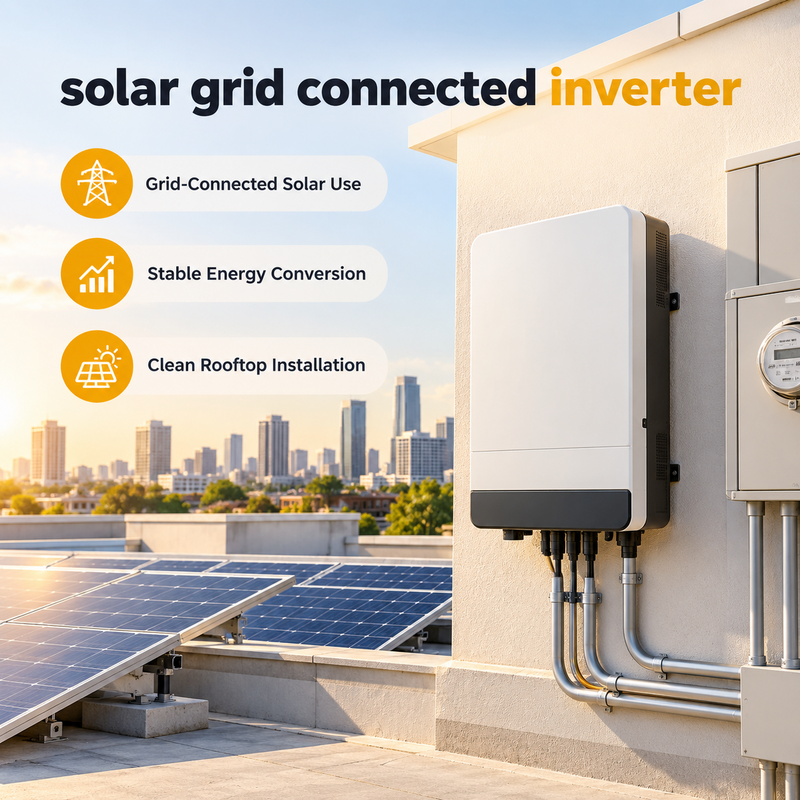
Choosing the Right Solar Grid Connected Inverter

5,000+ units ready stock, 1–5 days fast global delivery

application/solar-grid-connected-inverter, application/solar-grid-connected-inverter, 
Inquiry
Inquiry

solar grid connected inverter

Choosing  the right  solar grid  connected inverter is critical for  optimizing energy management  in various applications, including residential storage, RVs, and marine systems. With growing demand  for renewable energy solutions, B2B buyers, purchasing managers, and  engineers  face  challenges in  selecting an  inverter that  meets their specific project requirements. This article will guide  you  through the essential aspects of solar  grid connected inverters,  including selection  criteria,  key specifications, sourcing tips,  common issues,  and industry applications.

Key Specifications to Evaluate in Solar Grid Connected Inverters

Key Specifications to Evaluate in Solar Grid Connected Inverters

When assessing solar grid connected inverters, several  key specifications  should be at the forefront of  your evaluation:

Power Rating: This is the maximum output the inverter can  handle and  should match your energy needs. Select an inverter with a power rating that can accommodate peak loads in your application.

Input Voltage Range: Ensure  that the inverter's input voltage range aligns  with your system design. A mismatch can lead to performance issues  or system failures.

Efficiency: Look for inverters with high efficiency ratings, ideally over 95%. Higher efficiency translates to reduced  energy  losses and increased system  performance.


Durability and Environmental Ratings: Check the inverter’s  IP (Ingress Protection) rating for dust and  moisture  resistance, especially  if used  in harsh environments. Certifications like CE and UN38.3 ensure the  inverter meets international safety standards.

Cooling Mechanism: Effective cooling enhances inverter  performance and longevity. Consider whether the inverter uses passive or active  cooling solutions based on your installation environment.

By considering these specifications, you can make a more informed decision, ensuring that the inverter you choose will deliver reliable performance for your energy projects.

Where to Source Reliable Solar Grid Connected Inverters Wholesale

Sourcing reliable solar grid  connected inverters can be achieved through various channels. Here are  some effective approaches:

Direct Manufacturers: Partnering with manufacturers like Shenzhen Yanshuosheng  Technology  Co.,  Ltd. can provide direct access to high-quality  inverters. Manufacturers often offer competitive pricing, customization  options, and extensive product knowledge.

Distributors: Established distributors can provide a range  of inverter options from multiple manufacturers. This can be  advantageous for comparing different brands and technologies.

Online Marketplaces: Platforms like Alibaba or Global Sources can connect you with various suppliers. However, it’s crucial  to verify  the supplier's credentials and product quality through reviews  and certifications.

Trade Shows and Industry Conferences: Attending industry events offers opportunities to meet manufacturers and distributors, allowing  you to evaluate products firsthand  and discuss your specific needs.

Networking within Industry Groups: Engaging with professional organizations or online forums can lead  to recommendations for reputable suppliers based on peer experiences.


When sourcing inverters, ensure that  the  supplier provides adequate support, including  warranty terms and availability of  replacement parts.

Common Problems with Solar Grid Connected Inverters and Solutions

Despite their robust design,  solar grid connected inverters can encounter several  common issues:

Overheating: Excessive heat can lead to inverter failure. Ensure proper  ventilation and  consider models with effective cooling systems. Regular maintenance checks can help identify  cooling issues  early.


Communication Failures: Inverters equipped with  monitoring systems may experience connectivity issues. Ensure the inverter’s firmware is up to  date, and check network configurations if problems arise.

Input Voltage Fluctuations: Sudden changes in input voltage can cause malfunctions. Use surge protectors  and ensure proper grounding  to stabilize voltage levels.

Compatibility Issues: Not all inverters work  seamlessly with  every type of solar panel or battery  system. Confirm compatibility with your specific components to avoid operational failures.


Quality Control: Inverters should pass rigorous quality inspections before deployment. Buyers should request test reports and certifications to ensure reliability.

Addressing these common  problems proactively can  enhance the performance and lifespan  of  your  solar grid connected inverter.

Applications of Solar Grid Connected Inverters in Various Industries

Solar grid  connected inverters are versatile and find applications across various sectors:


Residential Energy Storage: Homeowners utilize these inverters to  manage energy from solar panels,  optimizing energy consumption and reducing reliance on the grid.

Commercial Solar Installations:  Businesses implement solar solutions to  reduce operational costs. Inverters  help manage large-scale solar  arrays, ensuring efficient energy conversion.

Marine Applications: Inverters designed  for marine environments enable energy management in boats and yachts, allowing for the efficient  use of solar energy while at sea.

Telecommunications: In regions with unreliable grid power, solar inverters provide a reliable  energy source for critical communication infrastructure.

Electric Vehicles (EVs): As the EV market grows,  solar inverters play a crucial role in charging stations, providing sustainable energy solutions.

Understanding these applications can  help buyers identify  the right inverter type for their  industry needs  and ensure optimal performance in various settings.

Selecting the right  solar grid connected inverter involves careful consideration of specifications, sourcing options, and an understanding of potential issues and applications. With the  right knowledge, B2B buyers can make informed decisions that  enhance energy management and  operational efficiency. Furthermore, utilizing products like the All-in-One Energy Storage System 5.5KW / 7.5KW can significantly improve energy solutions for large homes.

How to Choose the Right Solar Grid Connected Inverter for Your Projects

When selecting  a solar grid connected inverter, the first step is to  assess your specific energy needs and application. Consider factors such as the total  power output required, system voltage, and the type of energy storage  system you are using. For example, if you're integrating with a LiFePO4 battery system, ensure the  inverter is  compatible with this  battery type.

It's  also important to evaluate the inverter's  input voltage range, efficiency ratings, and grid compatibility. A good  inverter should have a high efficiency rating, often  above 95%, to minimize energy losses. Additionally, verify that  the  inverter meets local regulations and safety  standards,  as this can vary by region.


Lastly, consider  the inverter's features—such as monitoring capabilities,  ease of installation, and warranty terms. A model with advanced monitoring can help you track performance and  identify issues early,  enhancing the overall efficiency of your energy management system.

Get a Free Quote

Our representative will contact you soon.
0/1000