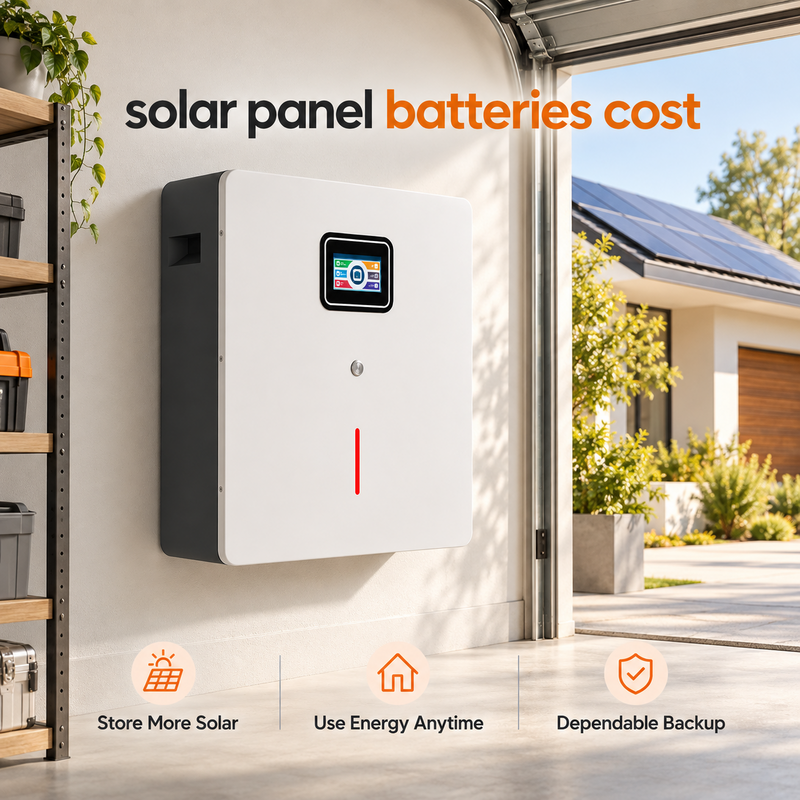
Understanding Solar Panel Batteries Cost Factors

5,000+ units ready stock, 1–5 days fast global delivery

application/solar-panel-batteries-cost, application/solar-panel-batteries-cost, 
Inquiry
Inquiry

solar panel batteries cost

Understanding solar  panel batteries cost is crucial  for B2B buyers in industries  ranging  from renewable  energy  to  manufacturing. As  the demand for  solar  energy  solutions  grows, so does  the need  for reliable  energy storage systems, particularly lithium iron phosphate (LiFePO4)  batteries. Buyers often face challenges in understanding the various factors that determine costs, sourcing  trustworthy suppliers, and ensuring product reliability. This article will  explore  these aspects, providing actionable insights to  help you make informed purchasing decisions.

Where to Source Reliable Suppliers for Solar Panel Batteries

Where to Source Reliable Suppliers for Solar Panel Batteries

Finding reliable suppliers for solar panel batteries is essential for ensuring  product quality and consistency. Start by researching  manufacturers that specialize in LiFePO4  energy storage  systems,  like Shenzhen Yanshuosheng Technology  Co., Ltd., which has  experience in supplying to over 50 countries across various applications, including solar,  RV, UPS, and  marine.

Utilize  industry trade  shows and expos to meet  potential suppliers face-to-face. This direct engagement allows buyers to assess the manufacturer’s capabilities, product offerings, and commitment to quality.  Additionally, online platforms such as B2B marketplaces  can be useful for  comparison shopping and  gathering supplier reviews.

When evaluating suppliers, consider their production capacity and  lead times. Reliable manufacturers should have the ability to scale production based on demand and provide transparent timelines for order fulfillment. Confirming their quality control processes is also crucial;  ask for information on how they ensure the  consistency and reliability of their products.

Lastly, don’t hesitate to request samples before committing to a larger order. Testing samples under actual operating conditions can provide valuable  insights into performance and suitability for your specific applications.

Common Problems with Solar Panel Batteries and Effective Solutions

Despite  advancements in technology, solar panel batteries can encounter several common issues that buyers should be aware of.  One prevalent problem is  thermal runaway, which  can occur if batteries are exposed to extreme temperatures. This highlights  the necessity  of  selecting batteries with robust thermal management features.

Another issue is  battery degradation over time.  Factors such as cycling frequency, depth of discharge, and charging practices can  impact battery lifespan. Buyers should be informed about the expected cycle life of the batteries and  the optimal usage practices to maximize performance. Implementing a monitoring  system can also  help track battery health  and warn of  potential issues before they escalate.

Additionally, compatibility with solar inverters is crucial. Buyers should ensure that  the selected battery system is compatible with their existing solar infrastructure to avoid  operational  issues. Consultation with the supplier regarding specifications  and compatibility  can prevent costly mistakes.

Best Practices for Contractors

Contractors involved in installing  solar panel batteries should adhere to several best practices to ensure successful deployment. First, conducting a thorough site assessment is vital. Understand the energy needs of the installation and evaluate environmental conditions that could impact battery performance.

Next, ensure proper installation according to the manufacturer's  guidelines. This includes attention to  wiring, ventilation, and  mounting conditions  to prevent future operational challenges. Additionally, educate clients on best practices for battery maintenance, including regular monitoring and timely troubleshooting.

For contractors, maintaining an open line of  communication with suppliers is essential.  Discussing project timelines, potential challenges, and  product specifics can help streamline the installation  process and ensure  that  both parties  are aligned  on expectations.

Lastly,  providing clients with clear documentation on battery  specifications,  maintenance schedules, and  warranty  information will enhance customer  satisfaction  and trust in the installation.

How to Assess Solar Panel Batteries Before Purchase

Evaluating solar panel batteries  before purchase involves several critical steps to ensure that the product meets operational requirements. First, buyers should review the technical specifications, including voltage,  capacity,  and discharge rates, to determine compatibility with  their systems.

Next,  consider the warranty and support offered by the manufacturer. A robust warranty  can indicate the manufacturer's confidence in product durability. Look for warranties that  cover both the battery capacity and performance over time.

Conducting a  performance assessment through testing  is also advisable. Request samples and evaluate them under actual usage conditions.  This testing phase can reveal insights into battery performance, charging  times, and heat generation.


Lastly, seek feedback from  other users or industry professionals  who have experience with the specific battery  model. Real-world usage insights can provide  valuable context that  specifications alone may not convey.

By taking these steps, buyers can make informed decisions and  select solar panel  batteries that align with their energy  storage needs and application requirements.

Understanding the Cost Factors of Solar Panel Batteries for Wholesale Buyers

The cost of solar  panel  batteries can vary significantly based on several factors that  wholesale buyers should consider.  Primarily, the type of battery is a major determinant; LiFePO4 batteries, known for their stability and longevity, often carry a higher upfront cost compared to lead-acid  batteries. However, their  longer lifespan and efficiency can lead to lower  total  costs  over time.

Another critical factor is capacity, measured in ampere-hours (Ah). Larger capacity  batteries may have a higher initial cost but can provide better  value for applications that require  more energy storage, such as residential systems or commercial setups. Additionally, the inclusion of advanced Battery Management Systems (BMS) can influence  pricing. A good BMS ensures optimal battery performance and safety, which is essential for applications in varied environments.

Manufacturing quality  and certifications also play a vital role in cost considerations. Batteries that meet standards  like UN38.3 and CE certifications may command higher prices due to the rigorous testing and quality assurance processes involved. Buyers should assess these certifications as indicators of reliability and performance.


Lastly, import  duties, logistics, and minimum order quantities (MOQ) can further affect the overall cost. Understanding these factors will help buyers budget appropriately  and choose products that align with their operational  needs.


Get a Free Quote

Our representative will contact you soon.
0/1000