Choosing the Right Battery Storage for Home

5,000+ units ready stock, 1–5 days fast global delivery

application/battery-storage-for-home, application/battery-storage-for-home, 
Inquiry
Inquiry

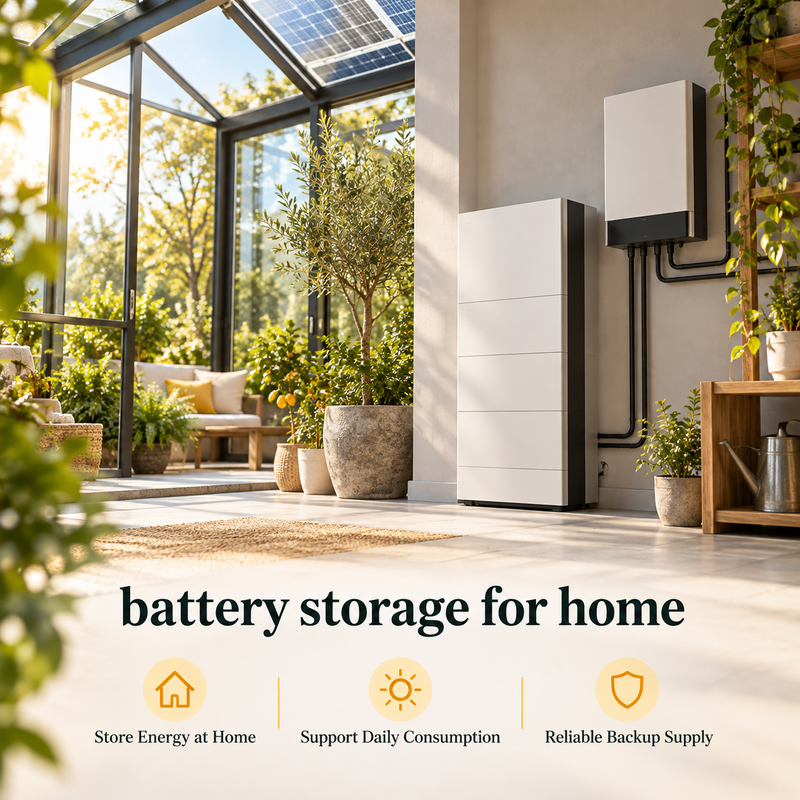
battery storage for home

Battery storage  for home applications has gained  significant traction in recent  years, driven by the increasing demand for  renewable  energy solutions and energy independence. For B2B buyers,  including purchasing  managers, engineers, and  product managers,  understanding the nuances  of battery storage options  is essential. Key concerns  often revolve  around product specifications,  reliability, cost-effectiveness,  and application suitability. This article provides  insights into selecting the right battery storage for  home applications, sourcing  reliable  suppliers, addressing common issues, and evaluating the  benefits of LiFePO4 batteries.

Where to Source Reliable Home Battery Storage Suppliers

Where to Source Reliable Home Battery Storage Suppliers

Finding trustworthy suppliers for home battery storage  is crucial for ensuring product quality  and  reliability.  Start by researching manufacturers  with a solid reputation in the industry, such  as Shenzhen Yanshuosheng Technology Co., Ltd.,  which  specializes in LiFePO4  energy storage systems.

When evaluating suppliers, consider their certifications, such as UN38.3 and CE, which indicate compliance with international safety and  performance standards. Additionally, assess their experience in serving diverse markets, which can  signal their ability to  meet  various customer needs.

Request samples to evaluate product quality firsthand.  A reliable supplier will also  provide detailed specifications and data sheets, allowing  you to understand the product  better before  making a purchasing  decision. Finally, establish clear communication and responsiveness with potential suppliers,  as these factors can significantly affect your overall experience.

Common Problems with Home Battery Storage and Effective Solutions

Home  battery storage systems can encounter several common issues that buyers should be aware of. One frequent problem is inadequate  capacity, which can result from  miscalculating energy needs.  To  prevent this, conduct  a thorough assessment of your energy consumption patterns before purchasing.  This evaluation should include peak usage times and the total watt-hours  required for  essential appliances.

Another common issue is battery degradation over time, which can lead to reduced performance and shorter  lifespan. To mitigate this, consider  batteries  with higher cycle life ratings and ensure proper installation,  including adequate ventilation and temperature  control.

Lastly, compatibility issues can arise when integrating battery  storage with existing  energy systems. Always  confirm that the battery  management  system and inverter specifications align with your setup. If uncertainties arise, consult with  the supplier to clarify compatibility before installation.

Evaluating Material Advantages of LiFePO4 in Home Batteries

Lithium  Iron Phosphate (LiFePO4) batteries present several advantages for home energy storage applications. One  of the  primary benefits is  their  enhanced safety profile. LiFePO4 batteries are less prone to thermal runaway, making them a safer choice compared to other lithium-ion alternatives. This characteristic is particularly  vital for residential applications, where safety is a paramount concern.

Another  advantage of LiFePO4 batteries is  their long cycle life, often exceeding 2000 cycles at a  100% depth of discharge. This longevity translates  to reduced replacement frequency  and lower lifetime costs for users. Furthermore,  LiFePO4 batteries offer stable performance across  a wide temperature range, ensuring reliable energy output  in various environmental conditions.


Additionally, the environmental impact of LiFePO4 batteries is  favorable compared to traditional lead-acid batteries, as they do not contain toxic materials and are more easily  recyclable. This aspect is increasingly  important for buyers  looking to align their  purchasing decisions with sustainability goals.

Applications of Battery Storage in Residential Energy Solutions

Battery storage for  home applications is versatile and can serve multiple purposes. One primary application  is storing excess energy generated from solar panels. Homeowners can  utilize this stored energy during  peak demand times or when the solar system isn't producing energy, thereby enhancing energy independence and reducing reliance on the grid.

Battery storage systems are also invaluable for backup power solutions during  outages. In regions  prone to power  interruptions,  having a  reliable battery  storage system ensures that essential appliances remain operational, providing peace of mind for homeowners  and  businesses alike.

Moreover, battery storage  can facilitate demand response strategies, where users can draw from stored energy  during peak pricing periods,  minimizing energy costs.  This  capability is especially beneficial for  larger residential complexes or those with advanced energy management systems.

understanding battery storage for home  applications  is critical for making informed purchasing decisions. By evaluating capacity, sourcing reliable suppliers, addressing common issues, and recognizing the advantages of LiFePO4 technology, buyers can confidently invest in effective energy solutions.

How to Choose the Right Battery Storage for Home Applications

Selecting the appropriate battery storage for home applications involves several critical considerations. First, assess the energy capacity required for  your specific needs. Look for batteries with a  suitable amp-hour rating, which indicates  how much  energy the battery can store and deliver over time. For  instance,  a battery rated at 100 Ah  can provide 100 amps for one  hour or  50 amps for two hours.

Next, consider the depth of discharge (DoD), which refers to how much of the battery's  capacity can be used before it needs recharging. A higher DoD  can lead to increased efficiency and cost savings,  but it  may also impact the  battery's lifespan. Additionally, ensure the battery chemistry aligns with your application. Lithium Iron Phosphate  (LiFePO4) batteries, for example, are known for their safety, thermal stability, and longer cycle life compared to traditional lead-acid batteries.

Finally,  evaluate the compatibility of the battery  with your existing  solar or energy management  systems. Make sure to inquire about the battery management system (BMS)  and any specific integration requirements for seamless operation.

Get a Free Quote

Our representative will contact you soon.
0/1000