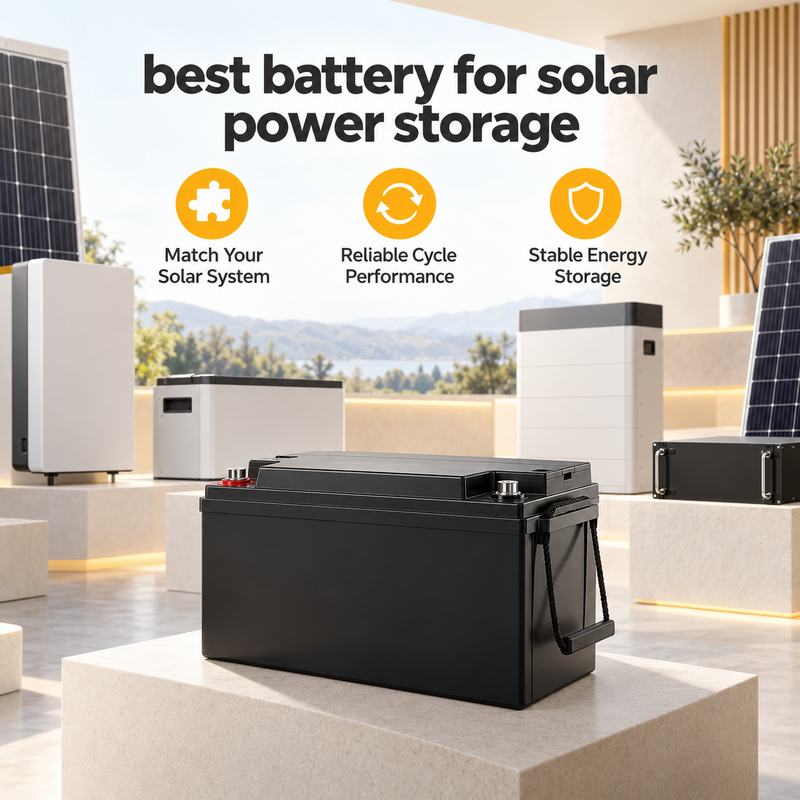
Choosing the Best Battery for Solar Power Storage

5,000+ units ready stock, 1–5 days fast global delivery

application/best-battery-for-solar-power-storage, application/best-battery-for-solar-power-storage, 
Inquiry
application/best-battery-for-solar-power-storage, application/best-battery-for-solar-power-storage, 
Inquiry

best battery for solar power storage

Choosing  the  best battery for solar power storage is crucial for  maximizing energy efficiency  and ensuring the  reliability of your solar power  system. With various options available, B2B buyers often grapple with concerns about performance, longevity,  safety,  and compatibility with existing technologies. This  article aims to  guide purchasing  managers,  engineers, and  distributors through  the key  considerations when selecting  solar storage batteries,  ensuring  they make  informed decisions that align with  their operational needs.

How to Evaluate Quality in Solar Power Storage Batteries

How to Evaluate Quality in Solar Power Storage Batteries

Evaluating the quality of solar power storage batteries involves several steps:

Certifications:  Ensure that the batteries have relevant certifications,  such as  UN38.3 and  CE, which indicate compliance with safety  and performance standards. These  certifications  are particularly important for international shipping and usage.

Material Composition: High-quality batteries often use advanced materials that enhance performance and longevity. LiFePO4 batteries, for example, are known for their stability and safety  compared to other lithium-ion options.


Manufacturing Process: Investigate the  manufacturing capabilities of potential suppliers. A manufacturer with  robust quality control processes is more  likely to produce reliable products. Look for details  on  their production equipment and techniques.

Warranty and Support: A comprehensive warranty  indicates the manufacturer’s confidence in their product. Evaluate the warranty terms and the level of customer support provided.

User  Reviews and Case Studies: Research user experiences  and case studies that highlight  the performance  of the battery in real-world applications. This can provide insight into long-term reliability and any common issues  encountered.

Where to Find Reliable Suppliers for Solar Storage Batteries

Finding reliable suppliers  for solar storage batteries  can be challenging. Here  are some strategies:

Industry Trade Shows: Attend industry trade shows and expos focused on renewable energy  and storage solutions. These events  provide opportunities to meet manufacturers and evaluate their  products firsthand.

Online Marketplaces  and Directories: Utilize B2B  marketplaces and  directories to  find manufacturers specializing in battery technology. Ensure  to filter for suppliers  with  positive reviews and demonstrated industry experience.

Professional Networks: Engage with professional networks  and forums related to solar energy. Industry professionals often share recommendations and can provide insights into reputable suppliers.

Certifications and  Standards: When evaluating suppliers, prioritize  those with recognized certifications and adherence to international  standards. This often indicates a commitment to quality  and  safety.

Requesting Samples: Before placing bulk orders, request samples to assess the product quality. Testing samples under actual operating  conditions can help you make informed decisions.

Cost Factors to Keep in Mind for Bulk Battery Purchases

When considering bulk purchases of solar storage batteries, several cost factors should be taken into account:


Unit Price: While the unit  price is a significant factor, consider  how  it plays into total cost  over the battery's  lifespan.  A  lower-cost battery may have a shorter lifespan or  lower performance.

Shipping  and Handling:  Factor in shipping costs, especially for international suppliers. Batteries may require special handling and shipping  procedures  that can increase overall  costs.

Custom Duties and Taxes: Depending on the country of origin and destination, customs duties and taxes  may apply. Be sure to factor these into  your total budget.

Volume Discounts: Many suppliers offer discounts for bulk orders. Inquire about pricing tiers based on volume to maximize your budget.


Installation Costs: Consider potential installation costs, which may vary based  on  the complexity  of integrating the new battery system into existing infrastructures.

How to Compare Different Batteries for Solar Power Storage Needs

To effectively compare different batteries  for  solar power storage,  consider the following steps:

Specification  Sheets: Review the technical specifications of each battery, such  as capacity, cycle life,  discharge rate, and  operational temperature range. Create a comparison chart to visualize differences.

Performance Metrics: Look for performance  metrics provided by  manufacturers, such as efficiency ratings and  energy density. These figures can help assess how  well the battery will perform in your specific application.

Application Suitability: Ensure that the battery is suitable for  your intended application—be it a  residential system, RV, or commercial use. Different applications may have unique performance requirements.

Long-Term Reliability: Evaluate user feedback regarding long-term reliability. Consider how the battery has performed over time in similar applications.

Manufacturer Reputation: Research the reputation of the manufacturer. Established companies  with a  proven track record in battery  production are often more reliable.

By carefully considering these aspects, purchasing  managers and distributors can ensure they select  the best battery for  solar power storage, ultimately leading to improved  efficiency and satisfaction with their solar energy systems.

What to Consider When Choosing the Best Battery for Solar Power Storage

When selecting the best battery for solar power storage, several factors should be considered. The primary  type of battery preferred for solar  applications  is  Lithium Iron  Phosphate (LiFePO4), known for its stability, safety, and  long cycle  life. Key factors include:

Capacity: The battery's capacity should match the energy needs of your application, whether it’s for residential use, RVs, or commercial settings. Assess daily energy consumption to determine the total  storage capacity required.

Cycle Life:  This indicates how many complete charge-discharge cycles the battery  can undergo before its capacity significantly diminishes. A  longer cycle  life typically results in lower long-term costs.

Discharge Rate: The discharge rate  affects how quickly the battery can supply energy. For applications with high energy demand, a battery with a high discharge rate is essential.

Temperature  Tolerance: Consider the operating temperature range of the battery, especially if it will be  installed in environments with extreme weather conditions. A battery that can tolerate a wider range of temperatures will be more  reliable.

Safety  Features:  Look for  batteries with built-in Battery Management Systems (BMS) that monitor performance and protect against overcharging, overheating,  and short circuits.

Get a Free Quote

Our representative will contact you soon.
0/1000