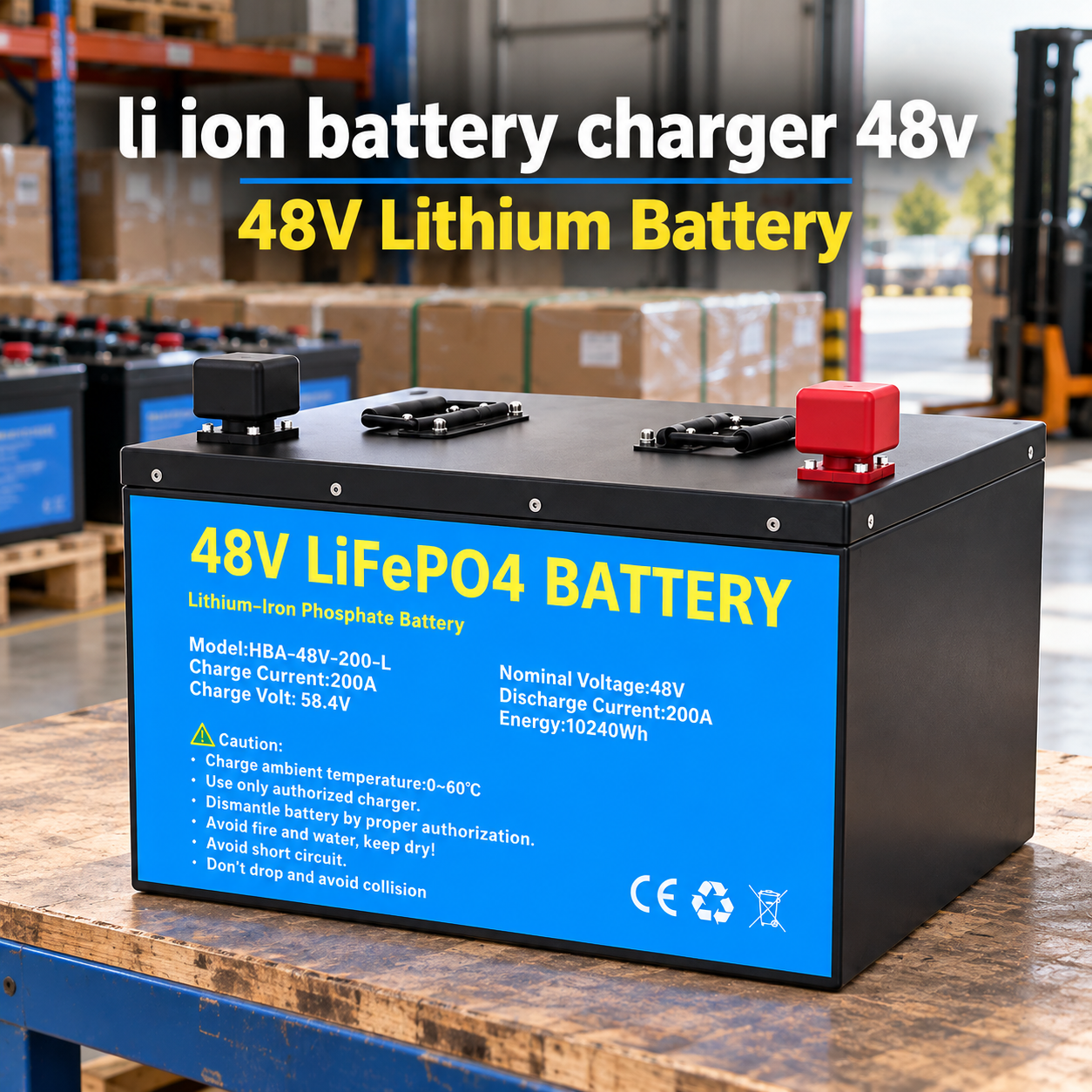
Evaluating 48V Li-Ion Battery Chargers for Projects

5,000+ units ready stock, 1–5 days fast global delivery

application/li-ion-battery-charger-48v, application/li-ion-battery-charger-48v, 
Inquiry
Inquiry

li ion battery charger 48v

Understanding the nuances of a 48V Li-Ion battery charger  is  essential  for  professionals in  various industries looking to  optimize energy storage  solutions. As applications for these  chargers span across  sectors like solar  energy, RVs,  UPS systems, and marine setups, buyers must confront concerns regarding performance, compatibility,  and  reliability. This article will  guide you  through evaluating the quality of 48V Li-Ion battery  chargers, addressing common issues, highlighting key features, discussing industrial applications,  and  explaining  the material advantages  that can influence your purchasing decisions.

Common Problems with 48V Li-Ion Battery Chargers and Their Solutions

Common Problems with 48V Li-Ion Battery Chargers and Their Solutions

While 48V  Li-Ion battery  chargers  are generally reliable, users may encounter certain common problems:

Overheating:  This  is  a  frequent issue arising from poor thermal management or  inadequate ventilation. To  mitigate this,  ensure that the charger is placed in a well-ventilated  area and consider chargers with built-in thermal protection features.

Incompatibility with Battery Types: Using a charger that does not match the battery  chemistry can lead to inefficiencies  or even  damage. Always verify that the charger's  specifications align with the battery's requirements.

Short Circuit or Overcurrent Issues: These can result from faulty components or improper connection. Regular maintenance checks and using chargers  with built-in overcurrent  protection can help prevent these issues.

Charging Time Discrepancies: Inconsistent charging times  can indicate a problem with the charger or the batteries. Monitoring the performance over time will  help  identify whether the charger requires servicing or replacement.

Features and Benefits for Buyers

When  selecting a 48V Li-Ion battery charger, consider the following  features that  enhance usability and performance:

Smart  Charging Technology: Many advanced  chargers now feature smart  technology that adjusts the charging speed based on battery  condition. This prolongs  battery  life and maximizes efficiency.

Multiple  Protection Mechanisms: Look for chargers  equipped with  protection systems such as over-voltage, over-current, and short-circuit prevention.  These features enhance safety and reliability, especially  for critical applications.

User-Friendly Interfaces: Chargers with clear displays or LED indicators provide real-time information on  charging status and faults,  making them easier to operate and troubleshoot.

Compact and Lightweight Design: A portable charger is beneficial for applications in  RVs  and marine environments where space can be limited.


Customizable Settings: For specialized applications, chargers that allow users to adjust settings can provide enhanced  performance tailored to specific needs.

Exploring the Applications of 48V Li-Ion Battery Chargers in Industry

48V Li-Ion battery chargers find utility across various industries due to their  versatility:

Solar Energy Systems: In solar  applications, these  chargers efficiently manage  energy storage from  solar  panels, ensuring that energy  can be utilized when needed, thus  optimizing renewable energy usage.

Recreational Vehicles (RVs): RVs require reliable power sources during travel. A  48V  Li-Ion  battery charger ensures that the batteries are charged quickly and  efficiently, maintaining the vehicle's power systems.

Uninterruptible  Power Supplies (UPS): For critical systems that  demand constant power, these chargers  provide the necessary support to maintain  battery  health and efficiency, thus ensuring a reliable  backup in case of power outages.

Marine Applications: In marine settings, the durability and efficiency of 48V chargers are crucial for ensuring  that onboard systems remain operational, even  in challenging environments.

Understanding Material Advantages of 48V Li-Ion Battery Chargers for Buyers

The materials used in the  construction of 48V Li-Ion battery chargers significantly influence their performance and durability:

Housing Material: Chargers made from high-quality, heat-resistant plastics or aluminum not only provide  durability but also  assist  in effective heat dissipation. This contributes  to the longevity of the device and minimizes the risk of overheating.

Connector Quality: Gold-plated  connectors can improve conductivity and reduce the risk of  corrosion, which ensures a stable  connection over time. This is particularly important in environments exposed to moisture or salt.

Internal Components: The quality of internal components, such as capacitors and resistors, affects the overall efficiency and reliability of the charger. Investing in chargers  with high-grade components can lead to  better performance and reduced  failure rates.


PCB Design: A well-designed printed circuit board (PCB) can enhance the charger's efficiency and reliability.  Look for  chargers that use advanced PCB technologies to ensure  optimal performance.

By carefully evaluating these material  characteristics alongside  performance specifications, buyers can make informed decisions that align with their specific operational needs. Understanding  these factors not only aids in  selecting a high-quality product but also ensures that the  investment in a 48V Li-Ion battery charger is justified by its performance and reliability in real-world applications.

How to Evaluate the Quality of 48V Li-Ion Battery Chargers for Projects

When assessing the quality of 48V Li-Ion battery chargers, several critical  factors come into play:

Certification and Compliance: Ensure that the charger  meets relevant certifications such as UN38.3 and CE. These certifications confirm that the product  adheres to safety and performance standards, which is crucial for preventing operational failures.

Build Quality:  Inspect the materials used in  the construction of the charger. High-grade components can  enhance durability and performance, especially in demanding  environments.  Check for robust  casing, quality  connectors, and effective thermal management  systems.

Performance Specifications: Evaluate the charger's output specifications, including voltage accuracy, charging speed,  and efficiency. A  charger with a high efficiency rating will minimize energy loss during the charging cycle, which is especially  important for applications relying on renewable energy sources.

Compatibility: Consider the charger's compatibility with the specific battery chemistry and application. Different battery types, such as LiFePO4, require  specific charging protocols to ensure safety  and longevity.

Warranty and Support: A solid warranty  and responsive customer support can be indicative  of a manufacturer's confidence in their product.  This  can be a lifesaver if issues arise post-purchase.

Get a Free Quote

Our representative will contact you soon.
0/1000